Get Full Government Meeting Transcripts, Videos, & Alerts Forever!
Get email alerts on the Drink Spiking topic
No spam. Unsubscribe anytime.
Council Committee Hears Survivors and City Plans to Combat Drink‑Spiking Ahead of St. Patrick’s Day
Summary
Survivors, public‑health officials and police told a Boston City Council committee that limited toxicology testing, uneven reporting and sparse training at nightlife venues impede investigations. Panelists described data‑collection steps, a 2026 expansion of drink covers and coordination around large events.
Boston — Survivors and city officials told the Boston City Council Committee on Public Safety and Criminal Justice on March 12 that gaps in testing, reporting and training undermine investigations into drink‑spiking and drug‑facilitated sexual assault, particularly ahead of high‑traffic weekends such as St. Patrick’s Day.
Chair Henry Santana convened the hearing (docket 01167) to review progress and opportunities for prevention and survivor support. Lead sponsor Councilor Clarissa Zapata opened by noting reported suspected drink‑spiking incidents of 116 in 2022, 107 in 2023 and 71 in 2024 and said the city has partnered with the Boston Police Department and the licensing board to improve tracking and outreach.
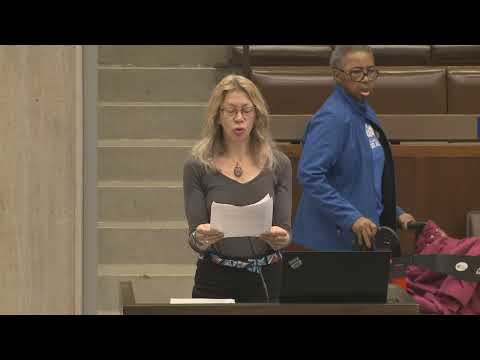
Survivors told the committee about frustrating experiences seeking medical care and records. "I was drugged in late 2022 … and I was refused a toxicology screen because I hadn't been raped," said Elana Katz Katz, who said she filed a public records request in August 2025 and had not received a timely response. A second survivor who identified herself as Jessica described being drugged and raped three years ago and said prosecutors told her the incident did not meet the legal definition required for certain charges.
City public‑health and police witnesses described practical and technical barriers investigators face. "Many drugs associated with drink spiking have very short detection windows," said Kim Mendoza of the Boston Public Health Commission, noting hospitals often do not perform spike‑specific toxicology outside a formal sexual‑assault kit. Captain Detective Terry Thomas of the Family Justice Center told the committee that police added a 'contaminated drink' flag to the Mark43 reporting system in 2023 and that a regional analyst now helps identify patterns, but he said toxicology results are often unavailable: "It is very difficult, investigatively, if we don't have those toxicology results to proceed criminally."
Panelists defended prevention efforts while acknowledging limits. Corinne Reynolds, director of Nightlife Economy in the Office of Economic Opportunity and Inclusion, said the city distributed 33,000 drink covers to about 40 venues in 2024 and plans to distribute 100,000 more in 2026 as part of a broader NightU training rollout for hospitality workers. Kathleen Joyce, chair of the Boston Licensing Board, said the board treats reported incidents seriously, will pursue public hearings even when toxicology is inconclusive, and urges licensees to preserve video and call police when an incident is suspected.
Council members pressed for more and clearer data. Several asked for: (1) a list of arrests or criminal referrals related to drink‑spiking in recent years; (2) records on training provided to venues and participation rates; and (3) the crime‑lab organizational chart and updates on expanded screening capacity. BPD said it would provide case counts and that the crime lab has received grants to pursue wider screening and has sent older kits to outside labs for re‑testing.
Panelists and councilors also discussed preparation for large events, including St. Patrick’s Day and incoming World Cup/FIFA activity, emphasizing public‑awareness campaigns, bystander intervention training, and coordination with community‑based survivor services. The Office of Violence Prevention said it contracted with Jane Doe Inc. and allocated funds for convenings and outreach aimed at increasing capacity for surge demand during major events.
No formal votes or motions were taken. Councilors requested follow‑up materials and records from the police, licensing board and nightlife office; Chair Santana adjourned the hearing at the close of the public record.
What’s next: Councilors requested specific data and documents (training rosters, arrest lists, lab org chart) and flagged legislation pending at the state level — Senate Bill 15537 — that would require standardized testing protocols and a DPH task force to study uniform standards of care for suspected drink‑spiking victims.