Get Full Government Meeting Transcripts, Videos, & Alerts Forever!
Get email alerts on the Land Use Regulations topic
No spam. Unsubscribe anytime.
Laramie County adopts rewritten land‑use rules, removes $100 home‑occupation fee after heated public hearing
Summary
After hours of public comment, the Laramie County Board of County Commissioners adopted the 2025 Land Use Regulations with amendments that clarify home‑occupation status as a use‑by‑right and remove a proposed $100 home‑occupation fee. Planning staff said the rewrite is intended to simplify permitting, expand certain allowable home uses and grandfather existing operations unless they become nuisances.
The Laramie County Board of County Commissioners voted unanimously to adopt an overhauled set of land‑use regulations on a motion amended after a lengthy public hearing and debate.
Justin Arnold, Laramie County planner, told the board the rewrite — organized into six titles — was designed to reduce unnecessary permitting burdens, clarify standards and modernize older code. Among the key changes he highlighted were expanded allowable home occupations (including limited light‑industrial activity inside accessory buildings), formalized accessory dwelling units (ADUs) as a use by right in urban districts, temporary provisions for RV living with an address and septic requirement, elimination of a costly preliminary subdivision step for many small plats, and a new simple‑site‑plan path intended to cut engineering costs for small businesses.
"We deregulated everything that I thought was commonsensical on the front end," Arnold said, summarizing staff work that he said included outreach (news events, radio, thousands of emails and multiple public meetings). "We want people to be able to make a living — but we also want to look out for neighbors."
Residents who spoke at length disagreed on whether the rewrite achieves that balance. Chloe Crumbleis, a craft‑fair vendor, said she feared ordinary makers and market vendors would be swept into new restrictions. "When you affect one of us, you affect all of us," she said.
Other commenters described successful home operations that would be harmed by fees or inspections, urged clearer language to avoid future enforcement shifts and raised concerns about the county acting like a county‑wide homeowners association. Jeff Daugherty, a former planning director who spoke in opposition, said the county's complaint records suggest only a small fraction of properties generate enforcement actions and warned against imposing subjective standards that could be used unevenly.
The board amended the staff motion twice before the final vote. Commissioners struck specific subitems of the proposed home‑occupation section and approved an amendment to label home occupations a "use by right" (a term county staff and the county attorney said is functionally synonymous with "permitted use" but emphasizes that applications meeting the criteria do not require discretionary approval). The board also approved an amendment to the county fee schedule that removed the proposed $100 home‑occupation fee.
County Attorney Mark Voss and staff repeatedly told the public that existing state law limits county authority in some areas — for example, food producers covered by the Wyoming Food Freedom Act — and that grandfathering language will protect existing commercial uses unless they constitute a statutory nuisance.
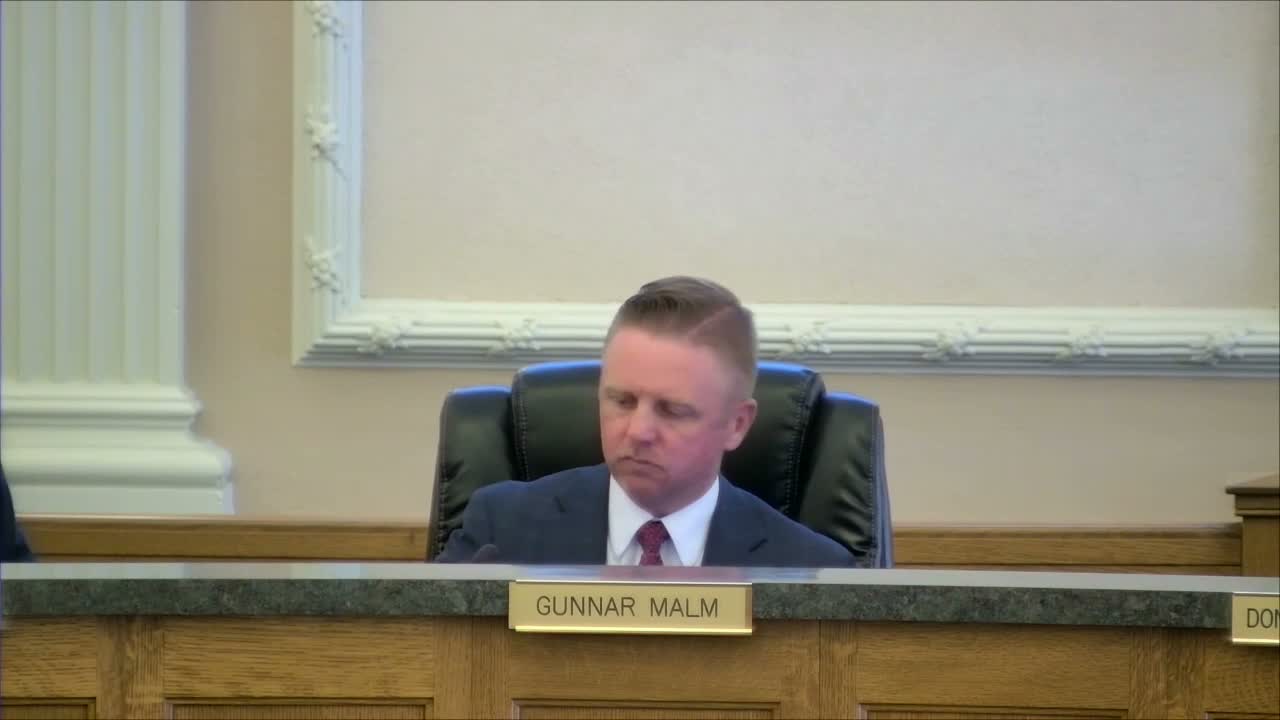
Commissioners framed the rewrite as an attempt to lower costs for small businesses while retaining tools to address genuinely intensive or noxious uses. "If you want to expand a business on Chalk Bluff Road today, under the old rules you might have needed a $30,000 engineering plan; under these rules you may use a simple site plan and save substantial costs," said Commissioner Malm (chair). "We tried to make it easier while keeping common‑sense guardrails."
The board followed the public hearing with three roll‑call votes: adopting the Land Use Regulations as amended; approving the updated unincorporated zone‑district map; and approving a revised fee schedule with the home‑occupation fee removed. Commissioners Heath, Hollingshead, Thompson, Zwonitzer and Chairman Malm all voted aye on the motions.
What happens next: county staff will post the final adopted regulatory text and updated maps to the county website and implement the fee change. Commissioners and staff said they will continue public outreach to explain the new rules and considered adding an email/alert subscription so residents get faster notice of regulatory updates and application processes.
Authorities referenced: the board and staff repeatedly cited state statutes governing nuisance enforcement and the statutory limits that preserve the Food Freedom Act; the land‑use rewrite was stated to follow Title 18 (local zoning enabling language) as a framework.
Ending: The board adjourned after approving several related items and thanked staff for support facilitating large public participation.