Get Full Government Meeting Transcripts, Videos, & Alerts Forever!
Get email alerts on the Transportation topic
No spam. Unsubscribe anytime.
WYDOT lays out 2027 STIP; Teton County residents press for alternatives to Highway 22 widening
Summary
WYDOT presented its 2027 State Transportation Improvement Program and local projects, prompting dozens of public comments urging smaller, incremental safety fixes and questioning the need for a 4‑ or 5‑lane Highway 22 expansion and the Bridal Veil connector.
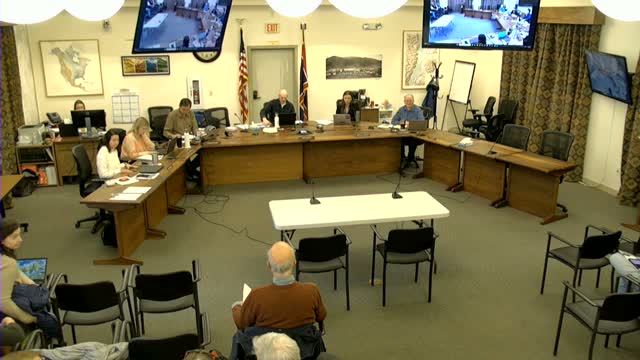
John Eddins, district engineer for the Wyoming Department of Transportation, presented the agency’s draft 2027 State Transportation Improvement Program and fielded detailed questions from the Teton County Commission on Feb. 2.
Eddins said the STIP is a fiscally constrained, six‑year program that includes highways, transit, aeronautics and capital improvements. He told the board that district funding is roughly 70 percent federal and 30 percent state and that major corridor work often requires discretionary grants in addition to routine allocations.
Why it matters: Commissioners and residents said the planning process for Highway 22 — including the Bridal Veil connector and options that would widen the corridor — will shape safety, wildlife movement and community character for decades. Many called for smaller, testable changes that can be implemented sooner and for more analysis of alternatives.
County transportation manager Charlotte Fry summarized local priorities: emphasize safety for all users; protect wildlife and natural resources; strengthen multimodal connections (transit, walking and biking); and pursue context‑sensitive design. Fry said county and town staff have been coordinating on project lists and submitted a joint CIP and a regional needs assessment to inform WYDOT’s STIP process.
During WYDOT’s technical presentation, staff detailed near‑term work (2026) including landslide mitigation, contract patching on Highway 22, Broadway slab and ADA repairs, a signal replacement at Millward and Broadway, and pre‑NEPA work on the Highway 22 corridor. WYDOT staff also described a potential Fish Creek bridge replacement in Wilson in 2028 and said an array of bridge and pavement projects are planned through 2031.
‘We’re constrained by funding’ — John Eddins
“Given current funding levels we’re limited in what we can do without discretionary grants,” Eddins said, noting inflation in construction costs and the need to preserve state match dollars to leverage federal funds. He explained that preliminary engineering (PE) dollars budgeted for the Highway 22 NEPA process were intended to support consultants and environmental work rather than immediate construction.
Residents press for alternatives, EIS and near‑term safety fixes
A long public comment period followed, during which dozens of residents and representatives from local groups urged the commission and WYDOT to reconsider a large‑scale widening. Critics included conservation and recreation organizations, neighborhood association representatives, and traffic safety advocates. Several asked the county to insist on an Environmental Impact Statement (EIS) rather than an Environmental Assessment (EA) for the Highway 22 corridor, saying the project’s scale and likely effects merit a full review.
“Expanding roads encourages more driving,” said Catherine Hughes of the Jackson Hole Conservation Alliance. “We urge a shift to demand management and modern transportation solutions.”
Advocacy groups and residents also urged targeted pedestrian crossing improvements along US‑89/US‑191 and Broadway and asked WYDOT and the county to prioritize low‑cost, evidence‑based treatments such as leading pedestrian intervals, pedestrian‑only phases, and spot safety upgrades that can be delivered alongside planned signal and ADA work.
Local examples and next steps
Speakers highlighted site‑specific issues — from parking and signage at Coal Creek and Teton Pass pullouts to turning and delivery movements in downtown Wilson — and asked for a clearer incorporation of public comments into WYDOT’s decisionmaking. Several called for the county and WYDOT to form working groups to prioritize spot improvements and to jointly seek behavioral and safety grants.
WYDOT district staff said they had already mobilized traffic and safety data collection in response to county letters and would cooperate on a working group; county staff said they will follow up with a proposed working group and schedule for Wilson‑project issues. WYDOT indicated that major reconstruction on Highway 22 would likely require discretionary funding in addition to the program’s baseline dollars.
What comes next: The STIP process continues; WYDOT collects public comment via its interactive STIP map and project QR codes. County staff and WYDOT agreed to keep refining priorities and to bring follow‑up items (including technical memos and the county’s 100% plans for Wilson) to upcoming meetings. The STIP is scheduled for finalization and approval at the Wyoming Transportation Commission later in the year.