Lifetime Citizen Portal Access — AI Briefings, Alerts & Unlimited Follows
Appeals court hears claim that police lied to defense counsel to induce arrest in Harcum case
Loading...
Summary
At the Washington Court of Appeals, Division Two, defense counsel argued that officers lied to defense counsel about a DNA warrant to induce defendant James Harcum to report and be arrested, violating due process and the right to counsel; the state urged the issue was not preserved and that a warrant was obtained afterward.
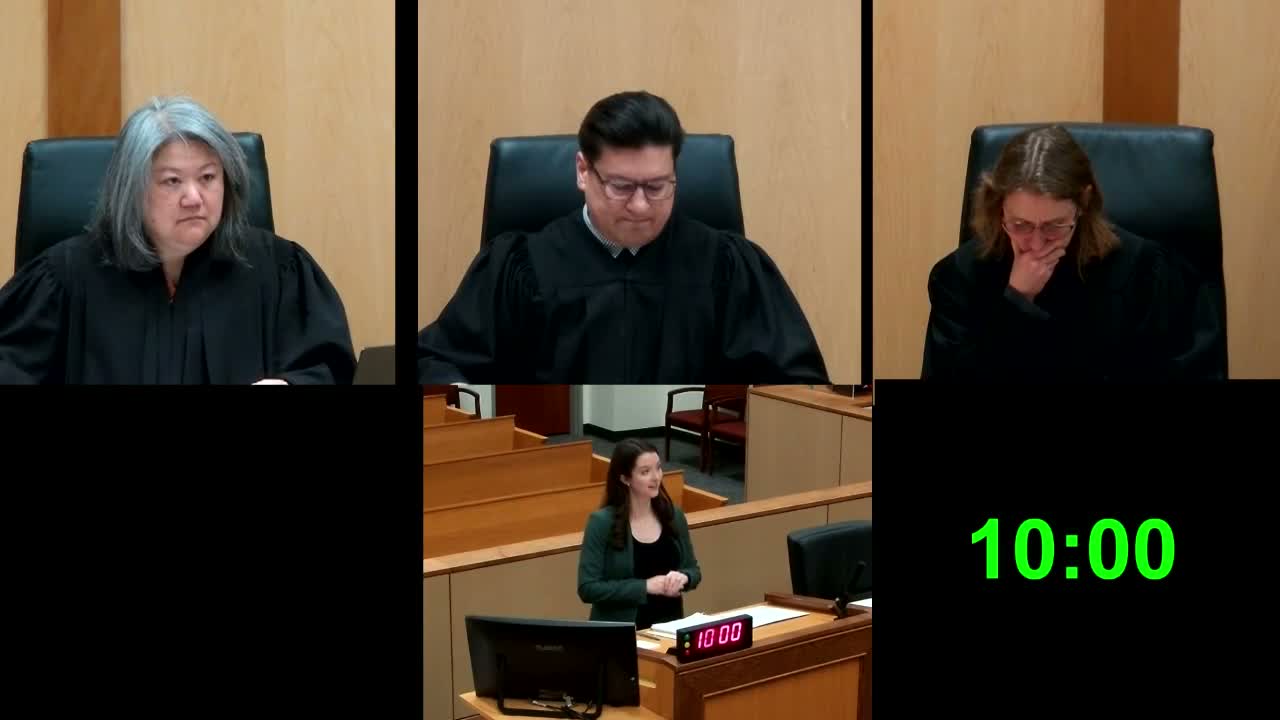
The Washington Court of Appeals, Division Two, heard oral argument in State v. James Harcum (No. 606283) over whether police misconduct during investigation — specifically, an alleged lie to defense counsel about a DNA warrant — requires reversal on due process and right-to-counsel grounds.
Eleanor Knowles, who represents Harcum, told the panel that Detective English called Harcum’s lawyer and falsely told him there was a warrant for Harcum’s DNA so the attorney would urge Harcum to report to the police station, where officers then arrested him. "When police invade that relationship by lying to a defense attorney, thereby inducing him to lie to his client, that behavior shocks the universal sense of fairness such that due process is violated," Knowles said, urging dismissal or reversal as a deterrent to similar conduct.
Knowles argued the record contains sufficient references to the events across pretrial and midtrial hearings for appellate review and relied on Washington precedent she cited in briefing, saying certain conduct is so "outrageous" that prejudice should be presumed and the state should bear the burden of proving no prejudice.
Joseph Jackson, senior deputy prosecutor for Thurston County, countered that the issue was not preserved in the trial court and therefore does not meet the "manifest error" standard under RAP 2.5. Jackson said the trial transcript shows the prosecutor below objected on relevance but did not dispute the occurrence of the ruse, and he stressed that the record does not demonstrate law enforcement gained a trial advantage or engaged in the kind of egregious intrusion that warrants dismissal. "Manifest error is not met by a unique or novel legal argument," Jackson said.
Judges pressed both sides about the evidentiary record and where the line should be drawn for relief. A judge asked how the court could infer an actual impact on the trial from the record; Knowles replied that some constitutional violations are so serious that prejudice is presumed. The panel also questioned whether officers had a legitimate safety rationale; Knowles said officers had already met Harcum for 45 minutes the day before with no incident and argued the safety explanation did not justify the ruse.
Jackson noted the record reflects that officers later obtained a warrant for a buccal swab and that DNA testing occurred after the arrest, arguing that sequence undercuts a claim that a false statement materially affected the evidence presented at trial. He urged the court to adhere to the narrow, case-by-case standard for dismissing convictions for outrageous government misconduct.
Knowles told the court that raising such claims below could force defense counsel into a conflicted role or require a client to waive Fifth Amendment protections, creating practical obstacles to preservation. She asked the court to evaluate the totality of circumstances and to set a precedent that discourages law enforcement from intruding on attorney-client communications.
The panel took the case under advisement and announced other matters to be heard in chambers; no ruling was issued from the bench.
Background and next steps: The arguments focused on appellate standards (including reference to RAP 2.5 and the Lively framework) and on whether the trial record contains an adequate factual basis to review a claim of constitutional dimension raised for the first time on appeal. The court did not announce a decision and said additional cases would be taken in chambers.