Lifetime Citizen Portal Access — AI Briefings, Alerts & Unlimited Follows
Debate in committee over limits on municipal contingency lawsuits and amendment targeting small liquor containers
Loading...
Summary
House Bill 3,347 drew extensive testimony and questioning: sponsor Rep. Jim Murphy said the bill would require Attorney General review of contingency‑fee contracts for cases of statewide impact and impose public‑hearing transparency; opponents (municipal leagues, county associations, plaintiff attorneys) said the bill risks delaying local action, could harm small jurisdictions, and contains vague AG discretion and retroactive language; an amendment addressing bans on small liquor containers in parts of Kansas City also drew industry opposition.
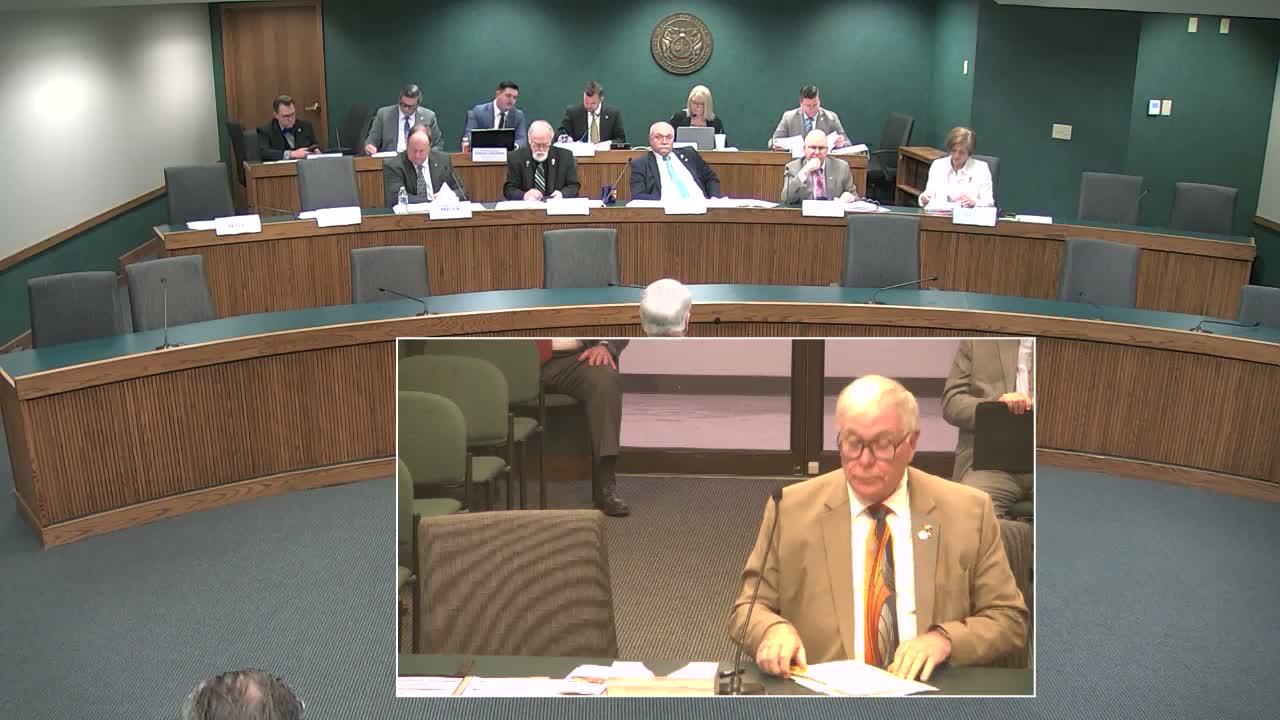
Representative Jim Murphy presented House Bill 3,347 to the House Commerce Committee as a two‑part measure. Murphy said the bill would (1) set clear requirements for political subdivisions that enter contingency‑fee contracts with outside counsel, including coordination with the Missouri Attorney General’s office when a matter has statewide impact, and (2) add an amendment addressing municipal ordinances that would ban sale of small liquor containers in geographically limited areas.
Murphy and the committee discussed the first component at length. The sponsor and supporting witnesses said the measure does not prohibit local governments from suing but creates a transparent, standardized process: local jurisdictions would explain the need for outside counsel, hold a public hearing, and the Attorney General would have up to 45 days to review and approve or decline before the local government could proceed. Backers argued the change would avoid the delays and fee disputes that arose in the opioid litigation and would protect state sovereignty and judicial efficiency in cases with statewide implications.
Opponents included the Missouri Municipal League, Municipal League Metro St. Louis, the Missouri Association of Counties, and practicing contingency‑fee attorneys. Richard Sheets (Missouri Municipal League) and Pat Kelly (Municipal League Metro St. Louis) warned the provision would undercut local elected officials’ authority, complicate and slow coordination for class actions, and could prevent smaller cities from participating. Attorney Steve Bresney (Coriantillery) said the draft language gives the AG overly broad discretion (for example, to refuse or “take over” a matter) and that retroactive or poorly scoped provisions could wipe out years of work and millions in fronted expenses if the AG later disapproved contracts. He also described cases where contingency counsel enabled remediation of public harms when local governments lacked capacity.
Industry witnesses focused on the bill’s second component: Ron Leone (Missouri Petroleum & Convenience Association), Brad Bates (beer wholesaler), Heath Clarkston (Southern Glazer’s) and Amy Blunt (Molson Coors) opposed the Kansas City ordinance portion and supported Murphy’s amendment. They said the proposed local ban on small alcohol containers (sometimes called “shooters”) is targeted to specific neighborhoods, would be discriminatory, and would harm small businesses in designated areas without evidence it would reduce crime or litter.
Committee members pressed on details: how the 45‑day AG review clock operates, whether there are emergency exceptions (temporary restraining orders), whether the AG could improperly steer work to preferred counsel, and whether the bill would prevent individuals from pursuing class‑action remedies. Witnesses and members offered possible fixes — including grandfathering existing litigation or clarifying expense recovery if the AG later assumes a case. The transcript ends with the committee recessing for executive session and later reconvening to continue the HB 3,347 hearing; no final committee recommendation on HB 3,347 is recorded in the public hearing portion.
Key next steps noted in the hearing: potential amendments to address retroactivity and TRO/emergency handling, and continued committee consideration.