Get AI Briefings, Transcripts & Alerts on Local & National Government Meetings — Forever.
Bill would let counties place 0.25% sales-tax question on the ballot to fund senior services
Loading...
Summary
House Bill 3,143 would let county governing bodies place a quarter-percent sales tax on the ballot to fund senior services—meals, in-home care, transit and prescription assistance—with counties deciding specific uses; sponsors said the measure is local control and intended to shore up rural service gaps.
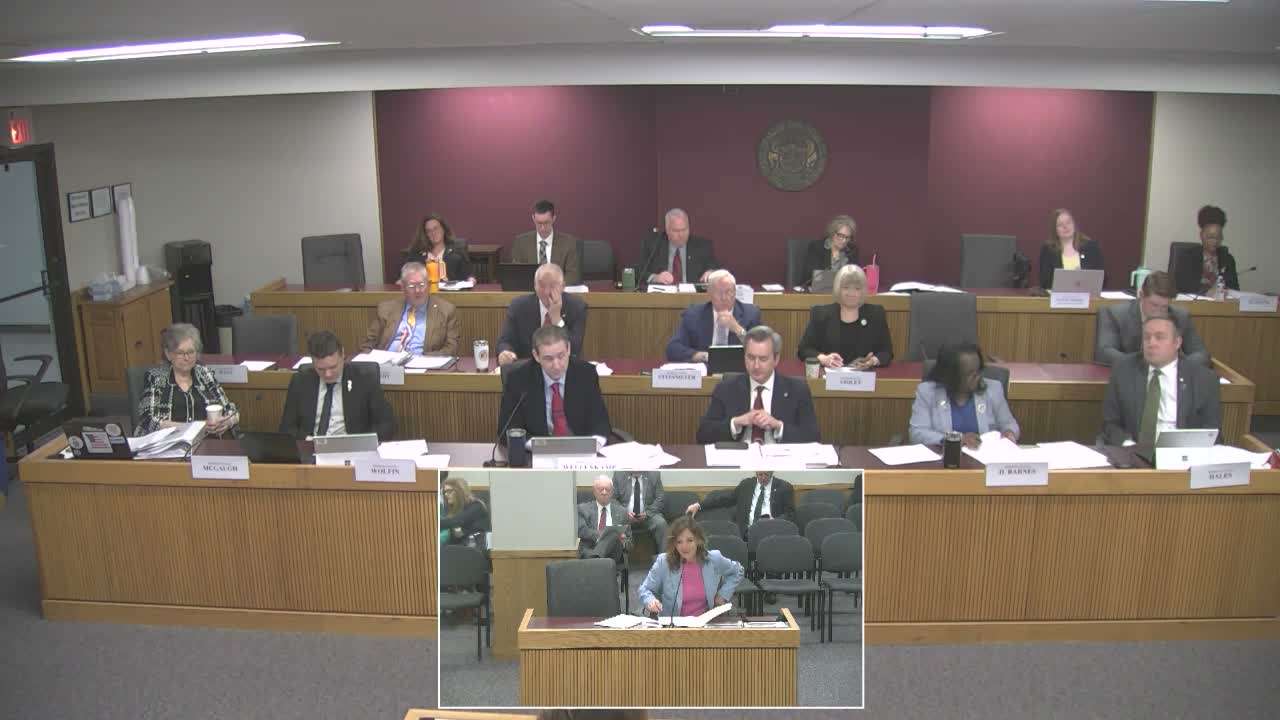
Representative Cameron Parker presented House Bill 3,143, which would allow county governing bodies to submit to voters a quarter-percent sales tax dedicated solely to senior services.
Parker, who represents Southeast Missouri, described service gaps in rural counties including transportation shortages, threatened nutrition centers and limited in-home care. “This is about local control,” Parker said, explaining counties could tailor the revenues to local needs—nutrition programs, transit, in-home care and prescription assistance.
Multiple advocates testified in favor. Jamie Opsal, a longtime senior-services director, said local funds can act quickly in crises and described how senior-service funds have been used to respond to a sudden nursing-home closure and a flooding event. “Local funding also provides critical supports in times of crisis,” Opsal said, citing past emergency responses in St. Louis City.
Anna Thomas, executive director of the Missouri Council on Aging, said the bill would let communities “resource those supports at a level commensurate with the scale of need” and stressed rural counties’ limited capacity to raise funds through property tax.
Committee members focused on guardrails and accountability: Representative Steinmeier and others asked how appointed spending commissions would be structured, audited and held accountable. Parker said subsection 9 provides a framework for a county-appointed commission and noted county commissioners are elected officials answerable to voters.
Members also discussed distributional effects—shifting some funding reliance from property tax to sales tax—and asked for more detailed revenue estimates and reporting requirements. No opposition witnesses attended the hearing segment recorded in the transcript. The committee then closed the public hearing and moved into executive session where a multi-bill package was considered.