Lifetime Citizen Portal Access — AI Briefings, Alerts & Unlimited Follows
Missouri House approves bill requiring commercial drivers to read and speak English; floor debate highlights concerns about subjectivity and enforcement
Loading...
Summary
The House adopted a committee substitute for HB 27-41 requiring commercial motor-vehicle operators to read and speak English 'sufficiently' to converse with the public and understand signs; the measure increases penalties for operators and carriers and requires additional identification for non-domiciled CDLs. Floor debate focused on how proficiency will be assessed, potential burdens on immigrant drivers and law enforcement, and whether the bill's enforcement would affect out-of-state carriers.
The House on April 9 adopted and perfected a committee substitute for House Bill 27-41, a transportation-safety bill that the sponsor described as designed to give law-enforcement authorities tools to enforce existing federal language requirements and to protect public safety on Missouri highways.
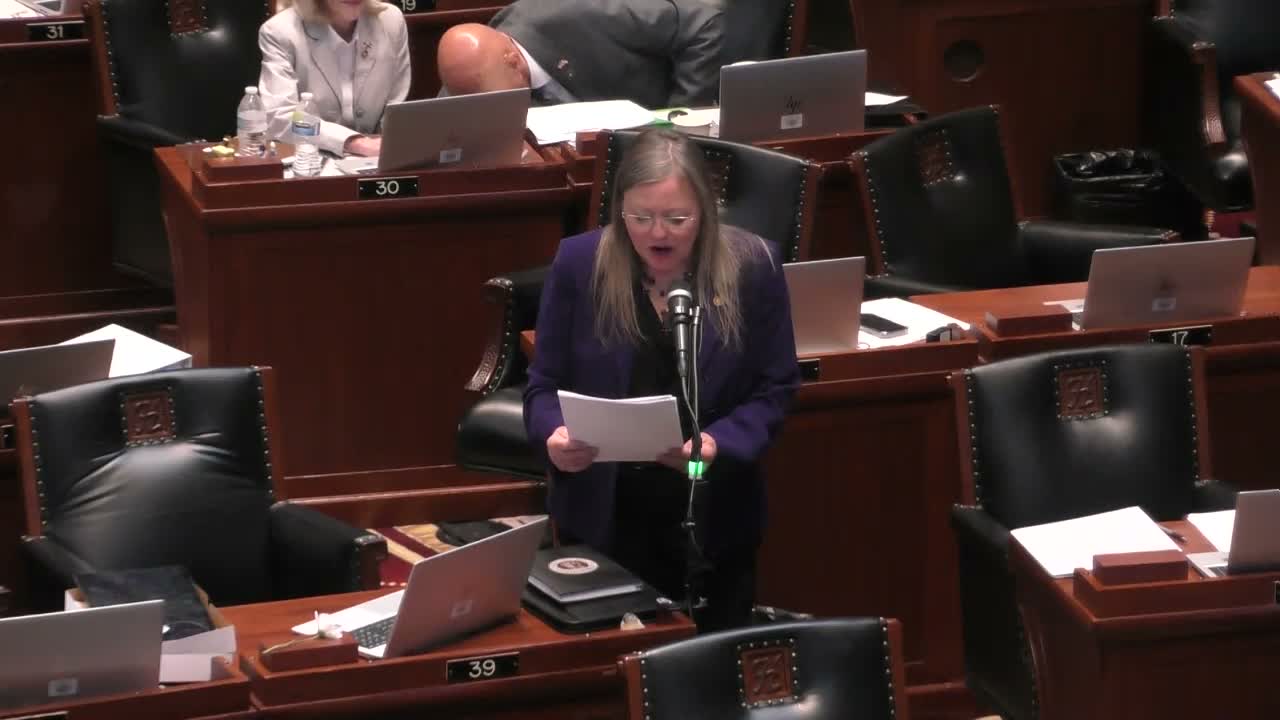
The sponsor (identified on the floor as the lady from Jackson, speaker 40) summarized key provisions: an operator of a commercial motor vehicle "shall be able to read and speak the English language sufficiently enough to converse with the general public, understand highway traffic signs and signals, respond to official inquiries, and make entries on reports and records." The bill, as discussed on the floor, also raises penalties for drivers and civil penalties for carriers, and permits suspension or revocation of a carrier's authority after repeated violations. The sponsor and supporters said the protocol used by highway patrol (questions about load, paperwork and road signs) informs enforcement, and they said the measure targets large commercial vehicles that can cause significant harm.
Opponents and questioners raised recurring concerns about subjectivity, implementation and disproportionate effects on immigrant drivers who pursue CDL work. Members asked who would make the determination of sufficient English proficiency and how that would be tested; the sponsor said a highway-patrol officer would make the decision based on a non-statutory protocol that the patrol prefers to keep outside the bill text so it can evolve. Critics argued that leaving the test to officer judgment risks inconsistent enforcement and could deter a workforce that includes many nonnative speakers. Members also debated whether the measure adequately confines penalties to carriers (rather than individual drivers) and whether requiring secondary ID (work visa or passport/birth certificate) would place an unusual burden on traffic stops. During floor exchanges, members noted different numbers mentioned for civil penalties (floor colloquy included both $15,000 and $50,000 as carrier penalties in different exchanges), and speakers repeatedly urged careful consideration of subjectivity and economic effects on supply chains.
After extended floor debate and the adoption of amendments, the House approved the committee substitute as amended and perfected and printed the measure on the floor; the transcript records the adoption and perfection but does not include a numeric roll-call tally of the final vote.