Missouri House adopts 'Mason's Law' to flag drivers who may have trouble communicating with officers
Loading...
Summary
House members adopted an amendment (referred to on the floor as Mason's Law) establishing a physician-signed form filed with the Department of Revenue that can flag, for five years, drivers who may have communication difficulties; the flag would appear in the Missouri Uniform Law Enforcement (MULE) system when a license plate is run.
The House on April 9 adopted a floor amendment nicknamed "Mason's Law" that would allow a physician-signed form to be filed with the Department of Revenue and linked to a driver's license and license plate in the Missouri Uniform Law Enforcement System (MULE), creating an alert that officers would see if they run the plate.
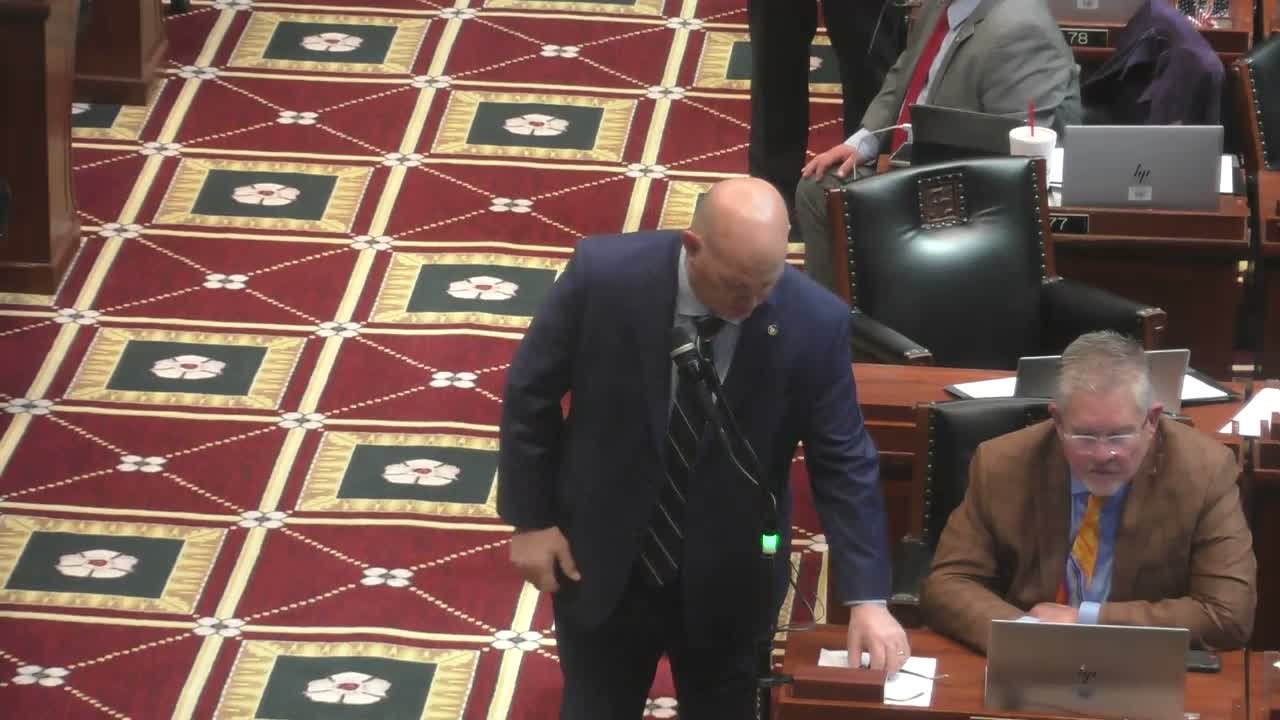
The sponsor, the gentleman from Clay (speaker 9), described a constituent incident where a driver with autism was pulled over and the interaction escalated until the apartment manager identified the driver as autistic and the situation deescalated. The sponsor said the Department of Revenue would issue a generic form that a physician could sign to indicate the individual may have trouble communicating with law enforcement; that information would be tied to the plate and a driver's license for five years.
Members asked whether the bill included training for officers; the sponsor said it did not — the amendment's scope is to provide an informational flag and the sponsor suggested training could be addressed separately. Supporters said the flag would give officers advance awareness in traffic stops and could reduce misunderstandings.
The House adopted the amendment on the floor; transcript debate shows bipartisan support along with questions about whether training should accompany the information-sharing mechanism.