Missouri House approves suite of capital and ARPA spending bills totaling several billion dollars
Loading...
Summary
The House passed a package of capital-improvement and ARPA-related appropriation bills April 1, including HCS for HB 20 17 (reappropriations, $2.9 billion), HB 20 18 (maintenance and repair, $638 million), HB 20 19 (new projects, $123 million) and HB 20 20 (remaining ARPA funds, $1.6 billion). Supporters said the measures complete previously authorized projects while using largely federal or previously appropriated funds.
The Missouri House on April 1 approved a series of capital spending measures and an ARPA-related appropriation to finish projects already authorized by prior legislatures.
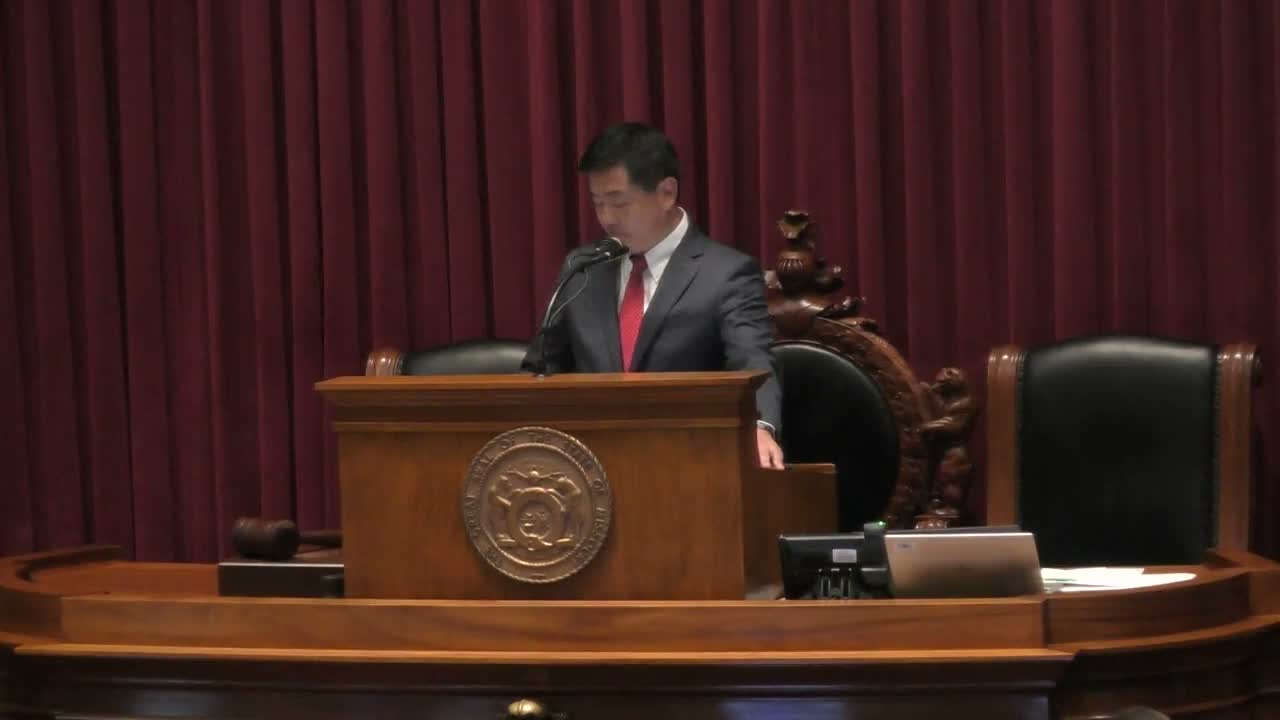
"These are the capital improvements bills that we debated and perfected earlier this week," the budget chairman, the gentleman from McDonald County, said when he moved HCS for HB 20 17 for third reading and passage. He described HB 20 17 as a reappropriations measure for projects still under way and said the bill totals $2,900,000,000 and contains no new money.
Members proceeded to vote on the related capital bills. HCS for HB 20 17 (reappropriations) passed on third reading by a roll call of yeas 137, nays 9. The chairman then moved and secured passage of HCS for HB 20 18, the maintenance-and-repair capital bill (roughly $638,000,000, mostly federal or other funds), by a vote of 127–21. HCS for HB 20 19, which sponsor said contains new capital projects totaling about $123,000,000 (roughly $27,000,000 in general revenue), passed 98–48.
Lawmakers then approved HCS for HB 20 20, which the sponsor described as appropriating the remainder of federal pandemic (ARPA) funds that must be spent by the end of calendar year 2026. The budget chairman said that HB 20 20 totals about $1,600,000,000 and again is largely federal dollars; the House passed it by a roll call of yeas 127, nays 24.
Supporters emphasized that the bills largely spend previously authorized or federal funds to complete ongoing projects rather than creating recurring general-revenue obligations. "This is not new money," the budget chairman said on the floor about HB 20 17. Members from both sides of the aisle urged colleagues to support the measures to avoid interrupting projects already under way.
The House moved the bills forward without extended floor amendments and recorded the roll-call tallies for each third-reading vote. The measures will proceed to whatever next steps the legislative process requires after third reading and passage in the House.