Public hearing on SB 1062 spotlights gaps in interpreter access; advocates urge statewide Communication Access Services
Loading...
Summary
Senate Bill 1062, a proposal to expand Communication Access Services statewide, drew emotional testimony from deaf and hard-of-hearing Missourians and support from the Missouri Commission for the Deaf and Hard of Hearing; witnesses gave multiple examples of delayed medical care, court hearings and denied services.
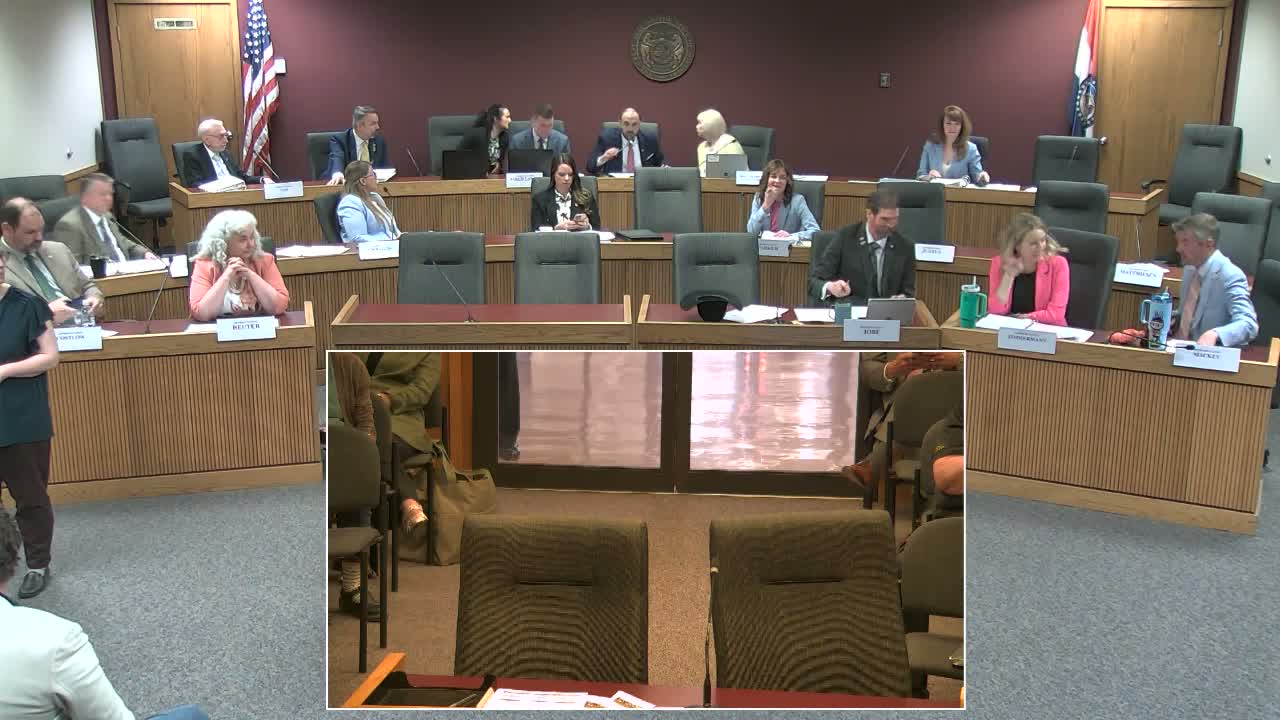
The House Committee on General Laws held a public hearing on Senate Bill 1062, a measure to expand Communication Access Services to all 114 Missouri counties. Sponsor Senator Jill Carter told the committee the proposal would extend software and cross‑communication tools already used in 36 counties and said the Department of Social Services supports broader participation.
"If I told you that we could reduce kids going into foster care by 40% and social services by 33% just because of the shift in the focus of local resources, would that have your attention?" Senator Carter asked, describing how community organizations and churches could be notified to meet discrete family needs and help keep children at home.
The hearing featured sustained, personal testimony from deaf and hard‑of‑hearing Missourians and commission staff. Becky Davis, executive director of the Missouri Commission for the Deaf and Hard of Hearing, described cases where people waited days for interpreters and families experienced delays in medical or legal care: "We had a situation that a person was put in a county jail where 3 days, they were given no communication whatsoever," Davis said, arguing the bill is designed to fill gaps that remain despite ADA requirements.
Crystal Rush, who said she is deaf, recounted the delayed hospice care for her father and told the committee, "Communication Access Services is not an option. It is essential." Multiple witnesses described problems obtaining in‑person interpreters, limits of video‑remote interpreting (VRI) in clinical settings and the practical burdens on families who must provide unpaid interpreting.
Several witnesses and commission staff urged the committee to use the bill to coordinate existing providers, improve interpreter certification and make clear which entities should be contacted when an interpreter is needed. Arnie C., the state public advocate, voiced support and noted language in the bill referring to a $20 million appropriation and the need for appropriations committee consent.
Committee members asked about interpreter supply and steps to encourage recruitment and certification; commission witnesses said certification, continuing education and better scheduling could help but acknowledged workforce challenges. The hearing closed after several hours of testimony and the chair reminded witnesses to submit written forms to the clerk.
No committee vote on SB 1062 was recorded in the hearing; the measure remains under committee consideration pending staff review, possible amendments and future scheduling.