Missouri committee advances broad education substitute after debate over reading mandates; eminent-domain amendment for foreign-owned energy firms fails
Loading...
Summary
A House special committee voted to report a large education committee substitute after heated debate over mandatory reading programs and who would pay for new staff; a proposal to bar foreign-owned companies from using eminent domain for wind and solar projects failed on the floor of the committee.
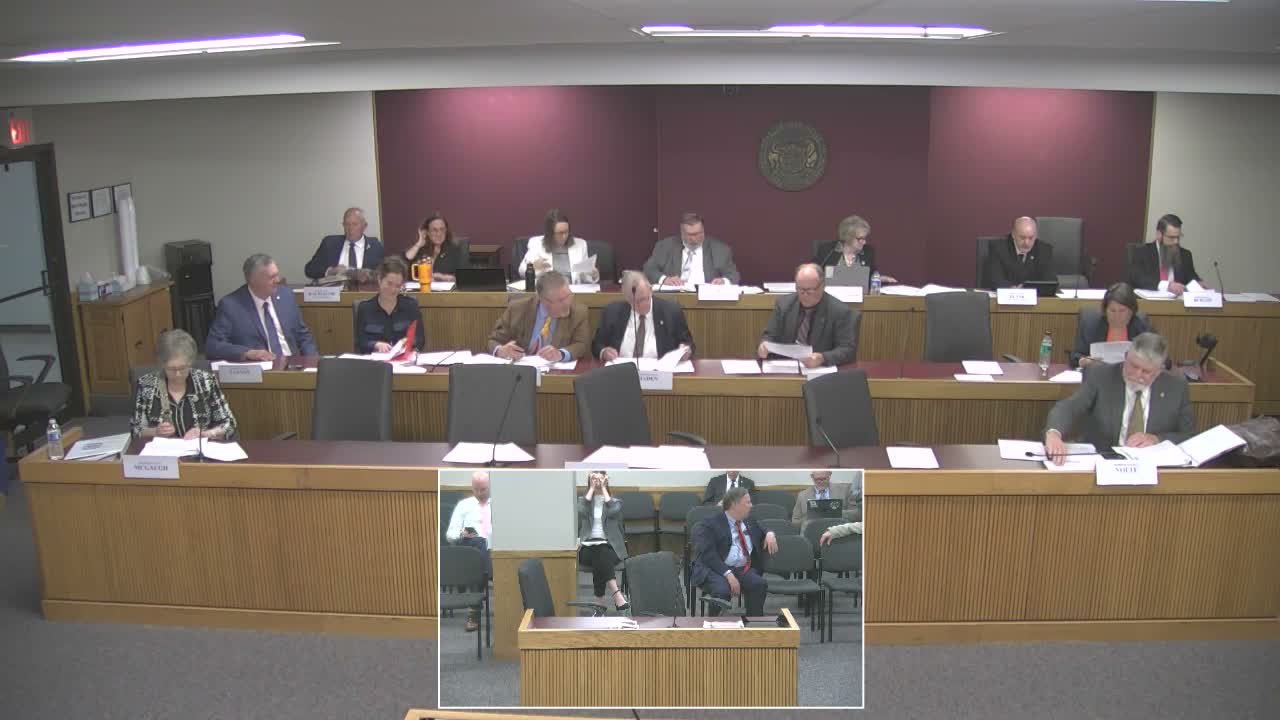
JEFFERSON CITY — A House special committee on rural issues voted Thursday to report a sprawling committee substitute that bundles multiple education measures, after extended debate over literacy mandates and local costs.
Representative Reed, who offered House Amendment 1 to add a voluntary Missouri integrated safe driving program, told the committee, “This is my house bill 21 95… It’s voluntary… It’s not gonna cost anything.” Reed said the proposal would integrate driver’s education into classroom instruction and leave implementation to schools.
But much of the committee’s time focused on a separate literacy package folded into the substitute. Representative Roseanne Christensen, the amendment sponsor on literacy-related language, said the measure aims to help students with dyslexia and IEPs and to clarify longstanding statutes governing county public-health and education duties. “We just want to make sure there’s a clear path,” Christensen said, explaining an amendment about county health officer succession.
Lawmakers who questioned the literacy and retention language repeatedly pressed who would pay for the required reading specialists and other new personnel. Representative Hayden asked bluntly, “Where are they getting that money from?” and estimated that his district could face about a $120,000 cost and that the state might need “7 to 800” additional reading specialists statewide — a figure raised in the committee as an illustration of potential scale.
Several members cautioned that the substitute had collected many unrelated provisions and new language that had not been vetted in committee. One member urged delaying action to return to the original senate bill, saying the process risked adding “things in here that have not gone through this committee.”
The committee rejected a motion to roll the amendments into a new house committee substitute and adopt that version on a roll call of 5–7, after which it instead voted 12–0 to report the committee substitute for Senate Bill 13-83 as "do pass." The chair announced the 12–0 tally.
On energy and property rights, Representative Burton offered an amendment to House Bill 2,169 that would have prevented foreign-owned companies from using eminent domain for wind and solar projects. Burton described the change as “a good compromise,” saying companies “based out of Canada or Italy or France… could not use eminent domain” under the amendment. Members questioned how to define “foreign owned,” asking whether U.S.-based subsidiaries or companies with mixed ownership would be covered. The amendment failed on a voice vote.
The committee later voted to report House Bill 2,169 as do pass by roll call, 9 ayes and 3 nos.
Other measures cleared the committee. The panel adopted an amendment clarifying county health officer succession and rolled it into a substitute for Senate Bill 16-99; that substitute was reported do pass by an 11–0 vote. The committee also adopted a substitute for House Concurrent Resolution 38 and reported it do pass by an 11–0 vote.
The meeting ended with brief thanks from Representative Point, and the committee adjourned.
Votes at a glance
- Senate Bill 13-83 (committee substitute): reported do pass, 12–0. - House Bill 2,169: reported do pass, 9–3; an amendment to bar foreign-owned companies from using eminent domain for wind/solar failed on a voice vote. - Senate Bill 16-99 (House committee substitute clarifying county health officer succession): reported do pass, 11–0. - House Concurrent Resolution 38 (substitute): reported do pass, 11–0.
What’s next
Bills reported do pass will move to the full House for further consideration; members who pressed for more vetting said they may seek floor amendments or further committee review.