Bill would let counties waive property-tax penalties in narrow hardship cases, sponsors say
Loading...
Summary
Representative Merritt introduced House Bill 3,381 to let counties and other local taxing jurisdictions waive penalties (not taxes) for taxpayers who face temporary hardship; supporters gave examples of stolen or misapplied payments, while pension fund representatives warned waivers could reduce revenue that helps fund county pensions.
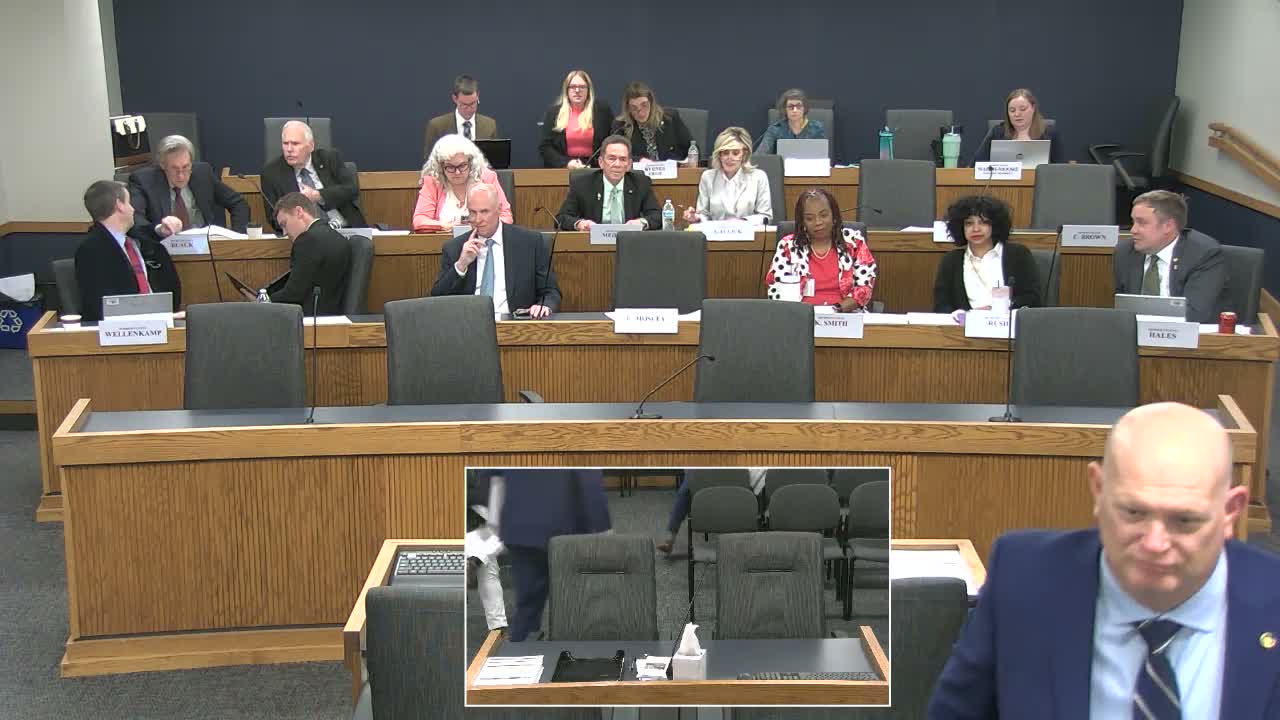
Representative Merritt opened a committee hearing on House Bill 3,381, which would give counties and certain local taxing jurisdictions the option to waive penalties on delinquent property taxes in narrow hardship cases.
"This is a may not a shall bill," Merritt told the Special Committee on Intergovernmental Affairs, stressing the proposal would not force local governments to change their practices but would allow them discretion. Merritt said the measure targets penalties and interest, not the underlying tax.
Clay County Commissioner Jay Johnson testified in support, describing several real-world examples in which taxpayers who tried to pay on time nonetheless incurred large penalties because of stolen checks, bank errors or postal delays. "When we talk about any kind of impact on any kind of pension fund, this is not gonna have any impact on that whatsoever," Johnson said, adding that Clay County encounters only a handful of cases a year that would qualify for relief.
Arnie C. A. C. Dinos, the state public advocate, also supported the bill and suggested expanding authority so county assessors could waive certain personal-property penalties. Dinos urged more use of drop boxes and other ways residents can avoid postal delays.
Scott Penman, representing the County Employees Retirement Fund (CERF), provided an informational statement about fiscal implications. He estimated that a portion of CERF’s annual revenue comes from late-payment penalties and cautioned that widespread waivers could reduce revenue unless counties replaced those funds. "When you waive a penalty, a portion that goes to [CERF] ... if you waive it, it doesn't go to us," Penman said, noting CERF receives penalty-derived contributions as part of a broader revenue mix.
Committee members pressed witnesses on implementation details: what evidence would be required to show hardship, whether counties or assessors should hold waiver authority, and how to prevent repeated claims from large taxpayers. The sponsor and several members said counties could require proof that a delinquency resulted from circumstances "beyond the taxpayer's control," such as a medical emergency or demonstrable postal or banking error.
The committee concluded the hearing without taking a vote on HB 3,381. Chair closed the session and said the bill will proceed through the committee process for future consideration.