Get Full Government Meeting Transcripts, Videos, & Alerts Forever!
Get email alerts on the Land Use topic
No spam. Unsubscribe anytime.
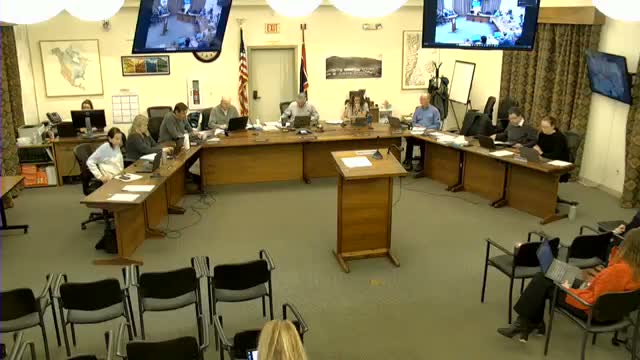
Hog Island zoning amendment fails after divided public comment and commission debate
Summary
The board declined to adopt a text amendment that would have allowed limited contractor yards and certain light/heavy industrial uses in the Hog Island Workforce Home Business zone; commissioners cited comp‑plan consistency concerns and a need for broader planning review.
The Teton County Board on Feb. 3 voted down a proposed text amendment (AMD2025‑0001) that would have allowed limited light and heavy contractor uses as primary uses within parts of the Workforce Home Business (WHB) zone adjacent to South Highway 89.
Associate Long Range Planner Erin Monroe (speaker 14) summarized the applicant’s proposal and staff analysis: the amendment would allow building and special‑trade contractors on sites wholly within 500 feet of Highway 89, limit the industrial footprint to three acres and require an operations plan, screening of equipment and materials, and an on‑site residential unit (either primary home or ADU). The planning director recommended denial because staff concluded several LDR and comprehensive‑plan consistency findings could not be made.
Applicant representative Alex Norton (speaker 17) and others argued the change would provide predictability for critical local services — excavators, large plow trucks and other heavy equipment — and help maintain local emergency response capacity when rapid deployment is needed. Supporters in public comment, including emergency‑response stakeholders, described incidents where locally based equipment allowed a rapid response to road washouts or avalanches.
Opponents — neighbors and environmental and watershed advocates — said the 2022 Workforce Home Business zoning was adopted to preserve a residential character and that converting primary use to industrial would risk noise, traffic, water‑quality impacts and incremental up‑zoning across Hog Island. Several speakers argued the applicant bought land after WHB zoning was in place and urged the board to uphold the existing regulations or pursue a countywide planning approach rather than a site‑specific amendment.
Commissioners debated whether the WHB rules were an adequate long‑term tool for businesses to scale and whether the amendment would set an undesirable precedent for spot zoning. Some commissioners proposed owner‑occupancy and ownership‑interest conditions to limit speculative or absentee commercial ownership; others said a comp‑plan amendment or a broader county planning process would be the proper vehicle for addressing systemic needs. The motion to approve the amendment as proposed failed (0–4, with one abstention). The application remains denied at this hearing.
Next steps: commissioners signaled interest in a larger discussion about WHB zoning and potential comp‑plan revisions to reconcile the county’s need for contractor capacity with neighborhood character and water‑quality protections.