Missouri House legalizes suppressors amid tense debate over safety and federal law
Loading...
Summary
House Bill 1730, which would legalize firearm suppressors in Missouri, passed after prolonged floor debate. Supporters cited hunters' safety and hearing protection; opponents, including teachers and members who lost family to gun violence, warned of reduced detectability and federal confusion. The measure passed on a recorded vote.
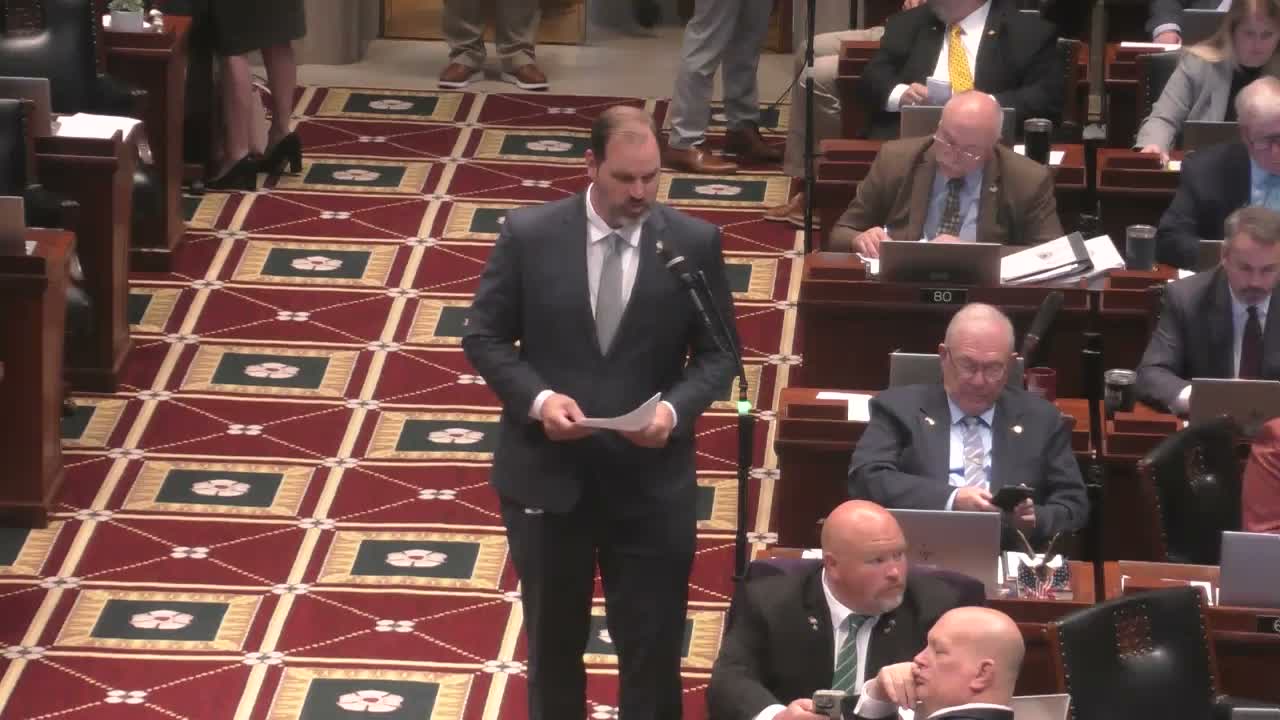
The Missouri House passed House Bill 1730 on April 8, a bill that would legalize firearm suppressors in the state. The sponsor, the representative from Saint Charles County, framed the measure as restoring state authority and easing what he described as onerous federal restrictions on ownership and possession.
Supporters told the chamber that suppressors improve hearing protection for lawful users and could promote in-state manufacturing. "It's an economic enticement for manufacturing within the state," one supporter said, and other backers described suppressors as safety devices for hunters that reduce disturbance to neighbors.
Opponents warned the bill would make gunfire harder to detect, complicate acoustic detection systems and public-safety responses. A teacher on the floor described carrying an alarm system at school and said making suppressed gunfire harder to hear increases risks for students and responders. Several members noted existing federal law (the National Firearms Act) still regulates suppressors and raised concerns that state legalization would not shield residents from federal enforcement.
Floor exchanges addressed how ownership and use would be treated and whether the bill would expose residents to federal penalties. Members also recounted personal loss: one speaker identified as having lost a son to gun violence and opposed the measure on that basis.
After debate, the House approved the bill on a recorded vote (yeas 95, nays 44). The sponsor urged members to consider constitutional questions and support the measure.
Next steps: passage in the House sends the measure to the Senate or to conference if changes are made. Observers and legal analysts will likely watch federal-state interactions and potential litigation.