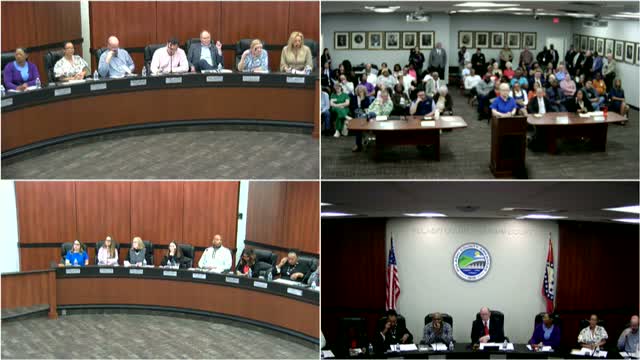
Pulaski Quorum Court approves emergency transfer after treasurer warns revised budgets left general fund short
Loading...
Summary
Pulaski County Treasurer Deborah Buckner told the Quorum Court that revised budgets and encumbrances created multi‑year shortfalls, and the court voted 15–0 to transfer emergency reserve funds to the county general fund while the county commissions an outside audit and freezes hiring.
Pulaski County Treasurer Deborah Buckner told the Quorum Court on April 6 that revised budgets and encumbrances had produced multi‑million‑dollar shortfalls in the county general fund, and the court voted unanimously to move emergency reserve money to cover immediate needs.
Buckner, who identified herself to the record as “Deborah Buckner, Pulaski County Treasurer,” said the approved budget for 2026 showed $105,000,000 in appropriations while a later “revised” figure listed roughly $117,210,000 available — an increase she said had no corresponding cash carryover. Buckner said records show the county was overspent by $32,988,000 in 2023, that the county general reported a $5,200,000 negative balance on Dec. 31, and that the emergency reserve stands at about $52,000,000. She proposed a negotiated, short‑term transfer of $29,750,000 to keep the county operating for the next 90 days while outside auditors and staff reconcile the accounts. “Show me the money,” Buckner told the court, challenging colleagues to identify errors if any exist.
The comptroller, identified in the meeting as Mr. Hutchins, told the court that revised budgets commonly arise from ordinances passed during the year and from encumbrances for projects that roll from one fiscal year to the next. Hutchins said some previously encumbered amounts could be released and agreed with Buckner that communication failures between offices complicated the month‑to‑month reconciliation: “You vote on every one of them,” he said, describing how ordinances passed during the year can increase appropriations and produce a revised budget total.
Court members pressed for more detail on timing and documentation. Several justices asked for monthly expenditure reports and read‑only access to accounting records; one requested a short list of ordinances and amounts that increased appropriations in the last three years. Members also discussed outstanding receivables (Hutchins estimated $2–3 million might be owed by outside entities such as cities or the state) and whether the county could pause capital projects to prioritize payroll.
Judge Hyde said he would issue an executive action freezing open positions and that procurement would issue a request for proposals for an outside audit. Court members and staff discussed procurement timelines; the comptroller estimated a likely outside audit cost in the range of $1.5 million to $2 million based on previous work and said proposals could take 30–45 days to return. Several members urged the RFQ be prepared quickly to avoid longer disruptions to county operations.
After the presentations and Q&A, the clerk read an ordinance amending the annual budget to transfer emergency reserve funds (Fund 1805) to the county general fund (Fund 1000). Justice Massey moved for adoption; the court recorded a roll‑call vote and adopted the ordinance by a 15–0 margin. The clerk announced “15 ayes, 0 nays.”
The meeting closed with one public commenter, Wendell Griffin, arguing that spending more than appropriated is a management problem rather than an emergency. The court adjourned after the vote. The next procedural steps recorded in the meeting were commencement of an outside audit procurement process and temporary constraints on hiring and nonessential spending while the audit and reconciliations proceed.
What happens next: procurement will prepare an RFQ for a full audit of county finances; the court approved an immediate, negotiated transfer from emergency reserves to restore short‑term liquidity; and the judge indicated he would issue an executive order freezing open positions during the review.