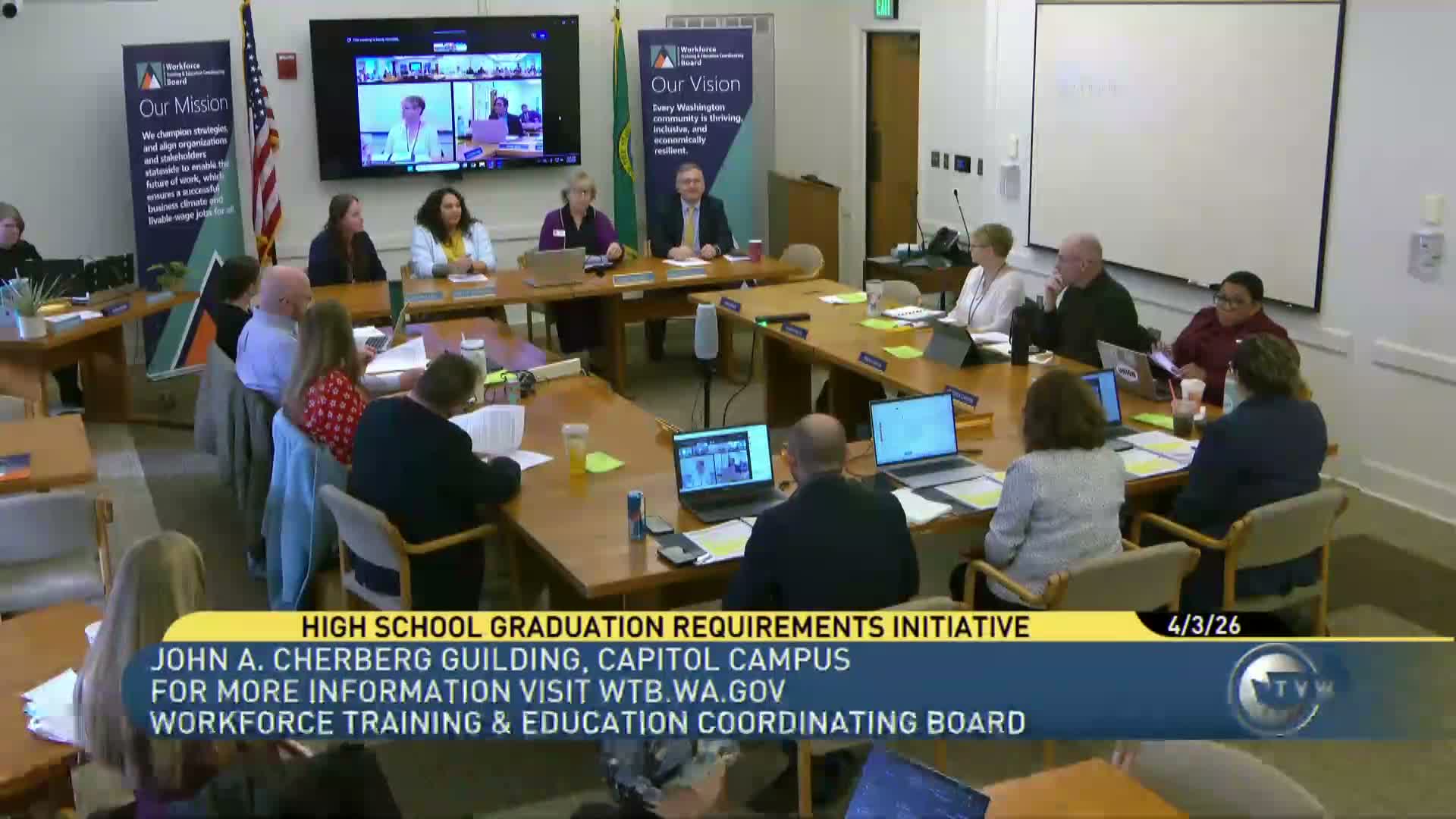
State board presents sweeping 'Future Ready' review of high‑school graduation requirements
Loading...
Summary
State Board of Education members briefed the workforce board on a multi‑phase 'Future Ready' initiative to rework graduation requirements for flexibility, equity and clearer pathways to work and postsecondary options; the task force favors more personalized pathways, competency crediting and phased implementation aimed at the class of 2031.
Mary Fertakis, chair of the State Board of Education, told the workforce board that the 'Future Ready' initiative is a priority in the board's 2024–28 strategic plan and aims to reexamine the state's high‑school graduation framework to better prepare students for postsecondary education, careers and civic life. "This is a priority initiative that was identified in the board's 2024 to 28 strategic plan," Fertakis said.
The presentation described a three‑part framework now under review: the high‑school‑and‑beyond plan (begun by 8th grade), a set of core course requirements, and a more flexible set of personalized‑pathway credits. State board staff said the task force recommends expanding personalized pathway crediting, standardizing competency‑based credit and narrowing the options for the third math credit to strengthen college alignment while keeping flexibility for students who receive robust advising.
Why this matters: presenters said the last full review of the framework was decades ago and that changes in the economy, student goals and available data call for a modernized approach. The task force — a 30–35 member group with students, educators, employers and community liaisons — has been gathering community input and preparing recommendations that may form part of a legislative proposal for the 2027 session. Staff emphasized phased implementation to avoid disruptions, noting an earliest effective class of 2031 for changes that require lead time.
Key proposals and tradeoffs included: greater use of competency‑based crediting so students can demonstrate standards without completing a specific course; a move to make algebra‑2 (or its equivalents such as integrated math 3, data science, statistics or financial algebra) the default third math credit while allowing advised alternatives; and combining civics and contemporary‑world topics into a stronger civics course. Presenters also recommended boosting the health requirement to a full credit to address mental‑health learning outcomes, and increasing required reflection and planning in the high‑school‑and‑beyond plan to help students translate coursework into employable skills.
In questions from board members and partners, Division of Vocational Rehabilitation Director Dana Phelps asked how the changes would support students with disabilities. Task force staff said they have community liaisons and are considering ways to reduce scheduling barriers so students with disabilities have more viable pathways and meaningful access to diploma requirements. "Reducing the number of required course constraints and building more meaningful default options can open up schedules for students with additional supports," staff said.
What happens next: staff asked the workforce board to consider whether it may provide formal feedback or a position on final recommendations once the state board advances a specific legislative package. The state board will continue task‑force work, move into phase‑3 implementation planning and seek additional local and sector input before sending proposals to the Legislature.
The presentation and Q&A provided detail but did not include a final regulatory or statutory text; board members and agency partners were asked to continue engagement and offer feedback during upcoming task‑force milestones.