Get Full Government Meeting Transcripts, Videos, & Alerts Forever!
Get email alerts on the School Health Programs topic
No spam. Unsubscribe anytime.
Youth Equipped to Succeed previews sexual‑health and online‑safety assemblies for Waxahachie ISD
Summary
Youth Equipped to Succeed (YES) presented two school programs — Aim for Success and Focus on Success — emphasizing goal‑setting, age‑appropriate sexual‑health education, and online‑safety lessons; presenters said parent previews and opt‑in surveys are available to districts.
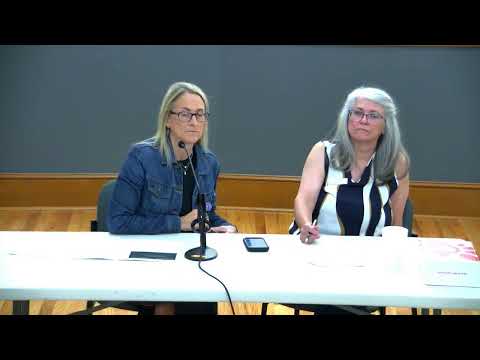
Chi Chi Odo, representing Youth Equipped to Succeed (YES), introduced the group’s two school programs and said YES now works in more than 130 Texas school districts, including Waxahachie.
Margaret Humphrey, a YES presenter, previewed Aim for Success, which begins by asking students to name goals and dreams and then frames risky behaviors as potential distractions from those goals. Humphrey described age‑appropriate content: contraception is discussed starting in seventh grade but not with sixth graders, and presenters emphasize that abstaining eliminates pregnancy risk. She cited CDC guidance in explaining that long‑term, mutually monogamous relationships are the lowest‑risk context for sexual activity and said sessions address teen dating violence, signs of abusive relationships, and how to seek help from trusted adults.
Humphrey also described how the program addresses sexually transmitted infections and related risks in an age‑sensitive way. She told the committee that presenters use interactive exercises — including a classroom game to illustrate infection prevalence — and that the curriculum notes asymptomatic infection and common STIs discussed in the program (chlamydia, genital herpes, and HPV).
In the Focus on Success presentation, Humphrey covered social media and technology risks, including objectification, sexting, revenge posting, deepfakes, and sextortion. She urged students to set boundaries, not share intimate images, and to report coercive or illegal behavior to trusted adults or school staff.
On logistics, presenters said a program can be condensed to 30 minutes but that 45–60 minutes is the "sweet spot." Schools can opt in to post‑presentation student surveys, but those surveys require parental permission; presenters also offer parent preview sessions — in person or virtual — so families can see the full content and ask questions before consenting.
The presenters said parent previews often increase opt‑in returns and suggested scheduling parent sessions earlier than student presentations. They also distribute QR codes and newsletter signups for ongoing communications with families.
The presentation closed with committee members and presenters discussing how to adapt timing and delivery (grade levels, class periods, or all‑grade assemblies) to district needs. No formal approval or contract was taken at the meeting; presenters invited districts to follow up for scheduling and pricing details.