Get Full Government Meeting Transcripts, Videos, & Alerts Forever!
Get email alerts on the Housing Policy topic
No spam. Unsubscribe anytime.
Councilmember Chantal Lewis proposes licensing and no‑solicit registry to curb predatory property wholesaling
Summary
Councilmember Chantal Lewis presented a draft bill to require a city licensing registry for residential wholesalers, create a homeowner 'no‑solicit' list, mandate disclosure forms and a cooling‑off period, and give Licensing & Consumer Protection authority to investigate and enforce penalties.
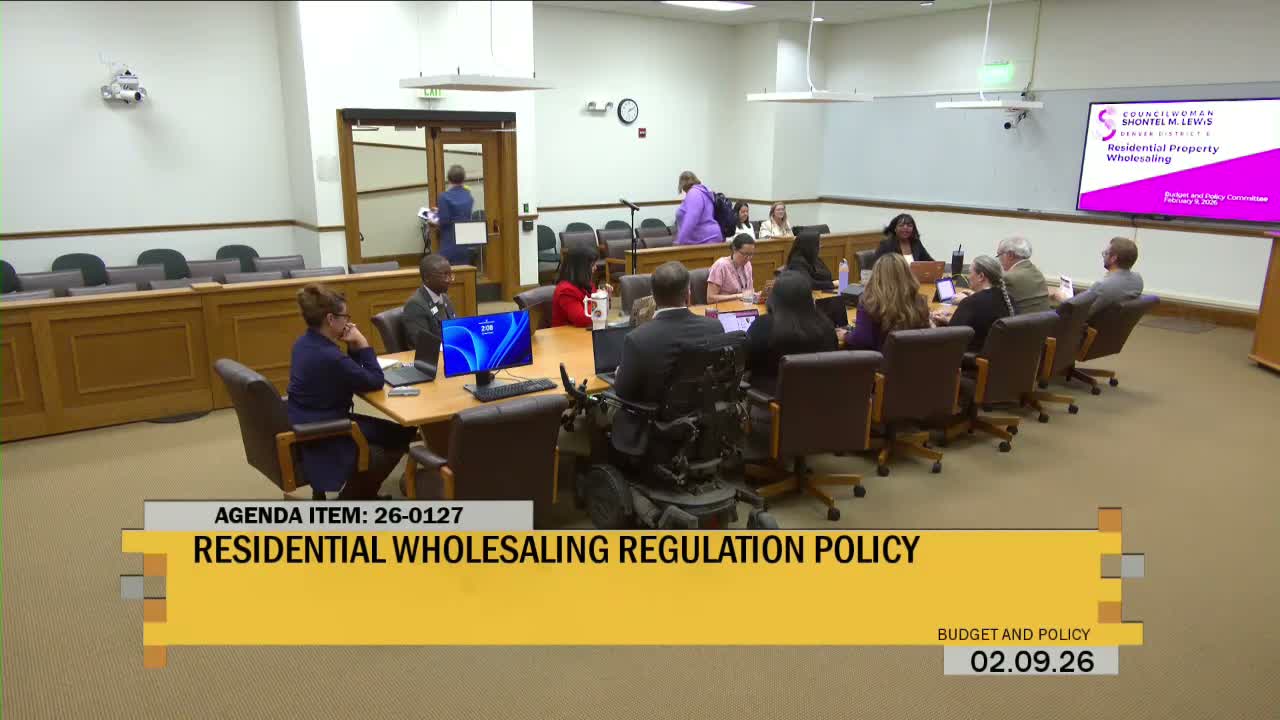
Councilmember Chantal Lewis introduced a bill concept the City should consider to regulate "residential property wholesaling," which she described as predatory home investing wherein investors buy homes with cash and resell them immediately or assign contracts for a profit. Lewis said the practice can depress sale prices in distressed neighborhoods and disproportionately affects vulnerable and nonwhite communities.
Citing national research, Lewis referenced a 2023 Drexel University Metro Finance Lab report that found homes sold to investors in a Philadelphia study sold for an average of $126,000 less than comparable sales to individuals. She said the practice raises equity and consumer‑protection concerns and provided local examples where properties were rapidly resold by chains of LLCs.
Lewis and policy aide Jesse Carey outlined the draft bill's proposed elements: a licensing/registry of residential wholesalers overseen by Licensing & Consumer Protection (LPC); a homeowner 'no solicitation' list maintained by LPC that would bar solicitations to listed properties; required use of standardized notice forms informing sellers of resources, fair‑value options and the right to consult legal counsel or a realtor; a three‑day waiting or cooling‑off period before an offer could be accepted; and civil penalties or fines for violating the no‑solicit list or operating without a license.
A Licensing & Consumer Protection representative said creating the license and the no‑solicit registry would require work with Technology Services (the city uses Acela for licensing records), one‑time technology costs and additional staffing for enforcement and complaint handling. LPC said it would also want an education campaign for consumers and recommended coordinated outreach with the mayor's office, Human Rights & Community Partnerships and the district attorney's office.
Council members asked whether the proposal would capture state‑licensed realtors who engage in similar activity and how the ordinance would interact with foreclosure or probate processes. LPC and staff said licensed realtors are regulated by the Colorado Real Estate Commission but the proposed city licensing aims to capture investors and LLCs that are not state‑licensed; enforcement details, licensing fees and the technical scope will be studied further.
No formal vote was taken; Lewis said the office will consult other municipalities and stakeholders (including title companies, housing counselors and legal aid) as the draft is refined.