Get Full Government Meeting Transcripts, Videos, & Alerts Forever!
Get email alerts on the Historic Preservation topic
No spam. Unsubscribe anytime.
City planner outlines 'We Are the Land' oral‑history project to center American Indian voices in Denver history
Summary
A city planner described 'We Are the Land,' a Landmark Preservation oral‑history and historic‑context project that gathered 17 oral histories, produced a documentary and a National Register nomination for the Denver Indian Center, and recommends language, signage and ongoing tribal collaboration.
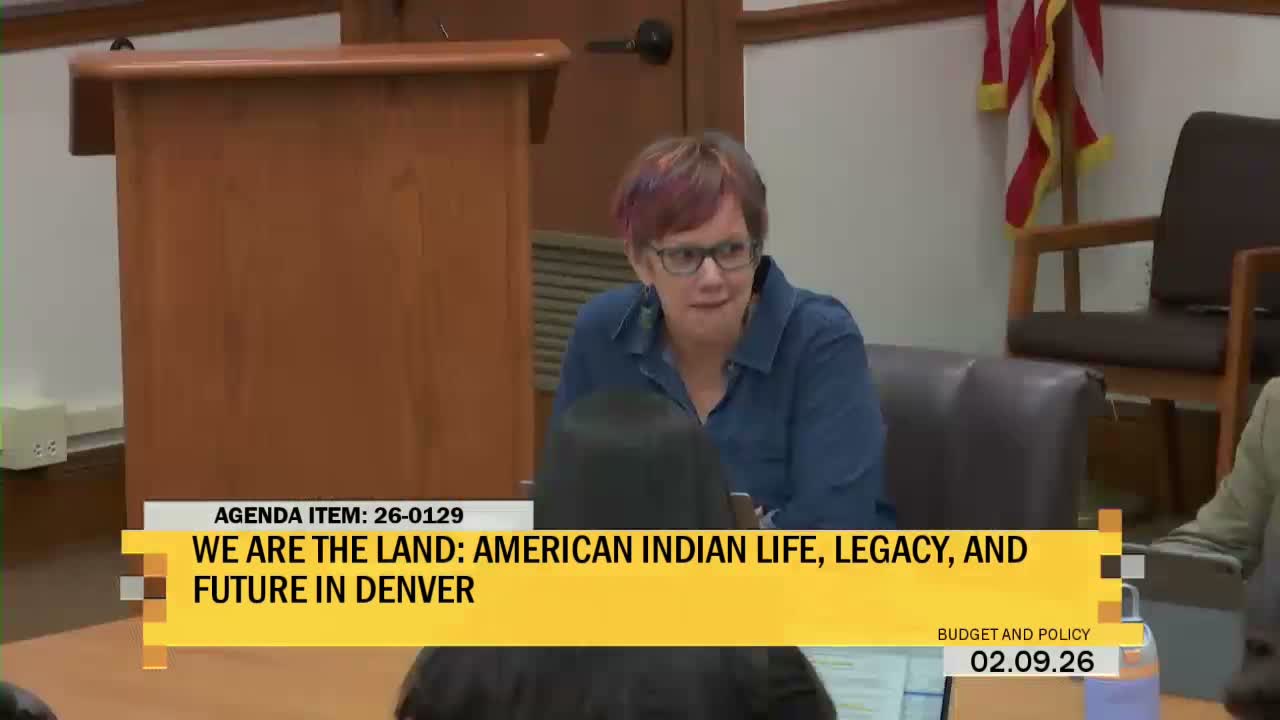
Abby Christman, principal city planner with Landmark Preservation and Community Planning and Development, told the Budget & Policy Committee that 'We Are the Land' is an oral‑history project intended "to center American Indian voices to tell a fuller story of Denver" that does not begin or end with the city's founding. The project documented living history, traditional knowledge and contemporary American Indian life and is the second installment in the agency's "Denver in Context" series.
Christman said the project team included Landmark Preservation as lead, Project Mosaic as indigenous consultants, and ERO Resources for research and writing. The project completed 17 oral histories, held two tribal convenings (October 2023 and October 2024), ran a youth art contest for chapter artwork and premiered an accompanying documentary the prior weekend. "We really had to think about history as cyclical," she said, describing a four‑hill framing used to organize the historic context.
Funding grew from an initial budget of about $77,000 to roughly $320,000 by project close, Christman said, after adding community engagement, tribal travel and honoraria, documentary production, audio transcription and design work. She described steps taken to make the work reciprocal, including honoraria, travel assistance for tribal representatives, community connectors, food at events and gifts for elders.
Christman said she prepared a National Register nomination for the Denver Indian Center, which "was officially listed on the National Register in December," and emphasized that many National Register listings are for local significance even when listed at the national level. She summarized community recommendations the team heard: maintain government‑to‑government relationships with tribes, incorporate American Indian languages and place names on signage, reintroduce native plants and stewardship in parks, develop land‑management partnerships with tribal nations, expand education and curriculum about native history, and create a permanent gathering place and community resources such as the American Indian Cultural Embassy.
Council members praised the project and asked staff to share the documentary and report with districts and community partners. Councilmember Stacy Gilmore noted follow‑up work with History Colorado on replacing the Camp Weld marker and encouraged continued community viewings. Christman said the project is intended as a starting point for deeper collaboration and potential future landmark designations and that copies of the report and a posted PDF are available on the Landmark Preservation website.
The committee did not take formal action on the project; council members requested further follow‑up and opportunities to screen the documentary in their districts.