Votes at a glance: Arizona Senate advances broad slate of House bills on water, education, zoning and public safety
Loading...
Summary
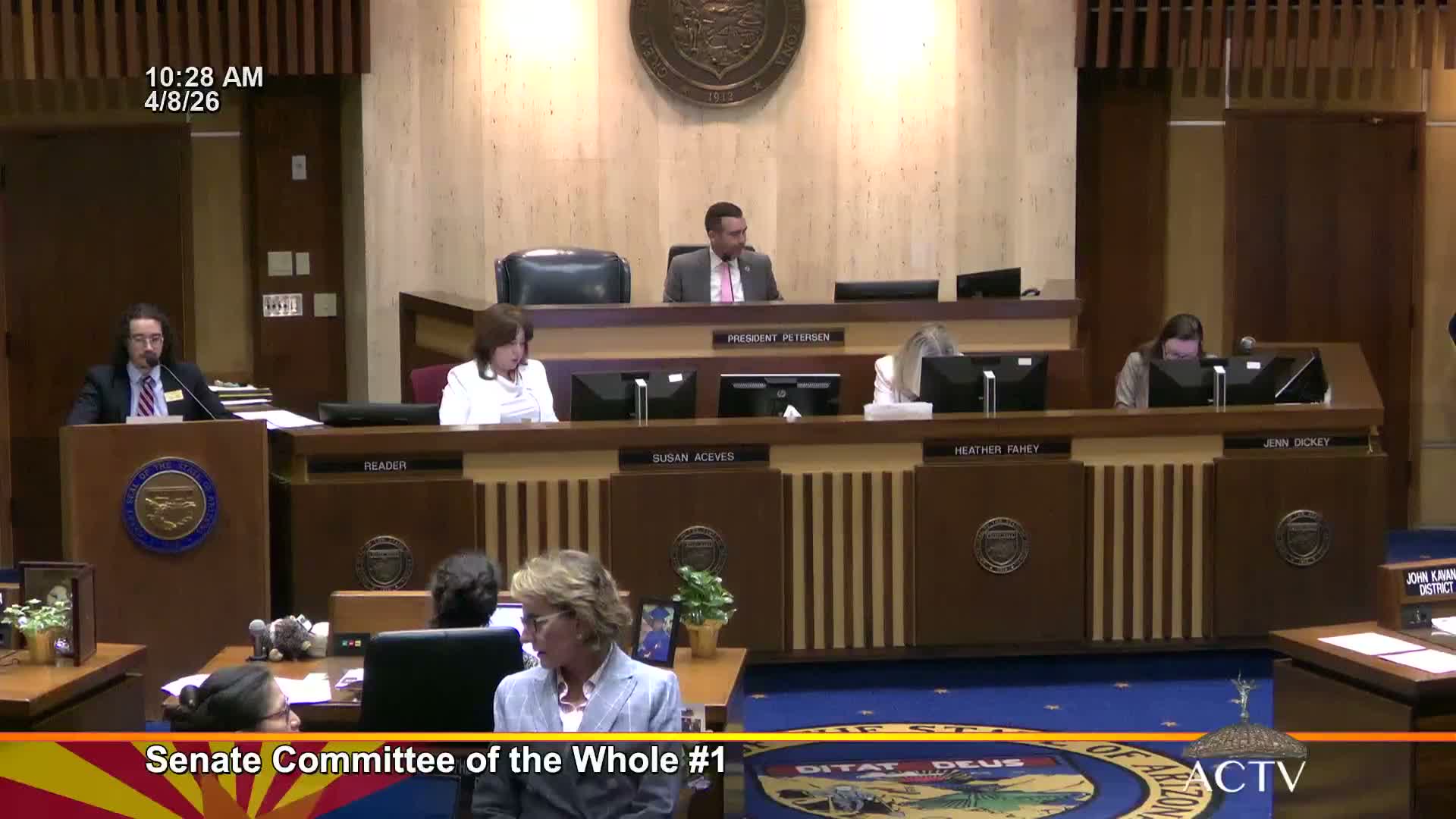
The Arizona Senate approved a large batch of House bills on April 8, 2026, including measures on water infrastructure and allocation, school activity permissions, zoning limits affecting small modular reactors, and multiple third‑reading items; several drew substantive floor explanations though most were advanced by voice or recorded vote and sent back to the House.
The Arizona Senate on April 8, 2026, recorded votes on a broad set of House bills spanning water policy, education rules, zoning and public‑safety statutes and transmitted most measures back to the House.
Key recorded outcomes from the floor session included:
- HB 20‑13 (air quality / ADEQ reporting of exceptional events): Passed, recorded vote 16 ayes, 12 nays, 2 not voting; supporters said the amendment limited reporting requirements to larger events, while opponents warned it duplicated federal processes.
- HB 20‑31 (temporary extension/application of certain water rights processes for the Wilcox AMA): Passed, recorded 16 ayes, 12 nays, 2 not voting; multiple senators argued the extension would delay needed groundwater conservation measures while others said local stakeholders needed additional time.
- HB 21‑02 and HB 21‑03 (improvements and water hauling/infrastructure-related measures): Both passed after debate; senators raised concerns that band‑aid measures like water hauling do not substitute for long‑term groundwater management.
- HB 27‑87 (prohibiting local cooperation with Mexican wolf reintroduction): Advanced after a division call and counted standing vote (15 ayes, 11 nays); the bill prompted argument over conservation funding and state‑federal cooperation.
- HB 26‑93 (expansion of association health plans): Passed 19 ayes, 9 nays, 2 not voting; proponents said it would expand small‑business options, opponents warned it could weaken essential health benefits.
- HB 27‑95 (restrictions on county zoning authority for small modular reactors): Failed to pass in recorded tally (15 ayes, 13 nays, 2 not voting); debate focused on local control and energy siting.
- Additional bills that passed with recorded tallies include HB 22‑26 (arrest-related statute changes; 28–0–2), HB 22‑62 (Arizona Geological Survey transfer; 16–12–2), HB 22‑78 (mining reclamation financial assurance; 16–12–2), HB 23‑78 (school facilities; 16–12–2), HB 25‑84 (workers' compensation related; 16–12–2), HB 26‑65 and HB 26‑66 (criminal statutes; 28–0–2 and 28–0–2) and HB 28‑76 (public meetings and proceedings; 25–3–2). Many of these bills were transmitted to the House following the recorded votes.
Several bills drew extended floor explanations. Senators opposing water‑related measures described the bills as temporary fixes that risked undermining long‑term groundwater protections; several senators in favor cited practical needs or local stakeholder concerns. On energy and zoning bills, opponents emphasized preserving county authority and local voice.
The Senate also appointed free conference committees where House and Senate versions differed and recessed to reconvene on April 9, 2026, at 10:00 a.m.