Get AI Briefings, Transcripts & Alerts on Local & National Government Meetings — Forever.
Senate advances amended HB 21‑33 after fierce debate over online‑image rules and First Amendment limits
Loading...
Summary
After hours of floor debate about free‑speech and child protection, the Arizona Senate passed an amended House Bill 21‑33 that adds verification and consent provisions for certain explicit or synthetic depictions. Opponents said the measure is vague and risks censoring parody; supporters said it protects minors and nonconsenting adults.
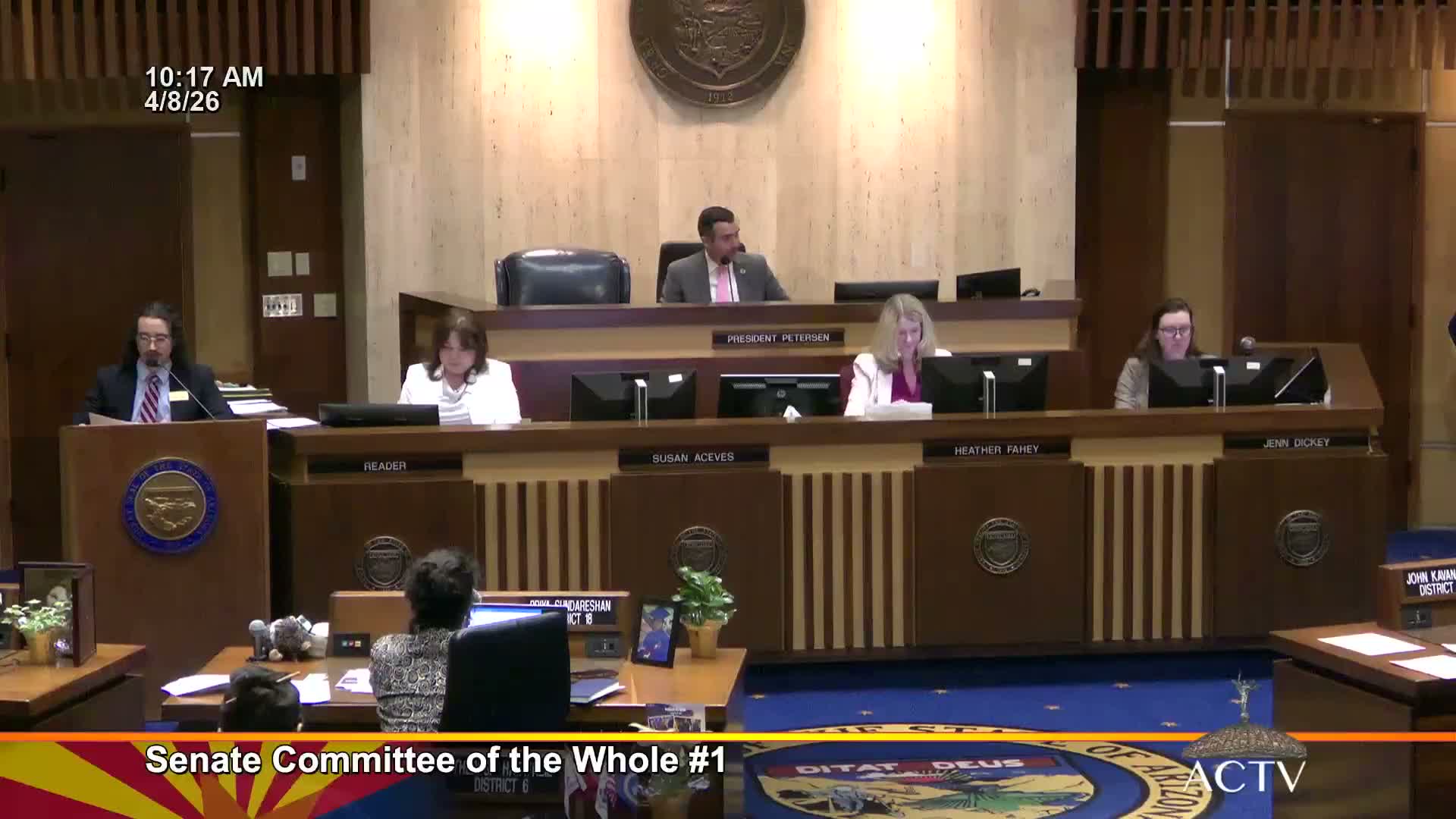
The Arizona Senate passed an amended version of House Bill 21‑33 on Tuesday after extended floor debate that centered on First Amendment concerns and the bill’s scope for online content. The measure, as amended, was given a ‘due pass’ recommendation by the Committee of the Whole and later passed in a recorded vote (16 ayes, 12 nays, 2 not voting).
Supporters said the bill targets exploitative or nonconsensual depictions and adds verification procedures for certain material. Senator Farnsworth moved a floor amendment that added a delayed effective date, saying, “This simply adds a delayed effective date of 12/01/2026.” The Senate adopted committee and floor amendments before advancing the bill.
Opponents warned the bill’s definitions and verification requirements are overbroad and could chill constitutionally protected speech, including parody and satire. Senator Ortiz argued the amendment “is vague and not clear” and said it could require consent from public figures to share parodies online. In floor remarks she warned the language could allow government censorship of parody, saying, “This is not a communist country that we live in.”
Senator Keough described the bill as “unworkable” and argued it would force broad verification obligations on media platforms and content producers, potentially reaching artistic, satirical and historical content. Other senators echoed concerns that the bill’s scope could sweep in lawful expression, and several cited organizations such as the Motion Picture Association and First Amendment advocates as opposed to parts of the measure.
Floor managers said the bill fills gaps in existing law by clarifying that certain exploitative images and synthetic depictions require verification and consent; they argued it is intended to protect minors and nonconsenting adults from harm. The Judiciary Committee amendment and the Schamp floor amendment removed a prohibition on retaining certain identifying information by commercial entities and expanded acceptable verification methods to include affidavits, copyright records and technical metadata.
After debate, the Senate recorded a final vote to pass HB 21‑33 as amended. The secretary recorded 16 ayes, 12 nays and 2 not voting; the bill was transmitted back to the House for further action. The sponsor did not take extended questions on the floor when asked to yield earlier in the debate.
The Senate also passed related housekeeping steps for other bills that were taken up that day and appointed conference committees where House and Senate versions differed. The chamber recessed and adjourned until Thursday, April 9, 2026, at 10:00 a.m.