Committee advances Cervantes bill to ensure ADU fees are proportional above 750 sq ft amid infrastructure concerns
Loading...
Summary
SB 1117, which would require impact fees on accessory dwelling units to be assessed only on square footage above 750 ft², was ordered to the Senate Local Government Committee 10–0 after supporters argued it removes a disincentive at the 750 ft² threshold and opponents (local governments and special districts) warned about funding for required infrastructure.
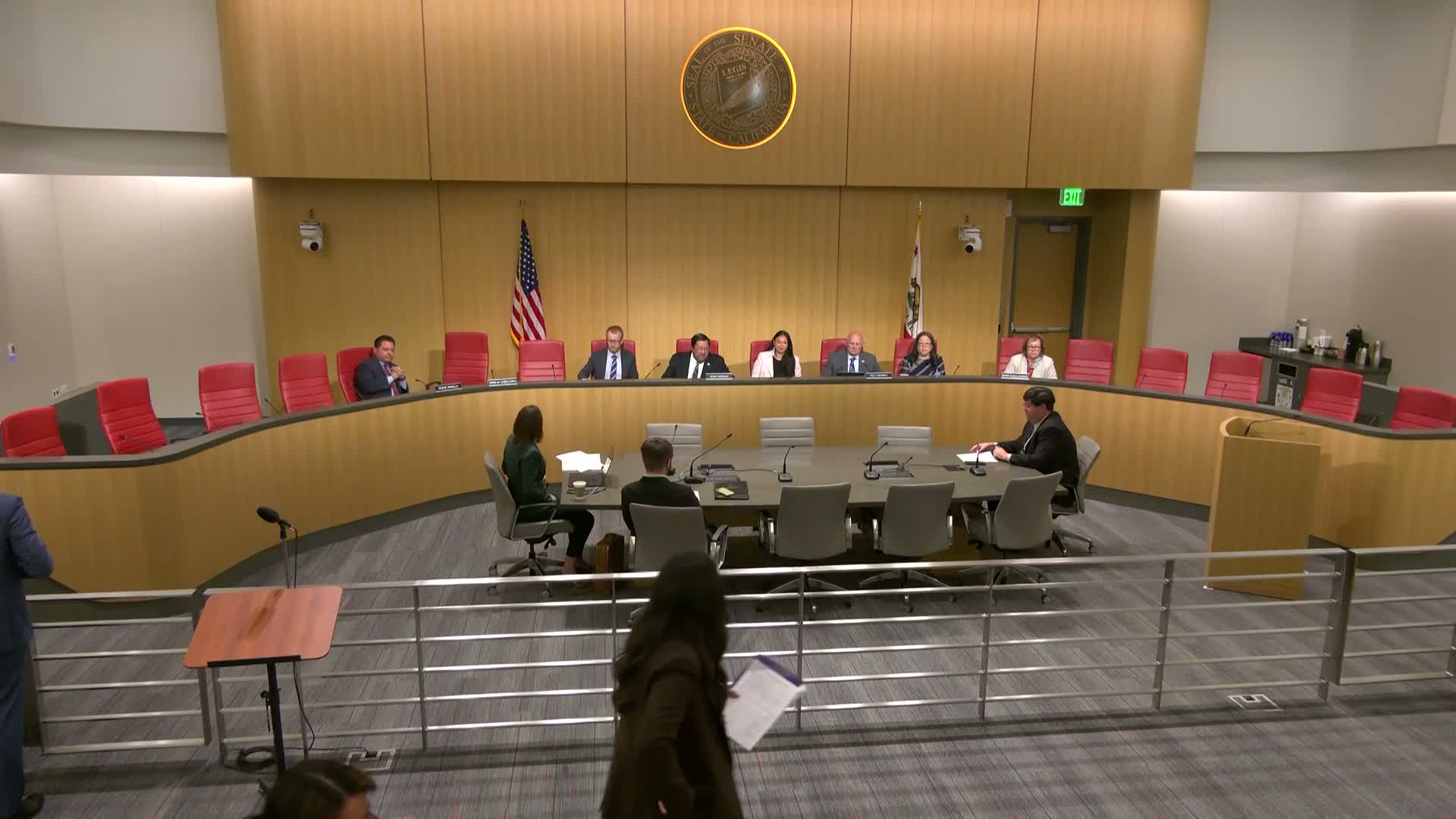
The Senate Housing Committee on April 7, 2026, voted unanimously to send SB 1117 to the Senate Local Government Committee. Senator Cervantes, the bill’s author, said the measure clarifies the way local governments calculate impact fees for accessory dwelling units (ADUs) so fees apply only to the portion of an ADU that exceeds 750 square feet.
Cervantes framed SB 1117 as preserving the existing 750-square-foot exemption while ensuring fees on larger ADUs are charged proportionally. “This bill does not increase, reduce, or alter existing 750 square foot exemptions in existing law,” he told the committee, adding the change will reduce unnecessary cost burdens on homeowners and promote continued ADU permitting.
Witnesses and homeowners described how current fee structures create a penalty for building slightly larger ADUs. Andy Lee, a trustee at the Jefferson Union High School District and a Pacifica resident, recounted building a small backyard ADU and said that had he tried to build an 800-square-foot unit he would have faced more than $22,000 in impact fees; he estimated SB 1117 would have reduced the marginal fee for the additional 50 square feet to about $1,400, which he said would have made building the larger unit financially feasible.
Ryan O'Connell, founder of HowToADU, said ADU production falls off sharply in the 751–1,000 square-foot range, a "cliff" homeowners avoid because of disproportionate fees. “There’s a disincentive to do that extra square foot,” O'Connell said, urging the committee to adopt the measure to encourage construction of two- and three-bedroom ADUs.
Local governments and special districts registered opposition or concerns. Jason Rhine of Cal Cities warned that mitigation and impact fees are constrained by nexus requirements and are the primary, legally restricted funding source for infrastructure such as roads, street lighting, parks, police and fire facilities. Representatives of the California Association of Recreation and Park Districts and California fire district organizations expressed similar concerns and said the bill could reduce funds available for required improvements.
Committee members expressed a mix of support for the bill’s narrow scope and concern about the infrastructure funding gap. Senator Padilla called SB 1117 “thoughtful and discrete” and signaled support; Vice Chair Sciarto and other members said the matter should be further examined in the Senate Local Government Committee to address local-government and special-district concerns.
The committee ordered SB 1117 to the Senate Local Government Committee on a 10–0 vote. Members said they expect additional discussions about nexus studies and infrastructure funding as the bill advances.