Senate committee advances Caballero bill to fix starter-home rules, citing implementation gaps
Loading...
Summary
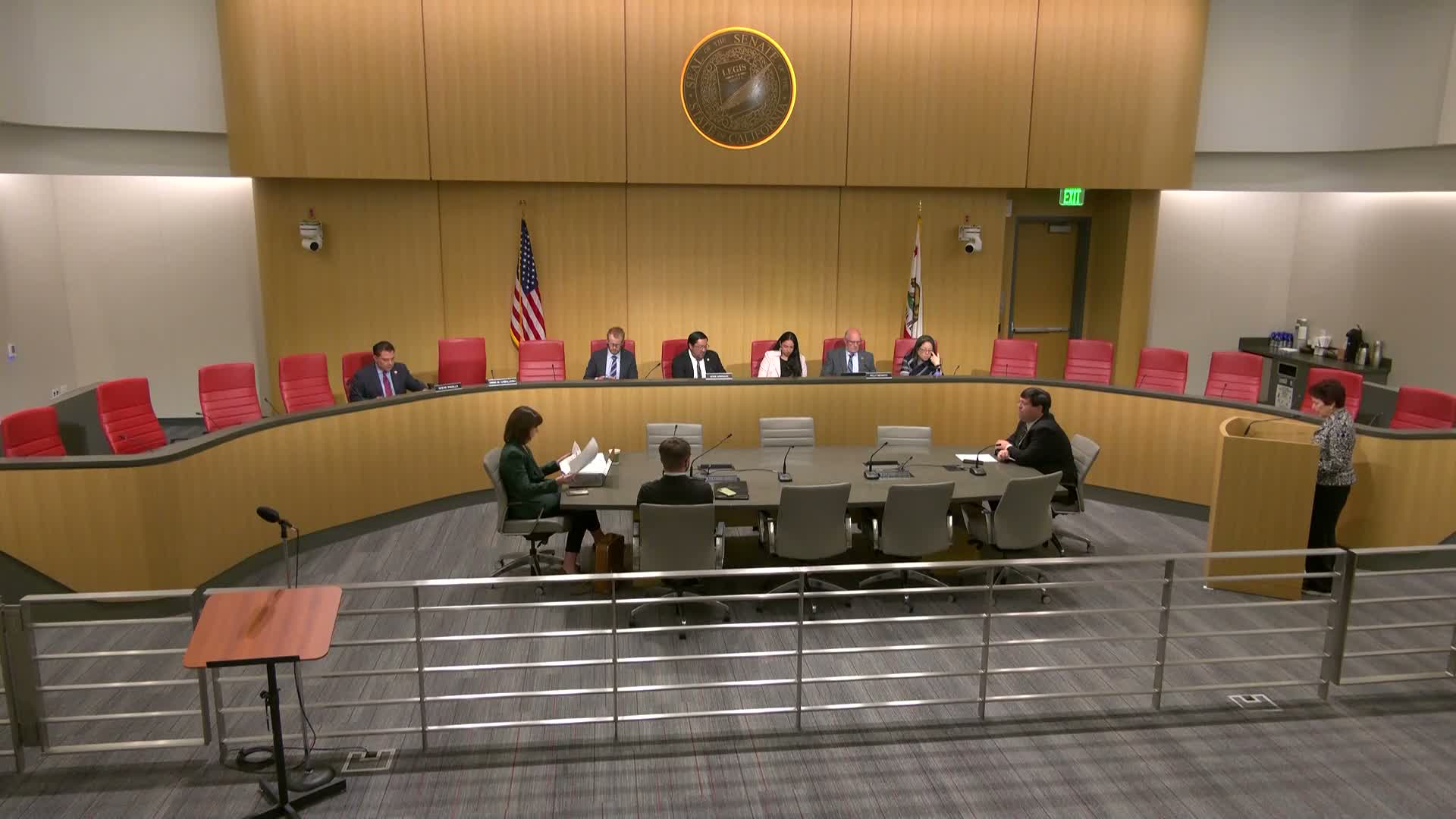
The Senate Housing Committee voted to send SB 1116, which clarifies development standards and enforcement for the Starter Home Revitalization Act, to the Senate Local Government Committee after proponents described zoning and HOA barriers that limit small infill projects.
Senator Caballero’s SB 1116, intended to strengthen and clarify the Starter Home Revitalization Act, was advanced by the California State Senate Standing Committee on Housing on April 7, 2026, and ordered to the Senate Local Government Committee. The committee recorded the action as out on a vote of 8 to 0.
Caballero told the committee the bill responds to two years of implementation feedback and real-world data showing local rules and inconsistent interpretation have reduced the law’s effectiveness. “SB 1116 clarifies development standards such as height, setback and density to prevent local rules from reducing allowable housing,” Caballero said, and the bill reinforces ministerial approval timelines, strengthens state oversight for local compliance, updates subdivision standards for small-lot development and addresses private restrictions such as HOA and deed provisions that can block housing.
Supporters said the changes are narrowly aimed at removing technical barriers that stop projects from moving forward. Nolan Gray, Senior Director of Legislation and Research at California YIMBY, said the bill reflects practical fixes from local governments, planners and builders and framed the need in affordability terms: “The median home in California is now over nine times the median household income,” Gray said, arguing the state needs more starter-home production.
Stephanie Yee, founder and CEO of AlphaX, described the implementation problems builders face, including local definitions and site constraints that prevent use of the existing streamlined pathways. She gave a San Jose infill example in which a project near city hall could not use the streamlined process because of local definitions of urban form and story/height limits. “There are too many homes that can still be lost because local government rules and outdated standards cannot reflect reality in infill developments,” Yee said, and she urged committee members to support the bill.
Several advocacy groups also testified in support. Kim Stone of Stone Advocacy spoke on behalf of Elevate California; Raymond Contreras of Lighthouse Public Affairs registered support for Abundant Housing LA and cosponsors; Joanna Prana Carvajal represented Unidos and other housing organizations.
Chair Senator Jesse Edehin opened for principal opposition witnesses but none were presented. Committee members thanked the author for the narrowly tailored approach and encouraged continued work with local stakeholders as the bill proceeds. Caballero closed by reiterating the bill’s targeted aim: to make the Starter Home Revitalization Act work as intended in practice and produce more starter homes.
The committee kept the bill on call while awaiting absent members earlier in the hearing; after the final roll call SB 1116 was ordered to the Senate Local Government Committee (vote recorded 8 to 0). The committee adjourned after completing the agenda.