Assembly approves AB 2180 to clarify water-rate formulas under Proposition 218
Loading...
Summary
On March 25, 2026, the California State Assembly passed AB 2180, which backers say will standardize how water agencies set proportional rates to comply with Proposition 218; opponents said the bill weakens voter protections and will invite litigation.
The California State Assembly on March 25, 2026, passed AB 2180, a measure intended to set clearer standards for how public water agencies calculate proportional water rates under Proposition 218, by a recorded vote of 41 yeas to 17 noes.
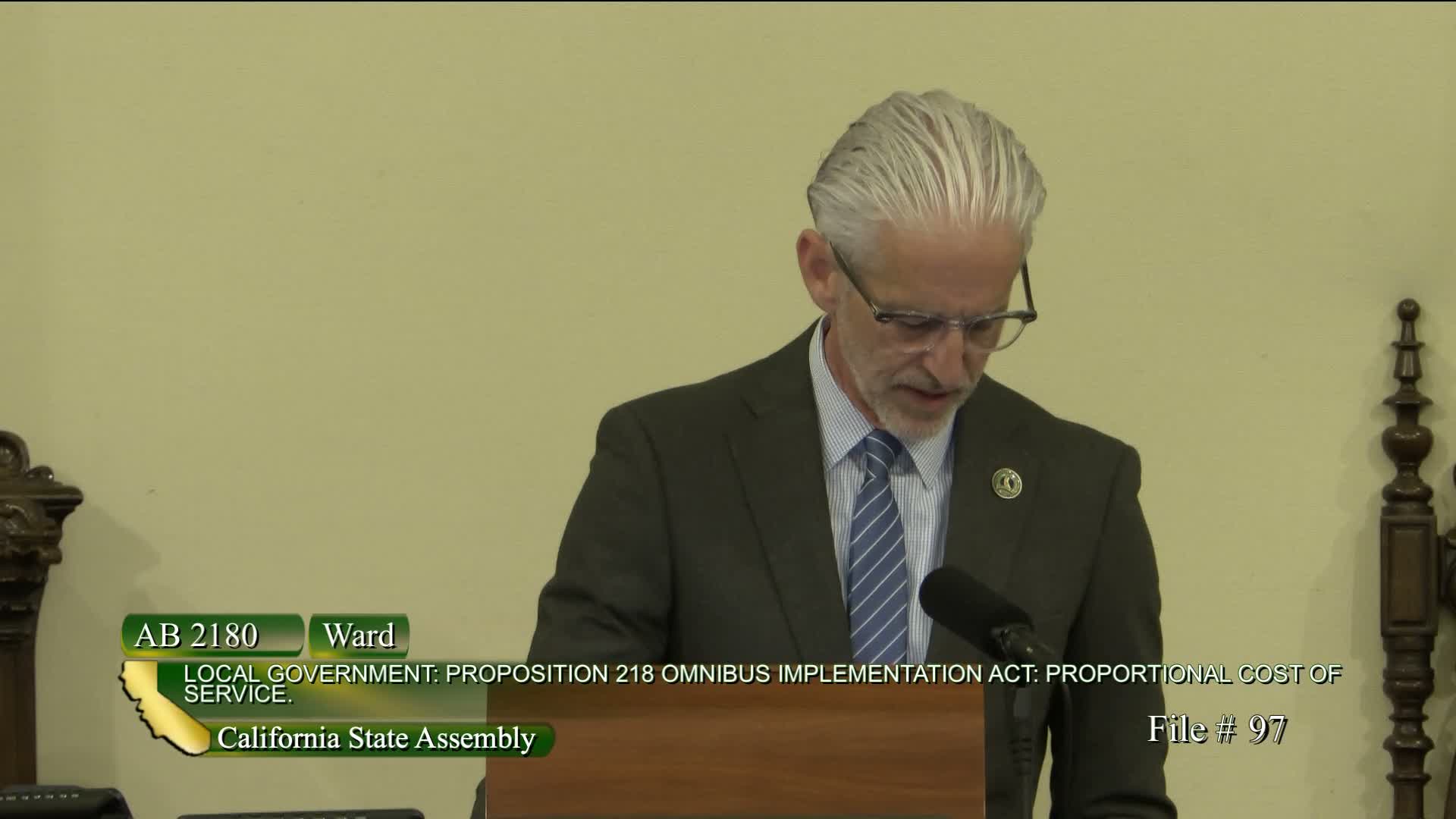
Assemblymember Ward, the bill's author, told colleagues AB 2180 "is gonna provide clarity, consistency, and practical framework consistent with long standing industry best practices for water agencies in setting proportional rates" and said the measure aims to reduce costly litigation and ensure low-use customers are not required to subsidize high-use customers. He described conflicting appellate decisions, including one involving Los Angeles, that have left water providers uncertain about compliant methodologies.
Assemblymember De Maio rose in opposition, saying, "This is not a bill that is consistent with Prop 218," and argued the measure would allow officials to "cook the books and overcharge rate payers," calling it "a tax, not a fee for service." He urged members to "Vote no on AB 2180 and uphold taxpayer protection under Prop 218," and warned the bill would prompt litigation that the state would lose.
Ward closed debate by reiterating that the bill reflects long-standing industry cost-of-service principles and presented an illustrative example of how high users can drive infrastructure costs; he asked members for an aye vote. After debate ended, the roll was opened and the clerk announced the tally: yeas 41, noes 17. The presiding officer declared the measure passed.
Why it matters: Supporters say AB 2180 would give water agencies clearer legal footing and reduce litigation costs by codifying acceptable methodologies for proportional-rate setting under Proposition 218. Opponents say the bill would undermine the voter protections Prop 218 was intended to ensure by permitting overly broad rate-setting that could shift costs onto low-use customers.
Next steps: The bill passed third reading on the Assembly floor; no effective or implementation dates were specified on the floor during debate. Further committee or enrollment actions and any subsequent steps toward chaptering were not discussed on the record.