Committee sends Safe at Home expansion for immigrant service providers to judiciary after debate over scope and free-speech protections
Loading...
Summary
AB 26 24 would extend the Secretary of State's Safe at Home address-confidentiality protections to immigrant-service providers, employees and volunteers in response to doxxing and threats; supporters described targeted harassment while some members raised concerns about definitions, journalistic exemptions and workplace/public-protest boundaries.
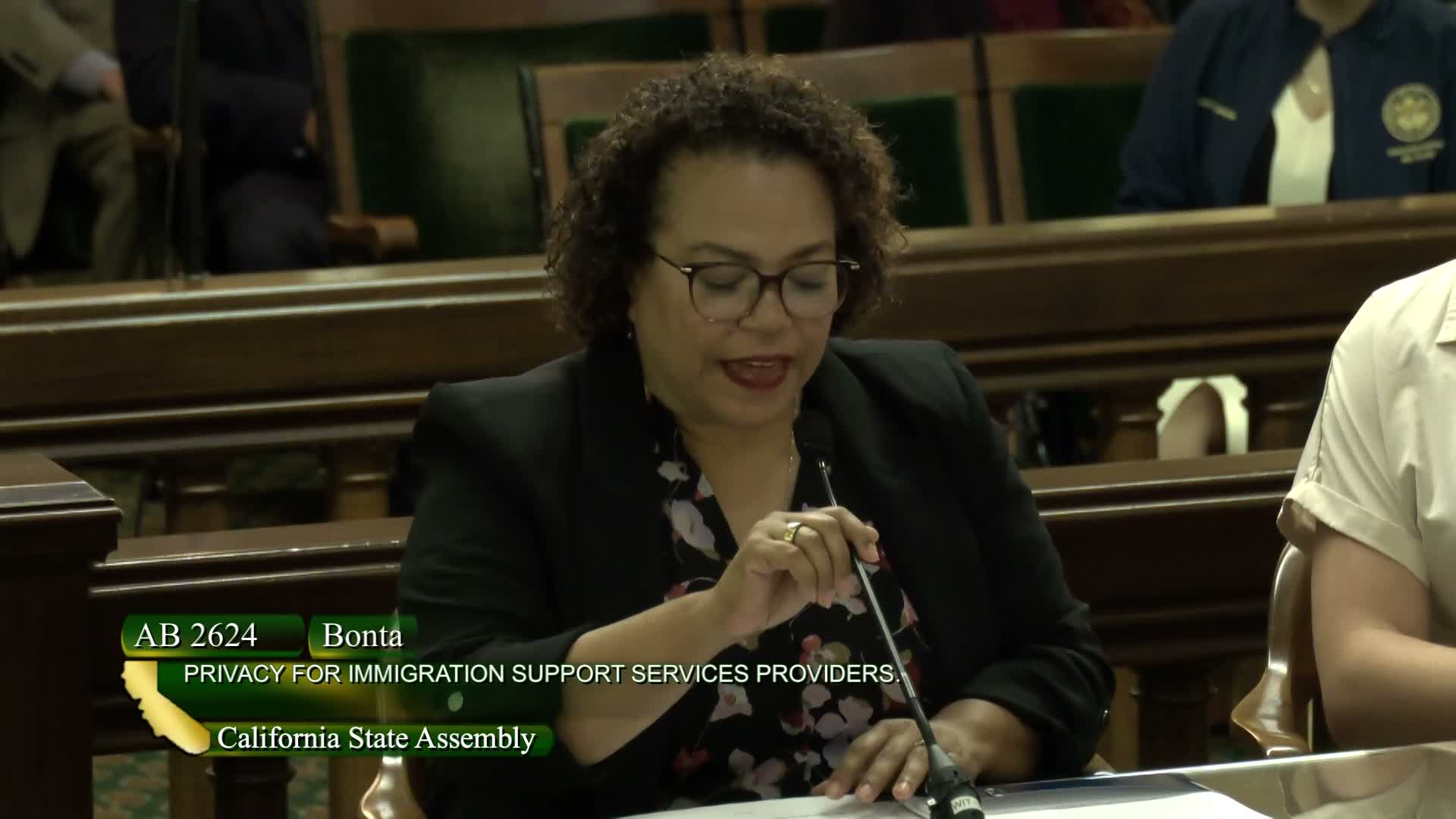
Assemblymember Rob Bonta (as introduced in the hearing) presented AB 26 24 to expand California's Safe at Home address-confidentiality program to include immigrant-service providers, their employees and volunteers, citing an increase in targeted harassment, doxxing and threats against organizations and staff.
Witnesses described a range of intimidation tactics. Cherry Javier, a fellow with the Solis Policy Institute, said the bill builds on a 30-year program at the Secretary of State's office to offer address confidentiality and substitute mailing addresses and urged a yes vote. Angelica Salas, executive director of the Coalition for Humane Immigrant Rights (CHIRLA), told the committee staff and volunteers have received death threats and that harassment has followed some staff to their homes, limiting organizations' ability to serve.
Opponents and some members raised constitutional and scope questions. Assemblymember DeMio asked whether the bill would effectively shield organizations or individuals that were the subject of investigations and whether journalists would be exempt. The author and other supporters said the measure requires applicants to show evidence of threats, harassment or violence and preserves lawful speech; they characterized the bill as targeted to protect workers facing credible threats. Members also debated whether workplace and public-record addresses should be shielded and asked for clarifying amendments.
The committee moved the bill as "do pass as amended" to the judiciary committee. The roll call produced a recorded outcome reported in committee as 11 yes and 2 no votes; the author and multiple members stressed the bill is intended to protect vulnerable service providers, not to block legitimate reporting or lawful protest.