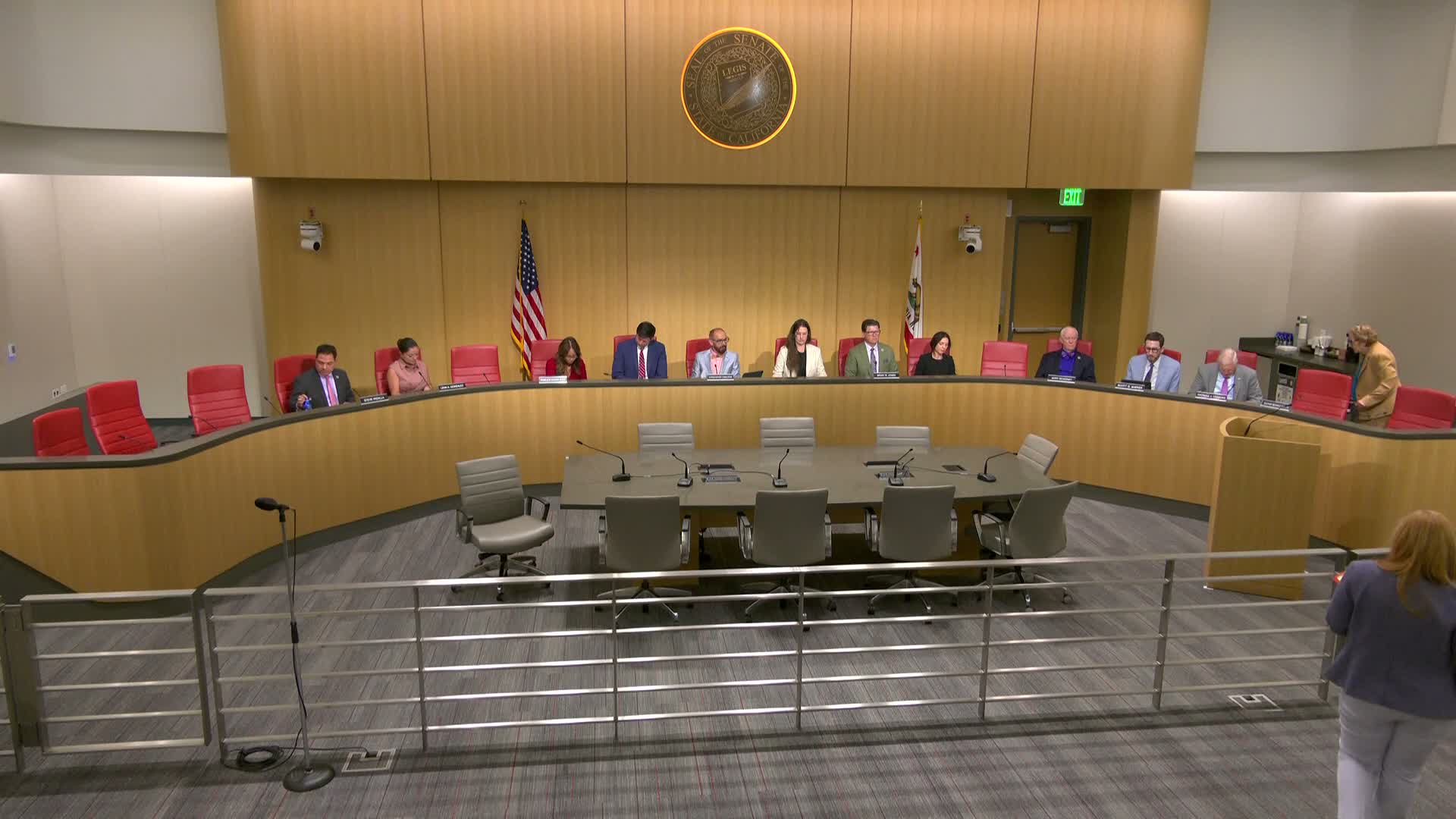
Panel sends ad-disclosure bill for synthetic performers to judiciary after debate over scope and exemptions
Loading...
Summary
SB 1050 would require clear disclosures when ads use AI-generated synthetic performers; labor and creative groups supported the transparency measures, while industry and advertisers urged a materiality standard and broadcaster exemptions to avoid over-labeling.
Sen. Ashby presented SB 1050, the Advertisement Integrity Act, which would require advertisements using AI'generated performers to include a disclosure if the depicted performer is synthetic. The author said the bill is intended to protect consumers from deception and protect creative workers from misappropriation of voice and likeness.
Michelle Hurd, secretary'treasurer of SAG'AFTRA (speaker 33), and Shane Guzman (Teamsters, speaker 34) testified in support, saying the disclosure protects workers and consumers and does not outlaw the technology. They urged reasonable, conspicuous disclaimers.
Opponents including the Motion Picture Association, TechNet, the Chamber of Commerce and advertising industry representatives cautioned the bill's definitions are broad, risk over'labeling benign CGI or incidental uses, and could conflict with existing false'advertising law and broadcast exemptions. They recommended adding a materiality standard (only require a disclosure where a reasonable consumer would be misled) and aligning with New York's 2025 law and existing false advertising exemptions for disseminators.
Several senators agreed there are elements that need work (materiality and alignment with existing exemptions) but expressed support for the principle of consumer disclosure. The committee passed the bill to judiciary (reported 7-0) and the author said she would continue discussions with stakeholders on narrowing and exemptions.