Senate committee advances SB 876 to overhaul disaster claims process after wildfire losses
Loading...
Summary
The Senate Committee on Insurance advanced SB 876, a broad package aimed at faster, fairer insurance recovery after declared disasters; supporters said it would speed payments and reduce survivor burdens while industry warned it could raise premiums and affect availability. The bill was passed as amended to the Judiciary Committee for further work.
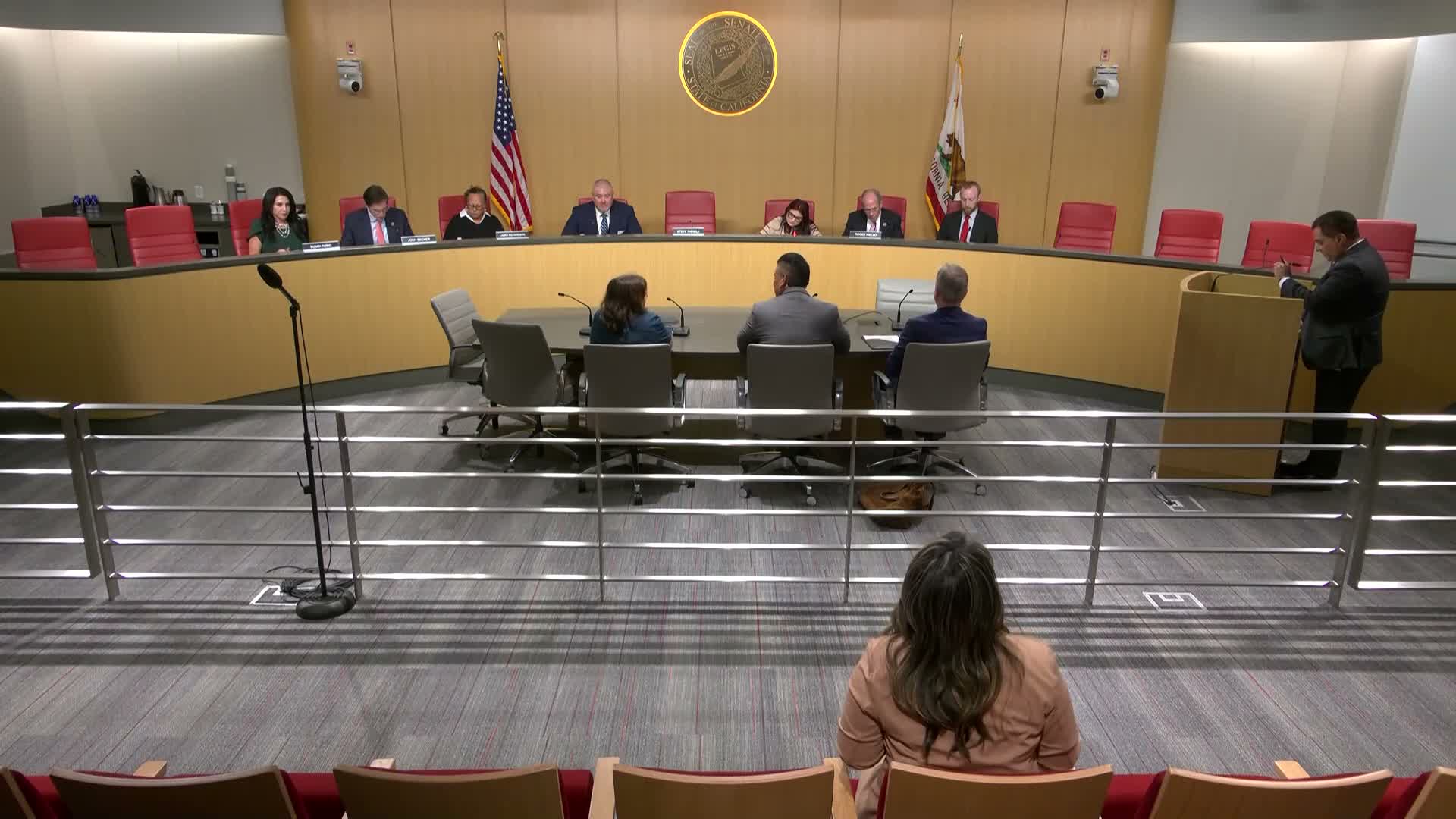
The California State Senate Committee on Insurance voted to pass SB 876, a wide-ranging measure framed by its sponsors as a survivor-centered overhaul of the disaster claims process, sending the bill as amended to the Judiciary Committee.
Senator Padilla, the committee chair, said the bill is intended to "fill critical gaps" exposed by recent catastrophic wildfires and to ‘‘cut red tape, improve payouts, and end delays’’ for families who lose homes.
Insurance Commissioner Ricardo Lara, who testified in support as a sponsor, told the committee SB 876 focuses on recovery rather than rates. "SB 8 76 is about one thing, making disaster recovery faster, clearer, and more fair for the families who have already lost everything," he said, summarizing several of the bill's consumer-oriented provisions: updated replacement-cost estimates based on current construction prices; requirements that insurers offer (but not force) extended replacement-cost options; expanded building-code upgrade coverage after declared disasters; deadlines for paying actual cash value and replacement cost benefits; five-day status reports from adjusters; required pre-disaster emergency response plans from insurers; and stronger penalties and restitution during declared disasters.
Consumers and advocacy groups backed the bill. Amy Bach, executive director of United Policyholders, told the committee her organization’s post-fire survey data showed persistent underinsurance: "After the LA fires, only 7 percent of the people who answered our survey said they had enough insurance," she said, arguing the bill would reduce burdens such as having to itemize every lost article and would improve continuity by keeping one adjuster on a file where feasible.
Industry witnesses urged more narrow changes and warned of statewide affordability and availability consequences. Denny Ritter of the American Property Casualty Insurance Association said the measure contains "more than 20 policy provisions" that, taken together, could "materially increase the cost of insurance and reduce flexibility in an already fragile insurance market." A trade representative for the Personal Insurance Federation told the committee their analysis suggested premiums could rise by “15 to 20 percent” on average — roughly $200 to $350 per year — and much more in high-risk areas.
Lawmakers pressed both sides on tradeoffs. Committee members repeatedly asked whether automatic triggers in declared disasters — such as doubling additional living expense (ALE) limits or requiring fuller contents payouts — would be optional offers or mandatory benefits that raise costs. Commissioner Lara and the bill's author said some elements would be mandatory triggers during declared total-loss disasters, while others (notably the 50% extended replacement-cost buffer) would be an offer the consumer could buy. The commissioner also emphasized that insurers must submit rate filings under the Sustainable Insurance Strategy (SIS) and that many rate filings are under active review, adding that the department is working to meet statutory 120-day timelines.
Members also focused on operational issues survivors cited repeatedly: adjuster turnover and the need for continuity (what witnesses called "adjuster roulette"). Deputy Commissioner Tony Signorelli explained there is currently no uniform limit for terminating ALE after repairs; survivor groups asked for a 15-day grace period after a home is declared habitable so families can move belongings and complete arrangements.
On contents coverage, the committee debated a proposal that would require insurers to pay policyholders the full contents limit after a declared disaster total loss without requiring an itemized inventory. Industry witnesses warned such a rule could fundamentally change underwriting and pricing; consumer advocates said survivors need simpler, trauma-reducing payouts when everything is gone.
After extended questioning and discussion, Senator Richardson moved the bill as amended. The clerk called the roll and the committee recorded the vote, passing SB 876 as amended to the Judiciary Committee; the chair left the file open to add one member’s vote later. The committee did not finalize an actuarial cost estimate in the hearing; stakeholders and the department committed to continued negotiations and further work in subsequent committees.
What happens next: SB 876 goes to the Judiciary Committee for further consideration; the author and the Department of Insurance said they will continue to engage stakeholders to narrow scope and address affordability and operational concerns.
Votes at a glance: SB 876 — Motion: pass as amended to Judiciary; mover: Senator Richardson; outcome: passed as amended to Judiciary (roll-call recorded in committee minutes; one member was held on call to be added).