Get AI Briefings, Transcripts & Alerts on Local & National Government Meetings — Forever.
Department of Cannabis Control seeks new Redding enforcement office, hemp enforcement and IT integration
Summary
DCC requested funding to add a northern field office and sworn investigators to target the illicit cannabis market, a civil enforcement unit and lab/test capacity to implement AB 8 for hemp cannabinoids, and multi‑year funds to integrate legacy licensing systems; legislators asked about measurement, backlog and consumer outreach.
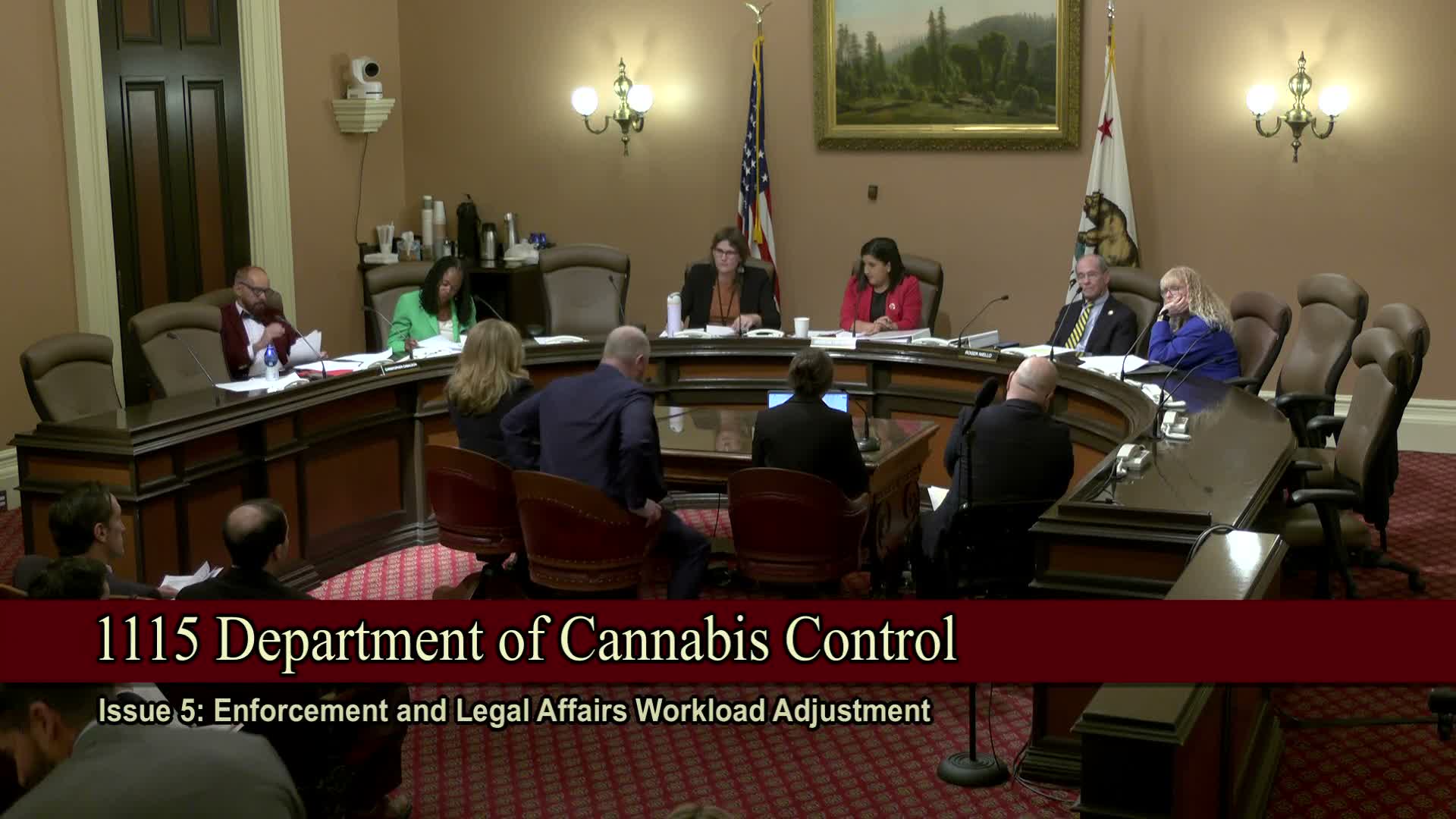
Clint Kellum, director of the Department of Cannabis Control, told the Senate subcommittee that the department’s proposals would strengthen law enforcement capacity against a persistent illicit cannabis market and modernize its licensing systems.
Kellum said that if the department’s budget proposals are approved its total budget would be roughly $198,000,000, funded by licensing fees and cannabis excise tax revenue. He described a law‑enforcement plan to increase the legal market’s share of consumption and to target organized illicit networks that produce, distribute and sell untested or mislabeled intoxicating products.
The DCC requested a Redding‑area field office with eight sworn investigators and three non‑sworn support positions to reduce travel time and improve complex, multijurisdictional investigations in Northern California. DCC witnesses said the agency currently receives about 1,500 complaints annually and closes roughly 400 cases a year, leaving an estimated backlog of 4,000 illicit‑market cases that grows by roughly 1,100 annually.
On hemp, DCC asked for resources to implement Assembly Bill 8—closing market loopholes for intoxicating hemp cannabinoids and integrating hemp into the cannabis supply chain by 2028. The proposal would fund a civil enforcement unit focused on online sales into California, field testing equipment, lab upgrades to detect synthetic cannabinoids, and trace‑system updates.
DCC also proposed a multi‑year IT modernization to integrate legacy licensing platforms so businesses and staff stop entering duplicate records and the department gains end‑to‑end data visibility. LAO and members asked how DCC will measure enforcement success, whether the Redding office would increase referrals and case counts, and how DCC coordinates with local, federal and other state agencies; DCC said enforcement is one tool among many and recommended a whole‑of‑government approach including consumer education, tax policy and prosecution of financial crimes.
The subcommittee held the items open for follow up and requested additional data on case outcomes, seizure statistics, and the projected effect of staffing on backlog reduction.