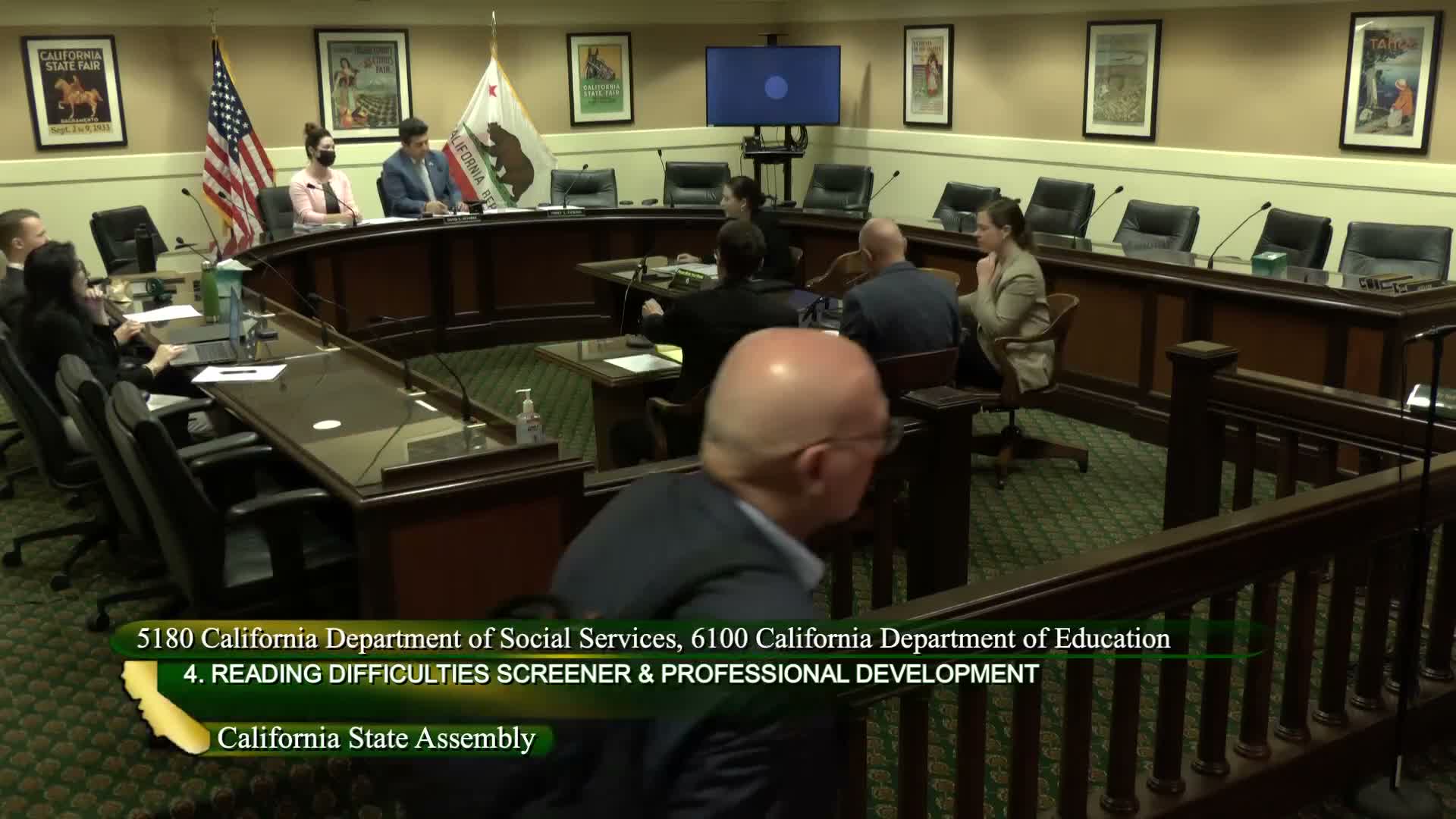
Assembly hears split on $40M proposal to fund reading screeners while debate swirls over timing
Loading...
Summary
The governor proposed $40 million in one‑time Prop 98 funds to support statewide implementation of universal K–2 reading‑difficulty screeners; department officials said delaying the formal risk‑identification screener until after 91 school days in kindergarten (46 for grades 1–2) would reduce over‑identification, while many advocates, literacy groups and parents urged preserving early screening windows so struggling readers receive timely intervention.
The committee’s discussion on reading‑difficulty screening centered on two linked questions: whether the state should provide $40 million in one‑time funding to support screener implementation and whether statutory language should restrict the earliest date when a screener that flags a student as “at risk” may be used.
A Department of Finance witness described the governor’s proposal for $40,000,000 in one‑time Proposition 98 funds to help local educational agencies cover screening administration costs and technical assistance while mandate claims are adjudicated. The DOF representative also explained proposed trailer‑bill language that would require local agencies to wait until at least the 91st school day before administering the screener used to identify kindergarten students as at‑risk and 46 days for first and second grade. The stated intent was to reduce over‑identification that could result from screening students before they have experienced adequate classroom instruction.
The Legislative Analyst’s Office recommended rejecting the additional targeted funding for this purpose, arguing many districts already received substantial state one‑time support for initial implementation and that discretionary block grants would offer more flexibility.
CDE and other supporters of the governor’s language said the proposed dates were based on preliminary screener data showing a decline in the share of students flagged as at‑risk after several months of instruction; CDE also emphasized that the change would not prevent universal observation, early instruction or the use of other assessments earlier in the year.
Opponents — including literacy advocates, district officials, parents and special‑education advocates — warned delaying the formal risk‑identification screener could postpone intervention for students who need help. “If we find them and then later on in a year, we find out that those difficulties have been mitigated, that is the whole point,” said Kareem Weaver of Fulcrum (literacy nonprofit), urging early screening and support. Multiple speakers asked the committee to preserve the $40 million line and to allow screening windows that include early, mid‑ and end‑of‑year checks so districts can measure growth.
The committee held the issue open for further evidence and asked DOF and CDE to provide the underlying data behind the proposed timing and the costs that local agencies face for ongoing screener administration and teacher training.