Get Full Government Meeting Transcripts, Videos, & Alerts Forever!
Get email alerts on the Tax Credit Cost Of Living topic
No spam. Unsubscribe anytime.
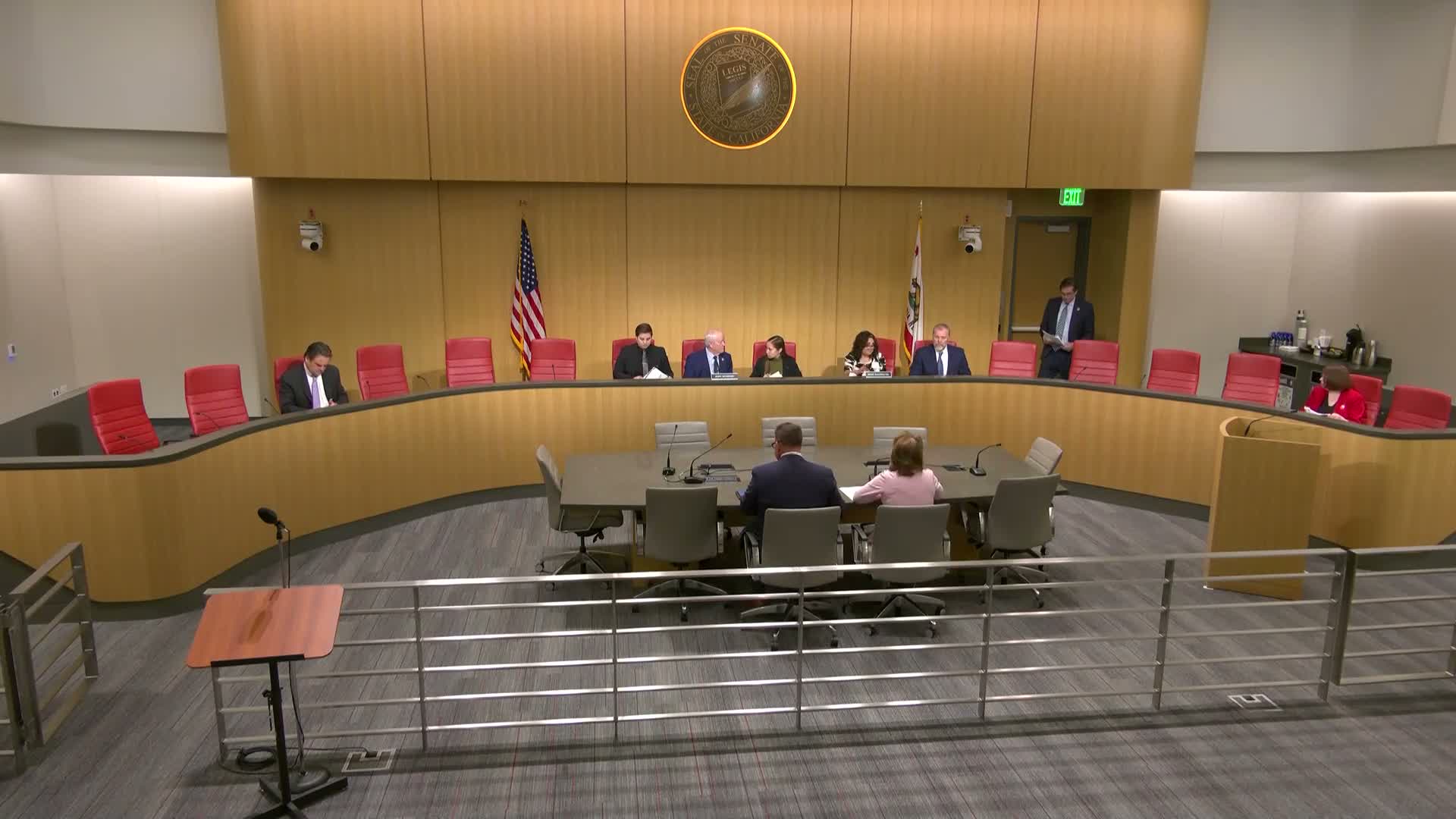
Senator Grove's cost-of-living tax credit faces opposition over state budget impact; committee denies immediate passage
Summary
Sen. Grove presented SB 1277 to create a graduated, refundable cost-of-living tax credit. Supporters said it would deliver immediate relief to struggling Californians; opponents including the California Teachers Association and California Tax Reform Association warned it would strain the general fund and invite fraud. The committee initially failed to advance the bill and granted reconsideration.
Senator Grove introduced Senate Bill 1277 as a graduated, income-based cost-of-living tax credit intended to provide immediate cash relief to families coping with high housing, energy and transportation costs. "Senate bill 12 77 establishes the California cost of living tax credit to help Californians cope with the state's persistently high cost of living," she said in opening remarks, citing estimates of high housing premiums and rising utility bills.
Supporters at the hearing argued the credit would be an efficient, targeted way to help households. Lance Christiansen of the California Policy Center told the committee the measure would place "direct graduated relief into the hands of Californians who need it most," pointing to income and migration data he said show residents are burdened by state costs.
Opposition came from fiscal and education groups. Danny Kando Kizer of the California Tax Reform Association argued California's progressive income tax and existing child and earned-income tax credits already deliver relief and warned that refundable credits are difficult for the Franchise Tax Board to monitor, saying they can encourage "gaming of the tax system." Michelle Warshaw of the California Teachers Association reiterated CTA's general opposition to tax credits that reduce the general fund and highlighted Proposition 98 education funding pressures.
Committee members probed both the policy goals and fiscal trade-offs. Senator Grayson thanked the author for the effort but said he was "having a hard time being able to reconcile how the cost and the benefit weigh out," noting concerns about impacts on education funding and the state's budget balance. Senator Grove and supporters pointed to examples of constituents making painful trade-offs and argued the credit would help keep families in California.
After extended questioning and public comment, the committee held a roll call on advancing SB 1277. The motion to pass the measure in that session failed in the recorded roll call (the transcript records a 1 to 4 outcome on that motion), and the chair granted a motion for reconsideration so the author may continue to work with committee staff.
The committee record shows debate focused on three central uncertainties: the near-term fiscal cost to the general fund, the administrative and anti-fraud safeguards for a refundable payment, and the degree to which the credit would overlap with existing state credits such as the earned-income tax credit.
Next steps: SB 1277 was not advanced at this hearing; reconsideration was granted. The author indicated a willingness to refine details and work with committee members on fiscal impacts and fraud mitigation.