Get Full Government Meeting Transcripts, Videos, & Alerts Forever!
Get email alerts on the Rural Telecom topic
No spam. Unsubscribe anytime.
Bill to extend High Cost Fund A and B to 2033 advances with telecom industry support
Summary
SB 1191 would extend the sunset for California High Cost Fund A and B until Jan. 1, 2033, to preserve subsidized telephone service in rural high‑cost areas; telephone carriers and USTelecom testified that the fund underpins 911 connectivity in remote exchanges.
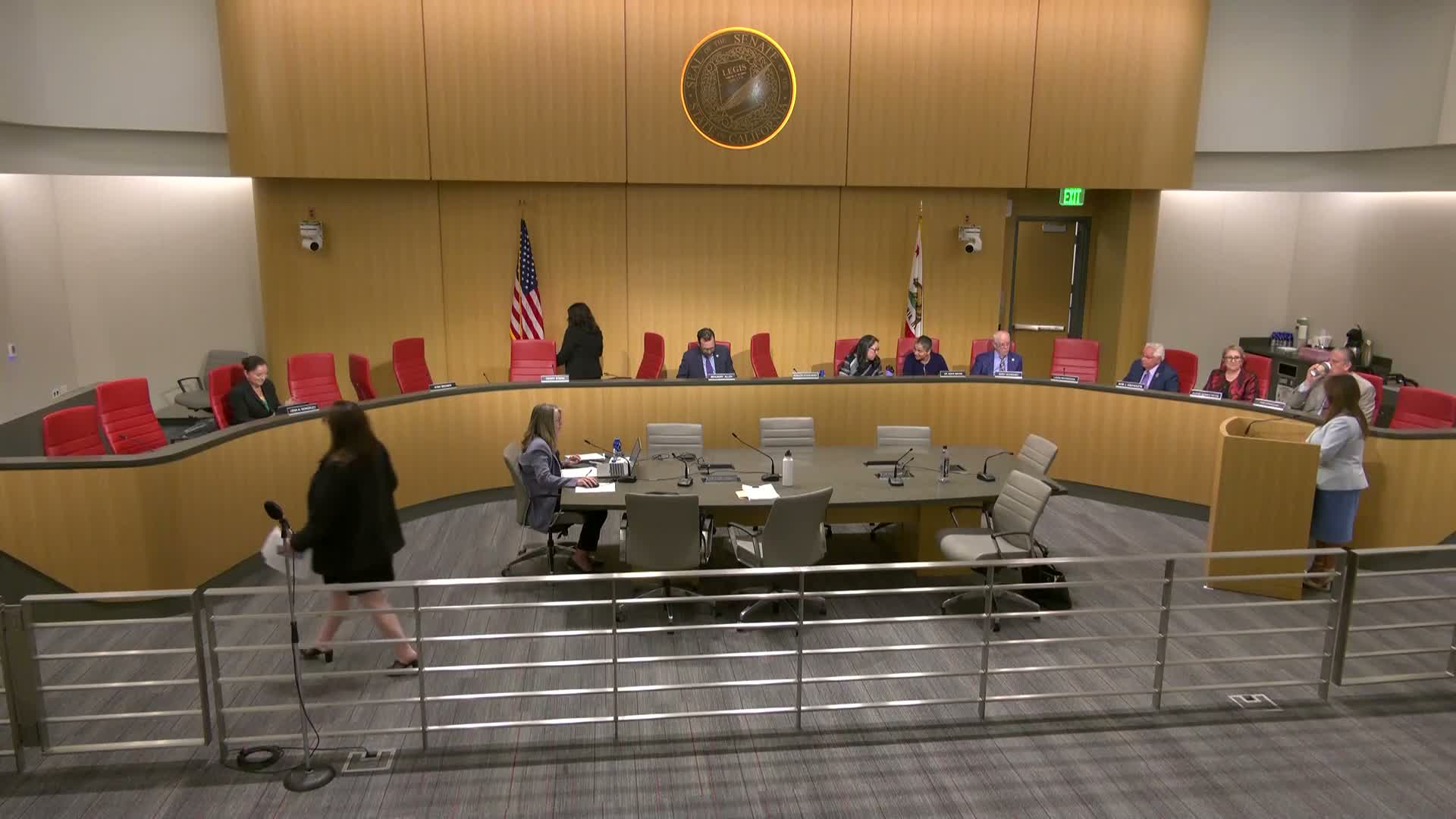
Sen. Ochoa Bogue presented SB 1191 to extend the sunset date for the California High Cost Fund A and B programs by five years to Jan. 1, 2033. The author said these universal programs are essential to ensuring affordable basic telephone service in rural and high‑cost areas and to preserve emergency connectivity.
Eric Votaw, CEO of Varcom and DuCor Telephone Company, described serving remote exchanges with sparse populations and mountain communities where some areas lack commercial power. “The California high cost fund A makes it possible for us to provide access to telecommunication services at rates that are affordable and comparable to what urban customers pay,” he said, adding that the fund helps ensure customers can dial 911.
Yolanda Benson of USTelecom testified that the fund is supported through a surcharge on telephone bills rather than general fund expenditures and estimated the surcharge at roughly two cents on her bill; multiple independent telephone companies and associations registered support. The committee accepted amendments and moved the bill to Appropriations with a recorded vote in favor.
Senators asked about the program’s cost and administration; witnesses explained the funds are administered by the PUC and collected as a surcharge on phone bills rather than drawn from the general fund.