Get Full Government Meeting Transcripts, Videos, & Alerts Forever!
Get email alerts on the Distributed Energy Resources topic
No spam. Unsubscribe anytime.
SB 913 would let aggregated home batteries and devices compete in RA market, sponsors say
Summary
Sen. Becker’s SB 913 seeks CPUC rule changes so aggregated distributed energy resources can bid into resource adequacy, expanding participation for home batteries and customer‑sited devices and promising cost and reliability benefits according to supporters.
Sen. Becker presented SB 913, the Clean Local Power Act, to allow aggregated customer‑sited distributed energy resources (DERs) to compete on a level playing field in California’s resource adequacy markets. The bill directs the CPUC to update rules so device‑level performance can be measured, multiple devices can enroll, and aggregations can export to the grid.
Californians for clean energy and aggregator groups testified in support. Caleb Weiss of Environment California, speaking for a sponsor, highlighted growth in behind‑the‑meter batteries and electric vehicles and argued that unlocking those resources could improve affordability and reliability. ‘‘We now have the technology to aggregate these resources in our homes and throughout our state so that they can provide clean, local energy to our communities during times of high energy demand,’’ Weiss said.
RenewHome’s Eric Lyon and John Hart of the California Solar and Storage Association described aggregation and forecasting practices that reduce reliance on single sites and allow aggregators to compensate participating homeowners. Committee members asked about reliability, opt‑in enrollment, compensation and the potential for kinks during early deployment; witnesses described market safeguards and opt‑in consent mechanisms.
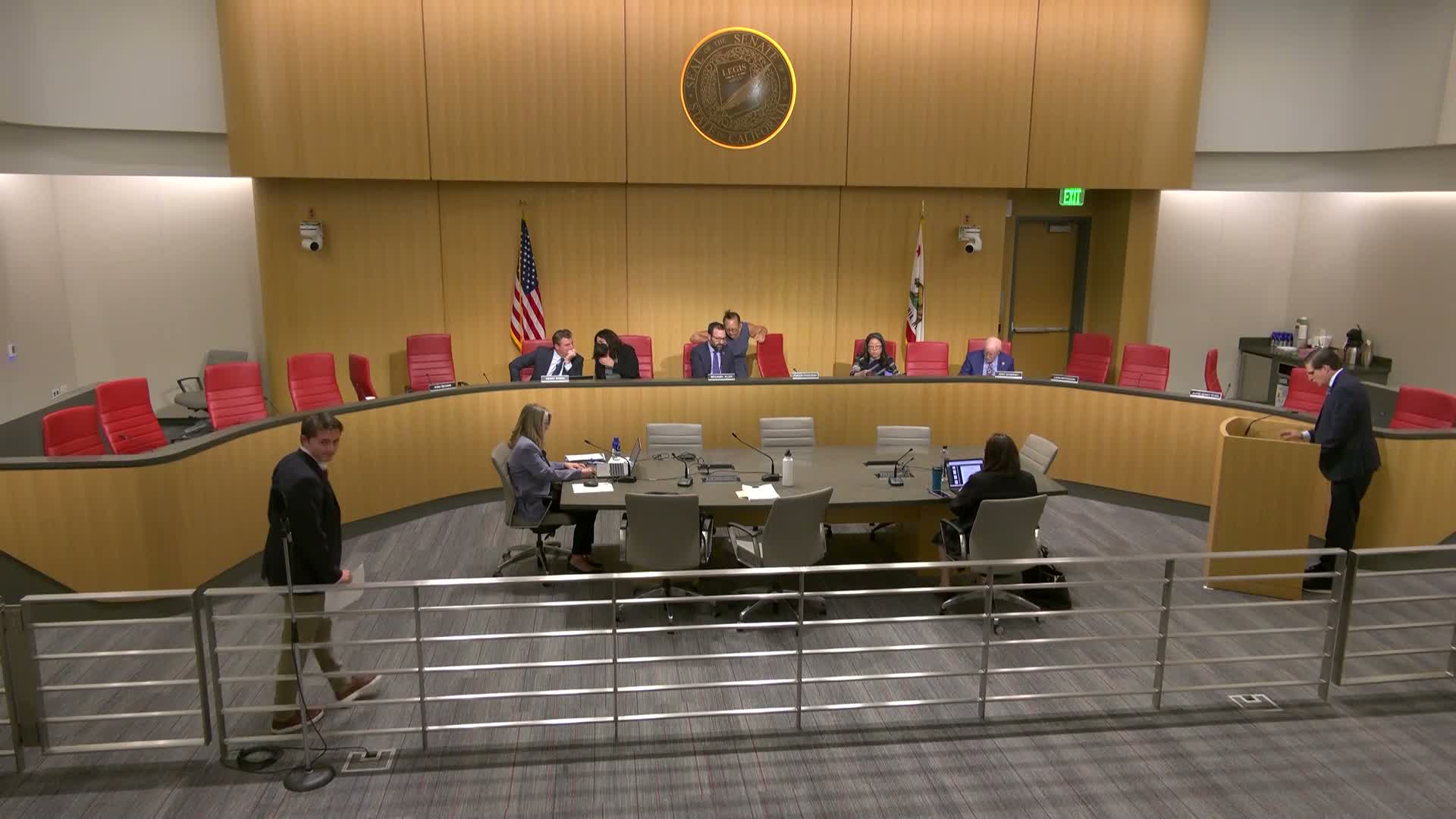
Sen. Stern and other members expressed support; the committee accepted amendments and recorded a due‑pass referral to the Committee on Privacy, Digital Technologies and Consumer Protections for further action.