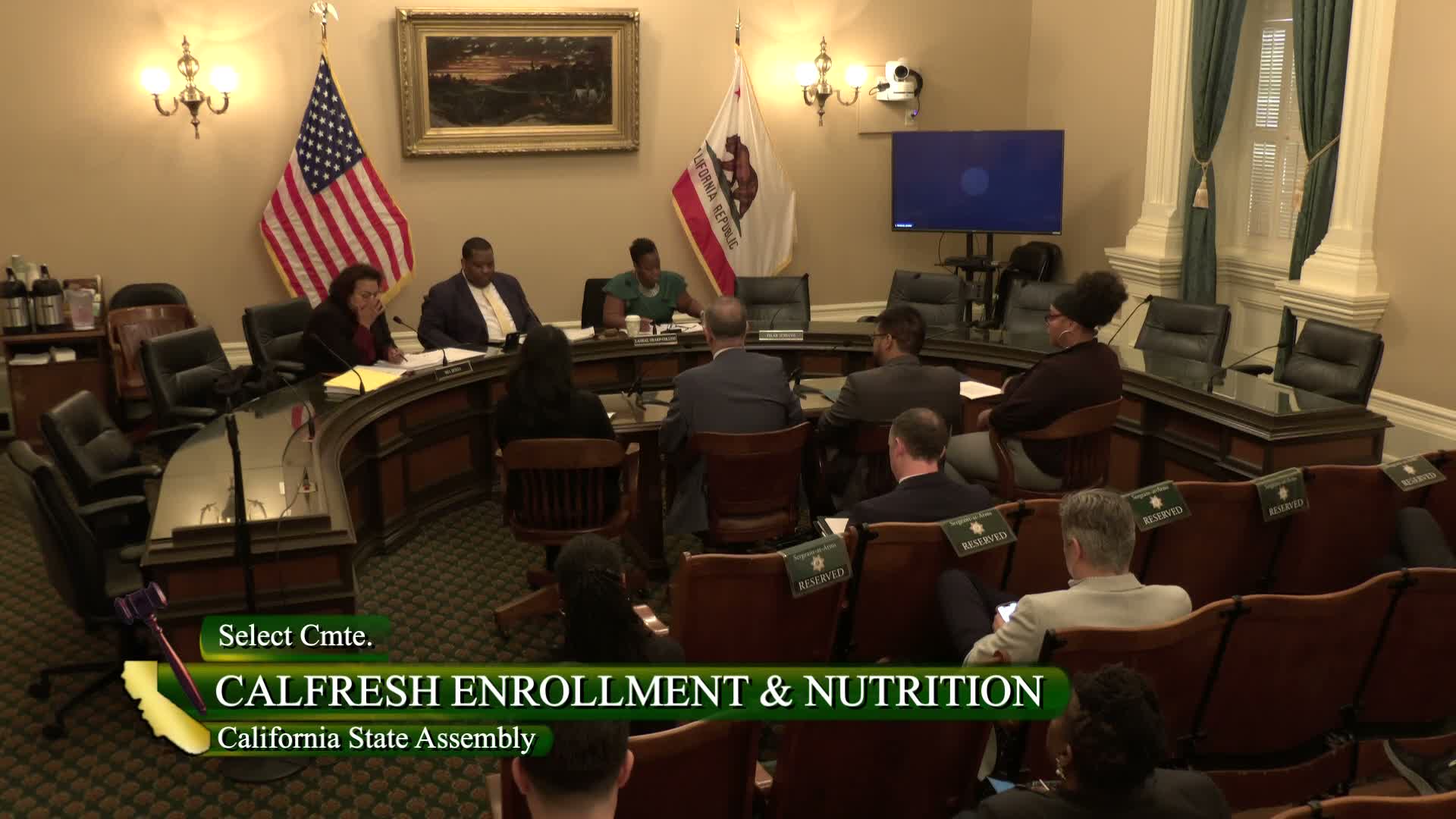
Counties warn they lack staff and time to process HR 1 exemptions; urge temporary funding and automation
Loading...
Summary
County welfare directors and frontline eligibility workers told the Assembly committee they need immediate funding, training and system automation to screen exemptions and avoid inadvertent denials as HR 1’s work requirements and eligibility changes are phased in.
County representatives and eligibility workers told the Select Committee that implementing HR 1 will require substantial frontline capacity they do not currently have. Carlos Marquez of the County Welfare Directors Association and Albert Banuelos of the County of San Diego said counties face higher workloads, potential layoffs and the need to hire and train eligibility workers quickly to avoid processing backlogs and wrongful disenrollments.
San Diego’s interim director said the county expects to touch over 93,000 impacted adults and estimated eligibility workers may need up to four additional hours per impacted client per year for multilayered exemption screening, client outreach and appeals. Counties urged the state to fund hiring up front rather than relying on retrospective “true‑ups” that lag real‑time needs.
Frontline eligibility worker Renee Scott described helping 50–100 clients a day, increased call volumes and the mental‑health toll on staff responding to frightened recipients. CDSS officials said they are expanding automation, consent‑based income verification tools and proactive communications to reduce manual burden, but both counties and CDSS agreed automation alone will not eliminate the need for more trained staff.
Witnesses requested short‑term budget augmentations for county staffing, expanded training, and clearer guidance on identifying complex exemptions (including hidden disabilities). Committee members pressed CDSS on timelines for additional guidance and on how the state will prioritize funds to counties with the greatest need.