Get Full Government Meeting Transcripts, Videos, & Alerts Forever!
Get email alerts on the Hr1 Overview topic
No spam. Unsubscribe anytime.
Assembly hearing warns HR 1 could cut CalFresh for hundreds of thousands; state eyes CFAP, outreach and county funding
Summary
State analysts and CDSS told a legislative select committee that HR 1 will expand work rules, narrow noncitizen eligibility and shift costs to states; officials estimated about 665,000 Californians may lose CalFresh and urged temporary funding, automation and CFAP expansion to blunt harms.
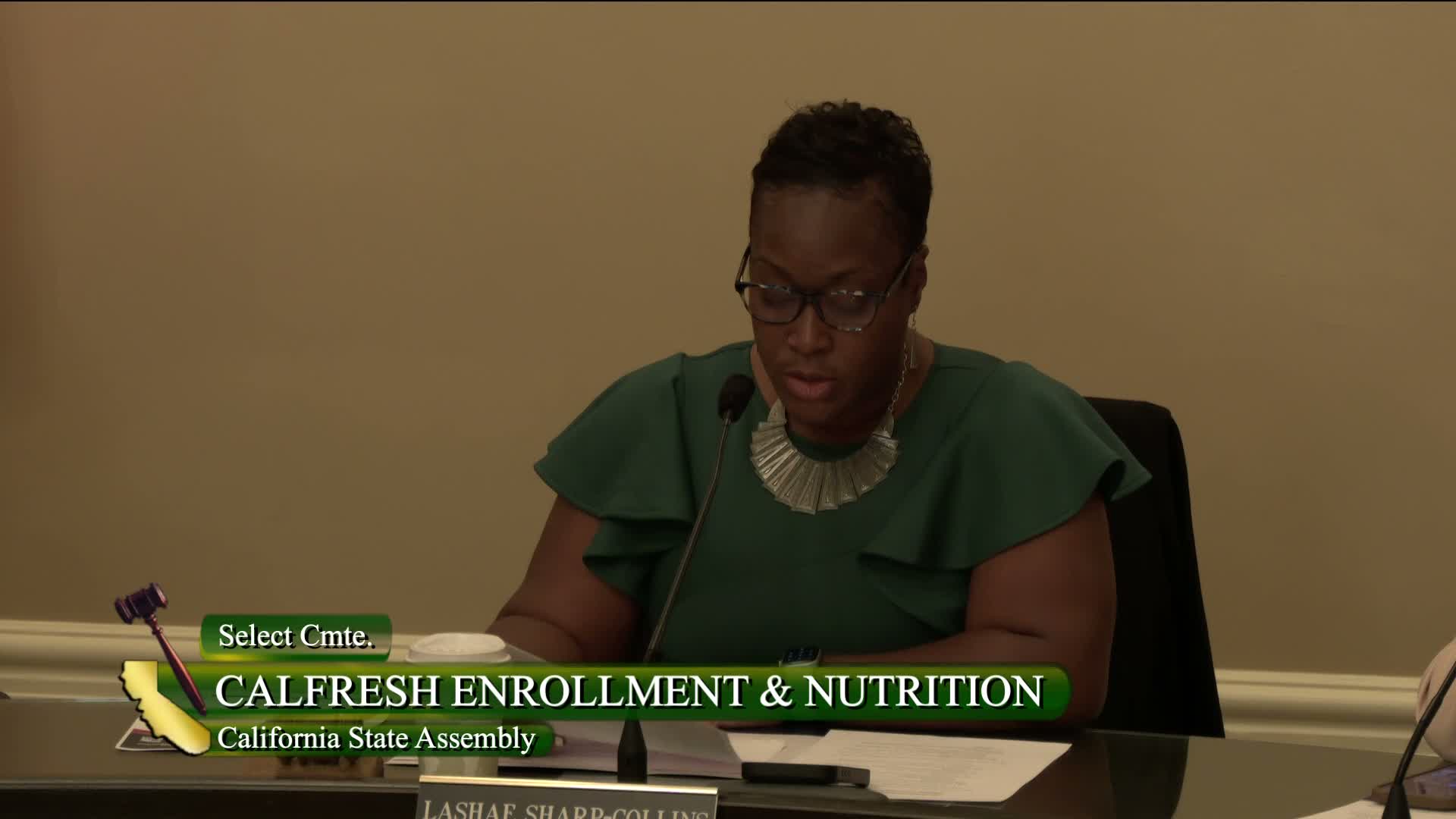
Assemblymember Lachey Sharp Collins opened a Select Committee hearing in Sacramento and said the state is preparing for significant changes under HR 1 that will affect CalFresh, California’s version of SNAP.
Ryan Wolsey of the Legislative Analyst’s Office told lawmakers HR 1 expands work requirements, narrows eligibility for some lawfully present noncitizens and shifts program financing. He said CalFresh serves roughly 5.4 million Californians and that, depending on exemptions and implementation, about 665,000 able-bodied adults without dependents (ABOD) could be at risk of losing benefits. Wolsey also said about 72,000 lawfully present noncitizens could lose federal CalFresh coverage, and that states could face benefit‑cost liabilities if payment error rates remain high.
Alexis Fernandez Garcia, deputy director at the California Department of Social Services, described CDSS’s implementation plan: identify individuals who may be ABOD, automate exemption screening where possible, and help nonexempt recipients access qualifying work or community activities. She said changes for new applicants began April 1, 2026, and that ongoing recipients will be screened at recertification over roughly a 12‑month cycle, with ABOD implementation beginning June 1, 2026.
CDSS and LAO outlined a fiscal concern: federal administrative support for CalFresh will fall from 50% to 25% starting October 2026 and, depending on the state error rate, California could be responsible for up to 15% of benefit costs beginning in October 2027. LAO estimated that at an ~11% error rate California might face roughly $2 billion in additional annual benefit costs.
Both analysts and county representatives warned that administrative burden could cause eligible people to lose benefits. Carlos Marquez of the County Welfare Directors Association said counties will shoulder most eligibility determinations and that the state’s prior workload methodology may undercount new exemption‑screening time. Marquez and county officials urged near‑term state funding for frontline hiring, training and system automation to reduce disenrollments.
State officials said they are pursuing automated income verification tools and proactive communications to reduce paperwork and errors. CDSS recommended temporary augmentations to county funding and continued legislative oversight as the state refines assumptions for budgeting and implementation.
The hearing produced a slate of legislative options discussed by witnesses, including expediting CFAP (the state Food Assistance Program) expansion, prioritizing automation and data matches, funding CalFresh outreach partners, and providing short‑term county staffing dollars. The committee did not vote on any measures at the hearing; members signaled urgency to continue work before the June 1 implementation date.