City of Los Angeles officials tell Assembly the Games could generate $18 billion for region, outline RAMP and small-business supports
Loading...
Summary
Paul Kerkorian of the City of Los Angeles’ Office of Major Events told the Assembly LA28’s spending could produce about $18 billion in economic output and outlined city programs (RAMP, Compete for LA, business source centers) to prepare small and diverse businesses to participate in Games procurement.
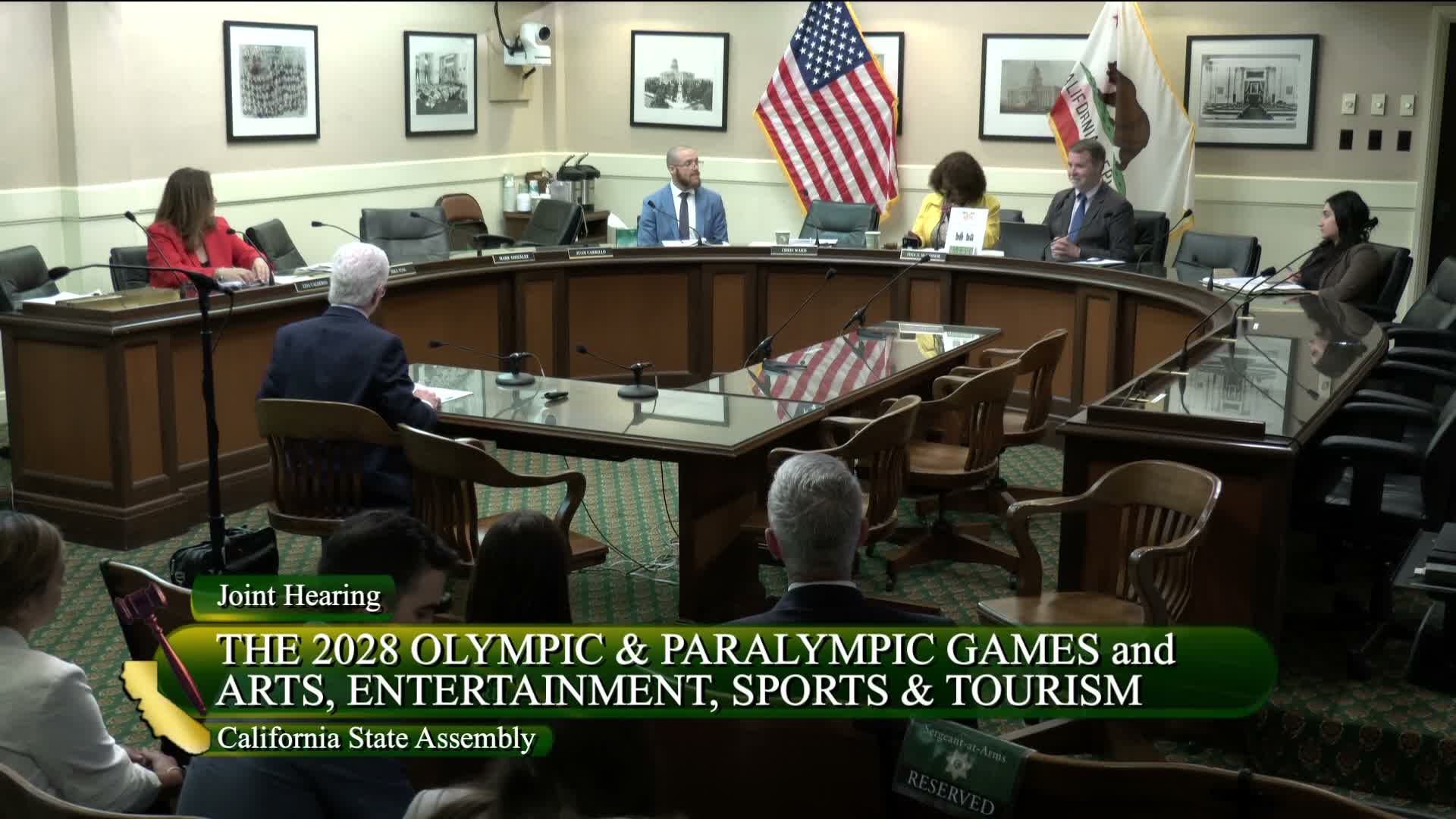
Paul Kerkorian, executive director of the City of Los Angeles’ Office of Major Events, told the California State Assembly that the city and LA28 are coordinating to maximize local benefits from the 2028 Games.
Kerkorian said LA28’s organizing-budget expenditures, together with the broader multiplier effect of game-related activity, could generate roughly $18,000,000,000 in economic output and about $700,000,000 in state and local tax receipts. “The games will result in $18,000,000,000 in economic output and $700,000,000 in state and local taxes,” he told the committee.
City presenters described a set of programs intended to help local businesses participate in procurement and capture long-term benefits. Those tools include RAMP (Regional Alliance Marketplace for Procurement) as a one-stop procurement awareness tool, Compete for LA (a searchable database of Los Angeles businesses), 10 Business Source Centers that provide in-person contract-readiness support, and “Get in the Game LA,” a county-level training and mentorship program run by local chambers.
Kerkorian said LA28 committed $160,000,000 to youth sports programming (Play LA) and the city planned an Arts and Culture Festival to complement the Cultural Olympiad and reach neighborhoods across the city, including mural restoration and small-artist procurement opportunities.
City officials acknowledged constraints: some city arts and cultural programs depend on available funding, and Kerkorian said additional state support could help scale city-led community programs. He urged the Assembly to consider state funding where appropriate to make community-focused cultural programming and workforce investments possible.
Committee members asked about how the city will reach historically underserved businesses; Kerkorian outlined outreach through business-source centers, ethnic chambers and a mayoral small-business cabinet and cited Procure LA and a Bank of California-funded contract-financing pilot as existing finance tools.
The city’s presentation emphasized coordinating procurement, workforce development and philanthropic partners to expand local participation and to leave legacy infrastructure and programs after the Games.