Get Full Government Meeting Transcripts, Videos, & Alerts Forever!
Get email alerts on the Flood Preparedness topic
No spam. Unsubscribe anytime.
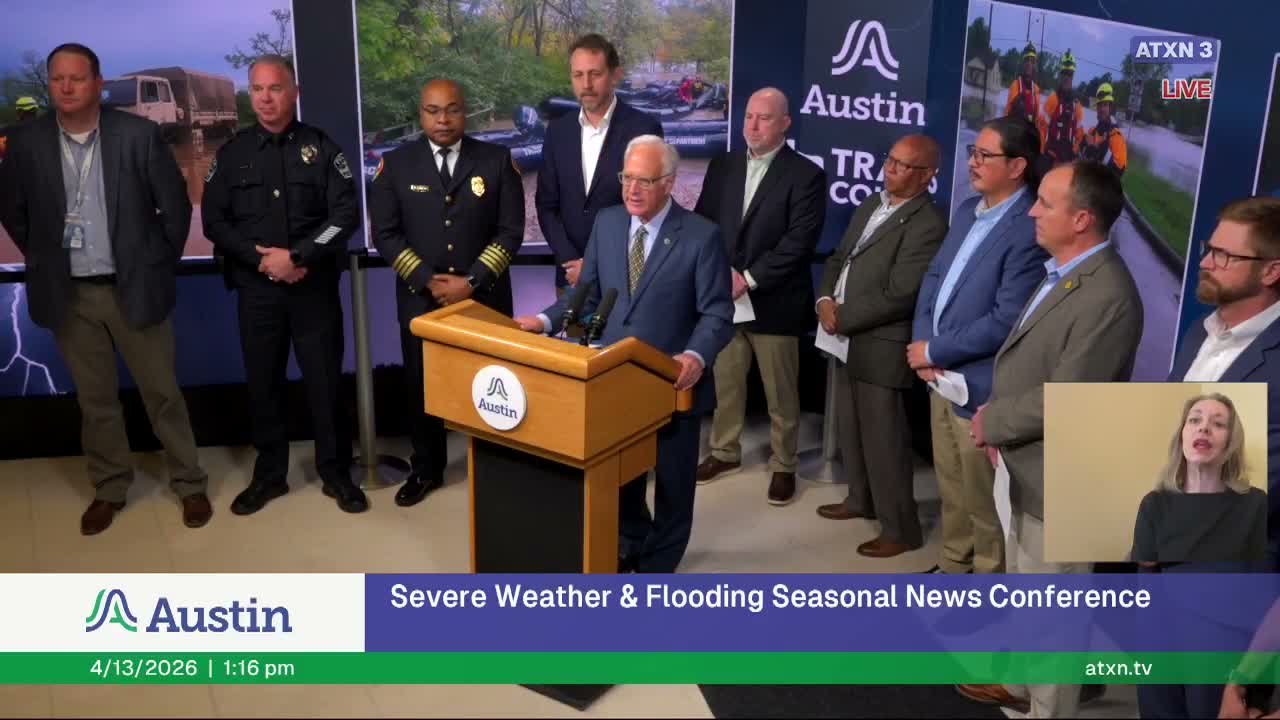
Austin and Travis County officials urge residents to 'Turn Around, Don't Drown' as flood season nears
Summary
City and county leaders at a joint Austin briefing urged residents to sign up for OneCentralTexas and use ATXFloods.com for live road and camera updates, emphasized the "Turn Around, Don't Drown" safety message and outlined steps to prepare emergency kits and plans.
City and Travis County officials on the record at a joint press briefing stressed that Central Texas faces a heightened flash‑flood risk and urged residents to prepare now.
The mayor (unnamed on the public record) opened the briefing by thanking media partners and saying emergency communication is “very important.” The mayor repeatedly delivered the core safety slogan in Spanish: “Dense vuelta, no se ahoguen” ("Turn around, don't drown"), and warned that "six inches of water can turn an adult; 12 inches can carry most vehicles."
Travis County Judge Andy Brown said residents should sign up for OneCentralTexas alerts and keep emergency‑alert settings enabled on their phones so they receive official warnings. Brown distinguished a flood "watch" (conditions favorable) from a flood "warning" (an immediate threat) and urged families to keep a basic emergency kit with water, food, pet supplies and important documents.
Jim Riddick, director of Austin Emergency Management, said the city is updating its hazard mitigation plan to assess vulnerabilities and reduce risks. Riddick emphasized that flash floods develop very quickly and encouraged residents to know evacuation and shelter locations and to practice family plans.
Jason Renion, meteorologist coordinator for the National Weather Service office that covers Austin and San Antonio, noted that flooding is the leading weather‑related killer and cited fatality figures stated at the briefing (316 in Central Texas, 33 in Travis County). He urged residents to use multiple alert channels—wireless emergency alerts, weather apps and radio—and to move immediately to higher ground when a flood warning is issued.
Other speakers, including Jorge Morales (identified as a director who oversees waterway protection) and Eric Carter (who identified himself on-record), emphasized low‑water crossings as especially hazardous, encouraged 3‑1‑1 reporting for blocked culverts or debris, and invited the public to events for Austin Flood Awareness Week (the briefing noted the awareness week runs through April 17 and an event at Campbell Elementary is scheduled for Saturday).
Officials repeatedly counseled that small amounts of moving water are hazardous, that neighbors are often the first responders, and that registering for OneCentralTexas and checking ATXFloods.com for live camera and road‑closure information are practical steps residents can take now.
The briefing closed with agency representatives offering to answer questions and with a reminder to stay informed and hew to official guidance during severe‑weather events.