Get Full Government Meeting Transcripts, Videos, & Alerts Forever!
Get email alerts on the Riverton Bonds topic
No spam. Unsubscribe anytime.
Sayreville redevelopment agency authorizes application for Riverton non‑recourse bonds to fund public improvements
Summary
The Sayreville Redevelopment Agency voted unanimously to authorize submission of an application to the New Jersey Local Finance Board for non‑recourse redevelopment area bonds tied to Riverton special assessments; counsel said bonds would be issued in tranches over many years and would not be an obligation of the borough.
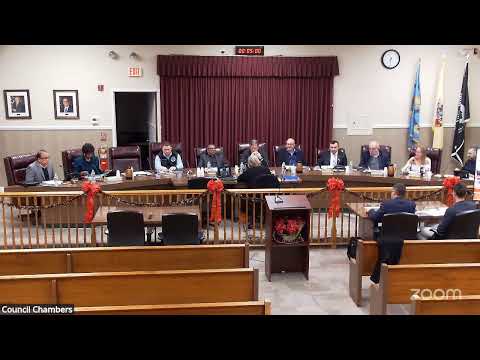
The Sayreville Redevelopment Agency unanimously voted to authorize submission of an application to the New Jersey Local Finance Board to enable issuance of non‑recourse redevelopment area bonds for the Riverton project, agency bond counsel Matt Jessup said.
Jessup of McManaman Scotland & Baumann told commissioners the bonds would be “non recourse,” meaning they are not “a debt or an obligation in any way of the borough of Sayreville,” and that repayment would be secured only by a defined set of special assessment revenues collected from the project. He said each series of bonds will fund specific public improvements — roadway and parkway work, stormwater, waterfront promenade and performing arts space among them — and that developers’ special assessment payments would be used to pay debt service.
Why it matters: Agency counsel said the bond structure is designed so the borough’s general fund, taxing power and agency general revenues are not pledged to repay bondholders. Counsel described a long timetable of tranches, estimating an initial issuance of roughly $4 million and a not‑to‑exceed amount of $200 million that would be requested in the LFB filing and is expected to cover multiple tranches over a 15‑plus year period.
Counsel said the process requires the agency to obtain local finance board approval in Trenton before returning to the agency for a separate resolution authorizing each bond issuance. “We will appear before the local finance board,” Jessup said, “we will explain the details of this transaction … we would get our findings, our approvals from the local finance board, and then we would come back before you… for a vote to actually authorize the first tranche of bonds.” He estimated LFB review and the subsequent steps could put a closing on the first tranche in about four to five months after application.
Co‑counsel John Drakowitz reiterated that bond documents will explicitly state the limits of recourse to make clear what bondholders can and cannot seek. He said the $200 million would likely be issued over a 15–18 year timeframe and reiterated that each issuance will be tied to the special assessment revenues for specific improvements.
Commissioners asked procedural and fiscal questions. One commissioner said he wanted the record to reflect that bondholders could not pursue the borough or the agency for other revenues if a developer defaulted; counsel repeatedly confirmed special assessments are the only revenue available to bondholders. Commissioners also asked for earlier circulation of bond details when available and for clarity about differences between municipal bond ordinances and authority resolutions; counsel explained authorities operate under a different statute and that the agency takes a different single‑meeting resolution approach with LFB oversight.
The agency adopted Resolution 202512.53, authorizing submission of an application to the New Jersey Local Finance Board pursuant to relevant NJ statutes, by roll‑call vote; the motion and second were called and the resolution passed with all present commissioners voting yes.
Next steps: Agency staff and bond counsel will prepare the application for the local finance board, appear before the board for approval, then return to the agency with a bond resolution for each tranche if and when the LFB approves the request.