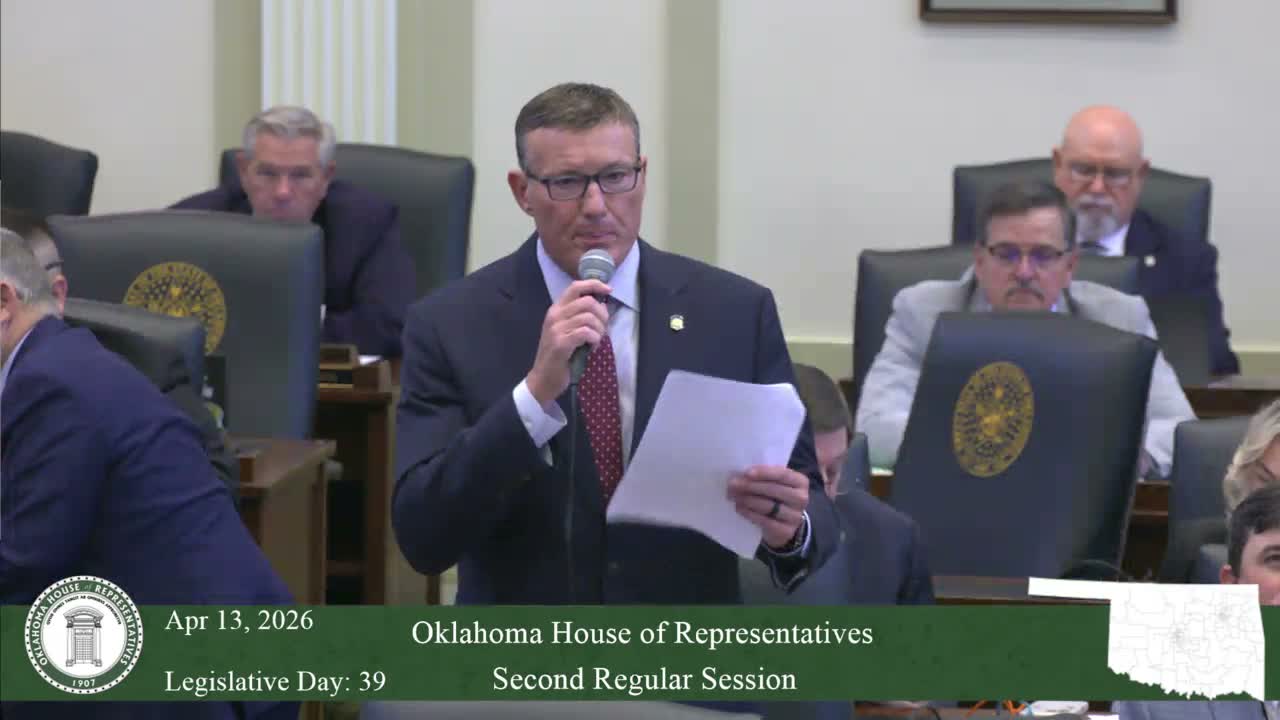
Representative Gann calls taxpayer 'bill of rights' hollow as House passes ad valorem measure
Loading...
Summary
A heated floor debate over an ad valorem taxpayer 'bill of rights' focused on whether the measure provides substantive relief or only symbolic protections; the House passed the bill after extended exchange (85–4).
The Oklahoma House engaged in extended debate on Senate Bill 1579, described by supporters as a "taxpayer bill of rights" related to ad valorem property taxation and by opponents as largely symbolic.
Representative Gann (floor opponent) said the measure fell short of real relief, arguing on the floor that the Legislature had recently set aside $200,000,000 and that the bill offered "a pamphlet of empty words" rather than tangible protections. In floor remarks he said, "This is not relief. It's not reform and it's not protection. This government handing the taxpayer a pamphlet of empty words in one hand and then picking his pocket with the other." Gann urged members to vote no, saying taxpayers need actual relief, not a notice of procedural rights.
Speaker Hilbert, the bill's floor sponsor, pushed back on Gann's criticism and defended the measure as increasing transparency and official protections for taxpayers. Hilbert asked members to consider the measure's intent and said giving taxpayers a statement of their rights was not mere symbolism. After debate, the House moved to a roll-call vote and passed SB 1579 (85 aye, 4 nay). Members later approved an emergency declaration for the measure by recorded vote.
Why it matters: The debate highlighted a broader split over legislative priorities — whether legislative gestures that increase procedural notice and transparency are sufficient in the face of broader fiscal questions (such as the recently referenced $200 million set‑aside). Opponents characterized the bill as inadequate without direct tax relief; supporters framed it as a necessary transparency reform.
The measure passed on final reading and advanced as recorded on the House floor; sponsors signaled the intent to implement the statute via affected agencies and to coordinate any necessary guidance.