Get Full Government Meeting Transcripts, Videos, & Alerts Forever!
Get email alerts on the School Funding topic
No spam. Unsubscribe anytime.
Riverside board weighs 1% earned-income tax and $120M school plan as deficit warning looms
Summary
District leaders recommended placing a 1% earned-income tax on the November ballot to stabilize operations and fund a proposed $120 million 7–12 campus; trustees debated timing, whether to combine operating and facilities funding in one question, and community impacts before unanimously moving to executive session.
At a work session, Riverside Local school leaders urged trustees to put a revenue measure before voters this year as a forecast showed ongoing deficits that could trigger state fiscal oversight.
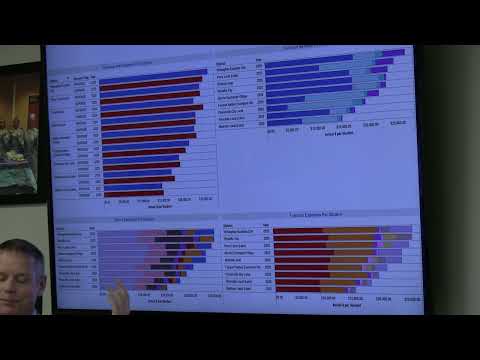
The district’s fiscal officer told the board the February forecast projects sustained deficit spending and that, absent new revenue, the district could enter fiscal watch and, by 2029, fiscal emergency under state thresholds. “You can see we’re in deficit spending at $8.96,” the fiscal officer said, and later summarized modeling that a 1% earned-income tax would generate an estimated $13.7 million annually while the district needs roughly $8.5 million to meet board targets for operating reserves.
School leaders also presented a facilities vision: renderings for a 7–12 Riverside campus that would preserve the high school’s signature appearance while adding a new wing and modern program spaces. Presenters said teardown-and-rebuild and renovation-hybrid options landed in the same neighborhood for total project cost — roughly $107 million at base and about $120 million all-in after contingencies and inflation were applied.
The board’s conversation focused on two linked decisions: whether to ask voters for operating money and facilities in one combined ballot question, or to pursue only operating funds this November and return later for a building-focused measure. Supporters of a single packaged ask argued it would present a coherent community vision and avoid asking residents to vote twice. Opponents said a bond or separate facility question isolates capital spending and could protect building funds from being spent on operations.
Trustee concerns centered on equity and timing. Several trustees said seniors and residents on fixed incomes worry about income-based levies; others noted that an earned-income tax does not apply to Social Security, pensions or retirement income, and argued it spreads the burden across working residents rather than relying solely on property taxes. One board member asked for clearer partner commitments for a proposed community hub (YMCA and local townships were cited as potential partners) before endorsing a combined ask.
Trustees pressed staff for numbers tied to prior decisions and one-time funds. When asked whether reserve balances could address immediate maintenance needs, staff said about $1.1 million of a $3 million PI (pandemic/one-time) fund is locked up and roughly $1.82 million remains available, but advised keeping reserves for catastrophes.
The board received multiple cost scenarios for levies: a 4-mill property levy would raise about $6.9 million, a 5-mill levy about $8.6 million, and various blends with earned-income tax were modeled. Presenters warned that recent state property-tax reforms (including House Bill 920 effects discussed in the presentation) limit the district’s ability to capture inflationary growth through property levies, making some trustees receptive to an earned-income option.
Staff and an outside advisor recommended moving quickly on at least operating funds. The advisor said districts in similar fiscal positions would act now to secure predictable revenue; district staff said an operational levy in November would begin collections earlier than a May measure but acknowledged the shorter timeline constrains full partner agreements and more detailed renderings.
After extended debate about trade-offs and community outreach, trustees voted unanimously to adjourn to executive session at 7:52 p.m. to discuss personnel matters. No final public decision on ballot language was recorded at the meeting.
The board’s next procedural steps include forming a levy committee, pursuing memoranda of understanding with potential partners, and clarifying campaign materials and detailed financial scenarios before certifying any question for the ballot.