Get Full Government Meeting Transcripts, Videos, & Alerts Forever!
Get email alerts on the Public Safety Sales Tax topic
No spam. Unsubscribe anytime.
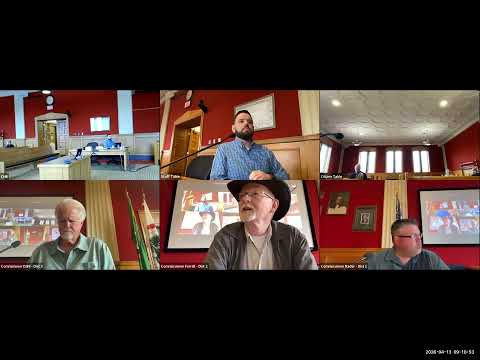
Cowlitz County commissioners consider placing 0.2% public-safety sales tax on the ballot
Summary
County staff proposed a draft resolution to place a two‑tenths‑of‑a‑percent public-safety sales-tax measure on the ballot; staff estimated roughly $3.6 million in county receipts and outlined a 60/40 county/city split. Commissioners asked for more time and legal review before a final decision.
The Cowlitz County Board of Commissioners reviewed a draft resolution and explanatory statement to place a public-safety sales-tax measure before voters, county staff said. The proposal would seek two‑tenths of one percent (0.2%) in additional county sales tax and requires a public meeting and final board approval before May 1 to meet election‑calendar deadlines.
County staff presented background on the ballot pamphlet process and said the county must supply a statement and identify both a proponents and an opponents committee for the voters' pamphlet. Staff described vehicle‑sale exemptions in the measure and explained the county would not replace existing municipal sales taxes; instead, any county measure would be in addition to city measures that already collect similar taxes.
Why it matters: the draft aims to shore up public‑safety funding amid a projected budget shortfall while sharing revenue with cities. A decision this month would determine whether voters see the measure on an upcoming ballot.
Staff said the county would retain 60% of project collections and distribute 40% to cities on a per‑capita basis. Staff estimated county receipts of about $3.6 million if the two‑tenths measure is enacted and total countywide collections of roughly $6 million, with approximately $2.4 million distributed to cities. The staff presentation contrasted the voted two‑tenths option with a separate nonvoted one‑tenth option (referred to in the briefing as a nonvoted tax under House Bill 2015 from 2005) that would be limited to law‑enforcement programs and collected only for sheriff‑department purposes; the one‑tenth, nonvoted option was estimated at about $3.3 million under the staff estimate and carries a 12‑month cooling‑off period if a nonvoted attempt fails.
Commissioners asked how pamphlet committees would be selected; staff said the county would attempt to recruit community members for both "for" and "against" committees and that, if necessary, county staff (Carolyn, as referenced in the packet) would assist in finding volunteers. Commissioners also asked whether a city that already collects the tax would see its collection redirected; staff said the county measure would be additive and would not supplant city collections.
Views were split in the briefing. One commissioner voiced support for putting the measure to voters, while the chair expressed opposition, saying, "Taxes are a death spiral" and arguing that levying a tax does not solve underlying budget issues. A commissioner asked for time to consult with the Longview city manager before proceeding; staff identified April 28 as the latest date to place the item on an agenda in order to meet the May 1 deadline.
Next steps: staff will revise the draft as requested and return the item for further discussion next Monday; the board has not taken final action. If the board directs placement on an agenda and subsequently approves it, the county will publish the explanatory statement in the voters' pamphlet and arrange for committees as required by law.