Maine Senate advances targeted revisions to school funding formula, 28–6
Loading...
Summary
The Senate voted 28–6 to accept committee changes to the Essential Programs and Services (EPS) school funding formula (LD 2226), including updates to regional cost adjustments and a poverty-related factor derived from free and reduced‑price lunch data plus a three‑year hold‑harmless provision for districts.
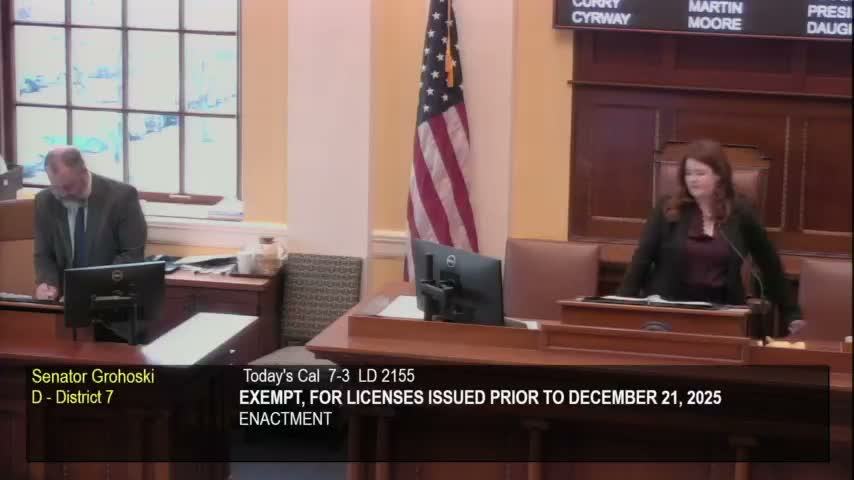
The Maine Senate on 2026-04-13 voted to advance LD 2226, a package of targeted changes to the state's Essential Programs and Services school funding formula, accepting the majority 'ought to pass as amended' report on a 28–6 roll-call vote.
Senator York Rafferty, the bill's floor champion and chair of the sponsoring committee, said the measure takes "meaningful, targeted steps forward" to update regional cost adjustments and add "a modest factor for economic disadvantage" so districts facing differing local capacities are treated more fairly. "No community will feel any negative impact from these changes," Rafferty said, noting the bill includes a three‑year full hold‑harmless period so no district will see immediate reductions in state support.
Opponents pressed for a broader overhaul. Senator Timberlake argued the proposal creates exemptions and "designs exemptions within the [three‑tier] system," saying he would vote against it on fairness grounds. Senator Libby, who also spoke, warned the bill relies on a poverty metric derived from free and reduced‑price lunch data that can undercount need and may advantage some districts over others.
Other senators emphasized trade‑offs. Senator Stewart and others said the changes could produce "a pretty good cliff in the out years" if follow‑on funding is not sustained, warning that local property tax burdens could rise later if state support does not keep pace.
The committee and supporters said the bill limits change to areas that are ready for reform — updating outdated regional cost figures and refining the calculation of a community's ability to contribute — rather than reopening the entire funding formula. Rafferty said: "We did not touch staffing ratios. We did not rewrite the cost model. That restraint was bipartisan and intentional."
After floor debate the Senate accepted the committee recommendation and advanced the bill for enactment. Senators who spoke publicly in support included Rafferty, Daughtry and Tipping; critics included Timberlake, Libby and Stewart. The bill includes implementation details and a phased approach intended to give districts time to plan.
What happens next: The measure was advanced under suspension of the rules for final steps and will be sent to the Governor for approval if enacted in due course. The three‑year hold‑harmless provision and other phasing details were highlighted by sponsors as designed to mitigate immediate disruption while the formula is adjusted.