Get Full Government Meeting Transcripts, Videos, & Alerts Forever!
Get email alerts on the Workforce Housing topic
No spam. Unsubscribe anytime.
County officials warn housing mitigation tools under threat as commission readies contingency planning
Summary
Commissioners and planning commissioners said Teton County is falling short of its 65% workforce housing goal and discussed the risk that state legislation (HB 141) could limit mitigation tools; staff and commissioners asked for contingency work‑plan items and clarification on whether mitigation changes would require LDR text amendments.
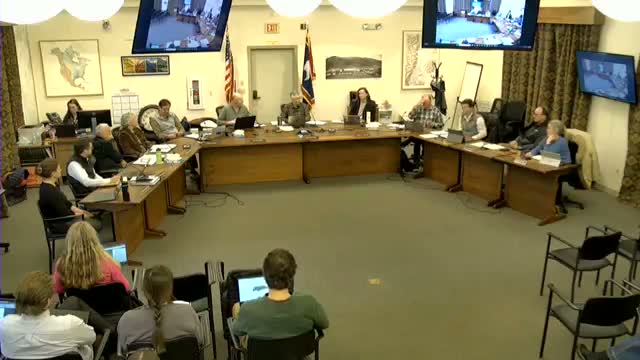
Planning commissioners and county commissioners used the joint meeting to press for action on workforce housing and to flag a potential legislative risk to the county's mitigation tools. Planning commissioner Susan Larson O'Brien said the county is "not meeting the 65%" workforce housing target and warned that mitigation fees have come under legislative pressure: "As we all know, our legislature really tried to get rid of that for Teton County in this last session." She asked what alternatives the planning commission and Board might pursue to protect or replace mitigation tools if state law changes.
Commissioner Probst expanded the point by citing HB 141 and its potential scope: "If you read HB 141, it's clear that it includes not only mitigation based upon a nexus study but it includes non monetary condition or other concession requiring the provision of workforce housing, unmet housing needs or affordable housing." Probst said the bill could call into question incentive‑based rezonings and other tools that rely on post‑construction certificates of occupancy.
Commissioner Wes Gardner suggested revisiting the mitigation program to preserve it in the face of legislative risk, including possible adjustments such as raising the large‑home size threshold (currently 2,500 square feet) toward 4,000 square feet so large homes and nonresidential development are handled differently in mitigation calculations. Planning Director Chris Neubecker confirmed that if mitigation were to be implemented through LDR text amendments it would go to the planning commission for review; otherwise the Board could request the commission's feedback.
Officials directed staff to put housing mitigation and related contingency options on the work plan for detailed review; no formal amendments or votes on mitigation were taken at the meeting.