Get Full Government Meeting Transcripts, Videos, & Alerts Forever!
Get email alerts on the Workplan topic
No spam. Unsubscribe anytime.
Concord working group narrows phase‑2 charge, aims for draft in May–June
Summary
The Concord Land Use Working Group clarified its phase‑2 deliverables and timeline April 10, saying it will reconcile subgroup outputs, document conflicts and options for surplus parcels, and deliver a draft report to the public in May or June with a final to the Select Board in 2026.
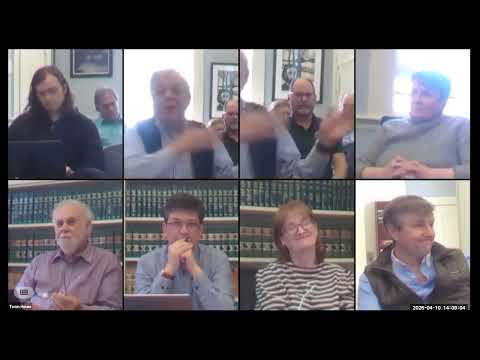
The Concord Land Use Working Group met on April 10 and moved to focus phase 2 on reconciling subgroup findings, identifying alignment or conflict across recommendations, and compiling a preliminary inventory of surplus town parcels for Select Board consideration.
"We were tasked with completing our work in a period of 1 year," the presenter said, reviewing the two‑phase process and adding, "we hope to have a draft report in May or June of this year," a timeline members repeated during the meeting. The chair reiterated that phase 2 will integrate outputs from the municipal consolidation, public works and police & fire subgroups and produce a consolidated set of nonbinding recommendations to the Select Board.
Members stressed that some broader issues—town‑wide commercial, housing or master‑planning work—exceed this group's one‑year scope and are likely to be a subsequent (phase 3) effort. "Town‑wide planning analysis on commercial, housing, open space was not really feasible within the initial charge," one presenter said, noting constraints including limited staff support and open‑meeting requirements.
The group agreed on a process to handle the long parcel list: walk each row in the spreadsheet, confirm whether the subgroup recommendation stands, record conflicts between subcommittees, and note items that require additional study. Several members asked that any new consultant studies (for example, yield or facility condition analyses) be incorporated into the working documents as they become available.
The meeting also included a routine governance action: "Move to approve the minutes of 03/13/2026," a motion that was seconded and approved by members present.
Why it matters: the group is assembling the evidence and policy options the Select Board will use when deciding whether to recommend sales, preservation, or site changes for dozens of town‑owned parcels. The working group's recommendation set and the reported timeline mean draft findings will be publicly available for comment before the final package goes to the Select Board later this year.
What comes next: members asked the facilitator to circulate a proposed outline for the draft final report and to continue reconciling the subgroup appendices. The next meeting will open with a proposed report outline and discussion of data gaps and consultant scopes that the Select Board or future committees should address.