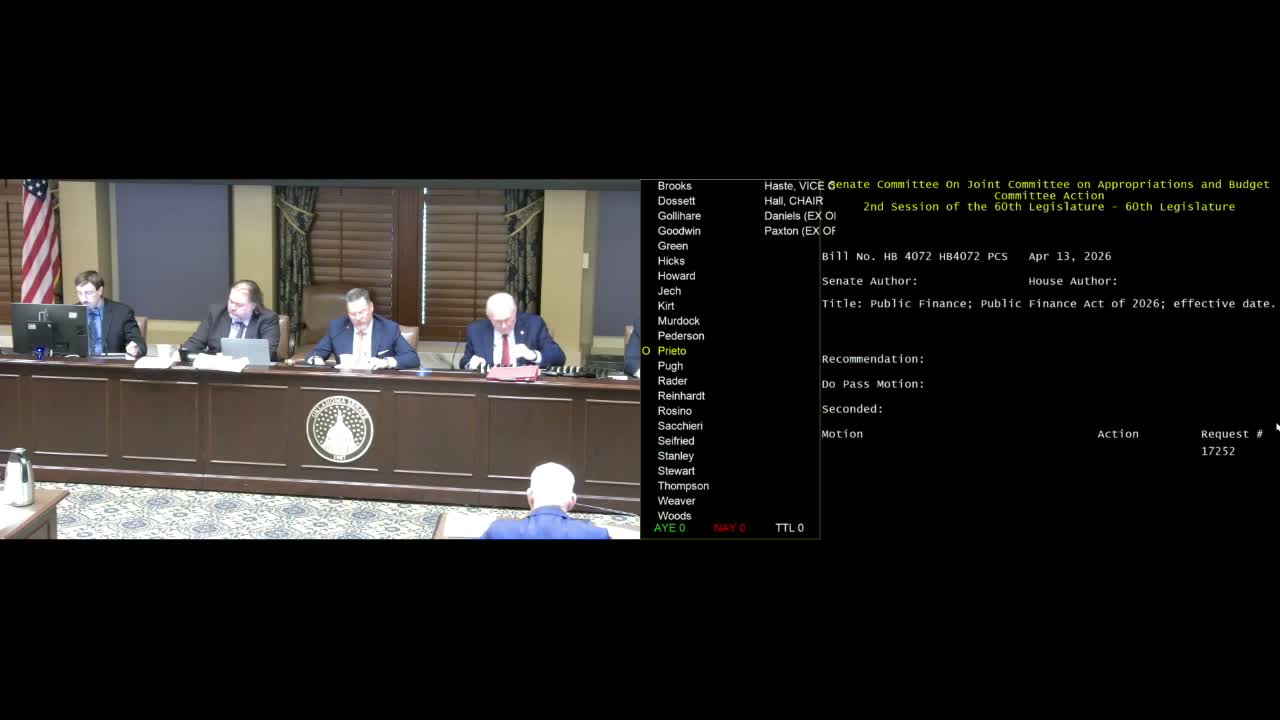
Senate committee backs creation of "Taxpayer Endowment" trust and $200M seed transfer
Loading...
Summary
Lawmakers approved HB 40-72 to create a statutory taxpayer endowment trust funded initially with a $200 million transfer and a 25% diversion of certain future gross-production overages; members pressed for investment limits and governance safeguards.
Pro Tem Paxton described HB 40-72 as a statutory mechanism to create a long-term savings and investment vehicle (the "Taxpayer Endowment Trust Fund") intended to build up to $1 billion over 10 years or trigger earlier payouts as a new recurring revenue stream. "This will take $200,000,000 out of the revenue stabilization fund to start this... It will be basically another savings account for the state," Paxton said in committee.
Questions focused on governance and risk. Several senators probed who would sit on the Invest in Oklahoma board and whether the statutory language limits equity investments or venture allocations. Sponsor said the treasurer chairs the board, that appointees would be expected to have financial experience, and that the bill seeks to limit risky allocations (noting a target that only a small share would be used for private-business investments); he promised to confirm specific limits and return answers to members.
Members pressed the sponsor on whether the proposal changes the gross production tax treatment; Paxton said it did not cut the tax but would reallocate future overage dollars: 75% would continue to feed the Revenue Stabilization Fund and 25% would be directed to the new fund to build balance. The committee approved the bill (18–6). Sponsors and questioners agreed to follow up with explicit investment guardrails and reporting requirements before floor action.