Get Full Government Meeting Transcripts, Videos, & Alerts Forever!
Get email alerts on the Municipal Fees topic
No spam. Unsubscribe anytime.
Council presses staff for benchmarking after staff proposes sizable fee and rate changes
Summary
Council members on March 9 pressed city staff for benchmarking and explanations after a fee study proposed sharp increases for some development and permit charges; members also sought clarity about potential sewer costs tied to the Potomac Interceptor and the schedule for a rate study.
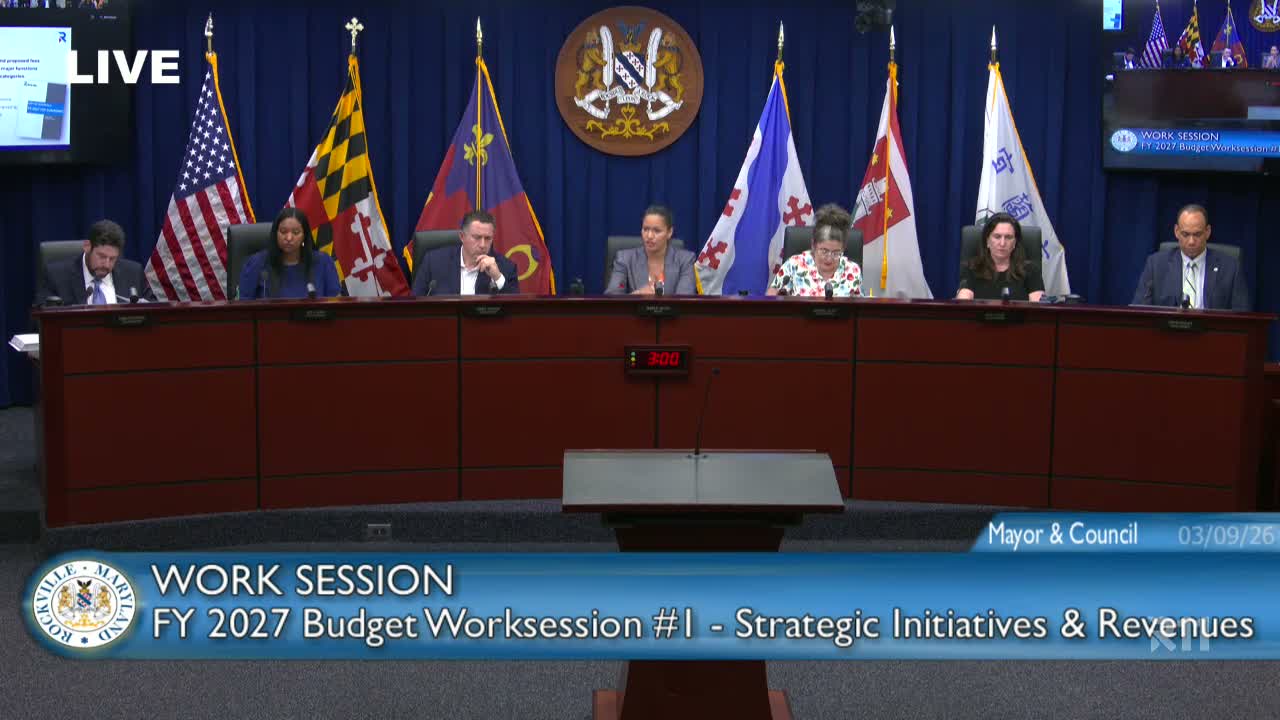
During the FY2027 introduction on March 9, Rockville councilmembers raised repeated concerns about proposed fee and enterprise rate adjustments included in staff’s fee study. Finance staff described a comprehensive review that combined cost‑of‑service calculations with benchmarking where comparables existed. The staff presentation included a range of proposed increases, some of which reflect long periods without adjustments.
Several councilmembers singled out development‑related fees — including new construction permit fees for single‑family and multifamily projects, site plan fees and certain sediment control fees — that in the packet showed double‑digit to triple‑digit percentage increases relative to older baselines. Councilmember Van Grama said such jumps could meaningfully affect developers’ decisions and urged broader peer comparisons beyond nearby jurisdictions. “We’re competing with other states and regions; if our fees spike, that could undercut our economic development goals,” he said (Council Member Van Grama).
Council members also asked staff to revisit increases to fees intended to promote climate resilience such as EV charging and small solar installation fees, noting the city’s strategic aim to encourage adoption. Mayor Ashton and others requested a program‑by‑program breakdown explaining whether increases were purely cost‑recovery, inflationary adjustments after long lags, or deliberate revenue measures to shift costs from taxpayers to direct beneficiaries.
Separately, council pressed for more detail about sewer‑related risk tied to a Potomac Interceptor project run by the Washington Suburban Sanitary Commission (WSSC). Staff said the larger multi‑jurisdictional project’s total cost estimates have varied in materials they have seen and promised updates; a citywide rate study is planned in FY27 to inform FY28–30 rates.
Staff asked councilmembers to identify particular fees of concern; staff committed to provide benchmarking, the cost‑recovery calculations and regional comparisons ahead of further work sessions and the March 23 hearing. The council did not adopt fee changes at the March 9 introduction; any final fee or rate decisions will be made later in the budget process.