Get Full Government Meeting Transcripts, Videos, & Alerts Forever!
Get email alerts on the Redevelopment Water Tower topic
No spam. Unsubscribe anytime.
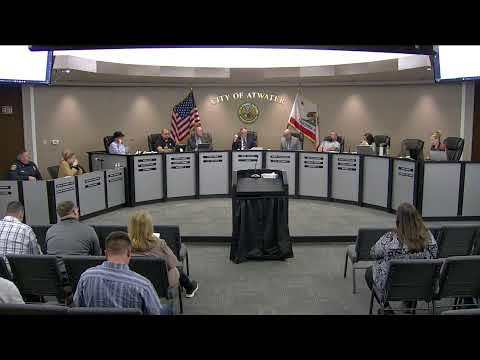
Atwater developer proposes converting city water tower into hotel, restaurant and condos; council takes no action
Summary
A local developer presented a concept to redevelop Atwater's decommissioned water tower into a mixed-use destination; staff outlined engineering, zoning and surplus-lands requirements and the council declined to start the surplus-lands process, citing need for more information and public outreach.
Adam Connor presented a conceptual plan to repurpose Atwater’s decommissioned water tower into a mixed-use destination featuring a restaurant, hotel rooms and condominiums, and said the project could help "put Atwater on the map and make a destination, right, where people wanna come." Connor asked the council to allow feasibility work and stakeholder outreach to proceed so proponents could produce engineering and renderings.
City Manager Chris told the council that the first formal step would be the Surplus Lands Act process because the property is city-owned. "One of the first steps would be to go through a surplus lands act process," he said, and he warned that the city would need to follow public bidding and offering rules while also assessing zoning, general-plan and building-code changes needed for a structure of that height.
In discussion, staff and legal counsel flagged engineering and permitting challenges. A staff description noted the project would require elevator and stair systems and special fire access because the city’s ladder truck cannot reach the tower’s top. City counsel explained statutory requirements under the surplus-lands process and the city’s obligation to provide nonprofits and affordable-housing developers a right of first refusal: "You have to make, essentially give nonprofits and affordable housing developers the right of first refusal," he said, describing the bargaining and meet-and-confer steps that follow an initial surplus declaration.
Residents and council members raised questions about neighborhood traffic, the tower’s existing infrastructure (including cell-site leases and a water-meter repeater), past investments in the tower’s restoration, CEQA and how parkland requirements would be met if the site were subdivided. One resident who had worked on the tower project years earlier asked whether the city still uses the tower for water storage; staff replied it is no longer filled and modern well systems handle pressure and storage.
Council member discussion focused on whether to direct staff to begin the surplus-lands process or to require the proponent to fund initial feasibility and outreach. A councilmember moved to "move forward with the Surplus Lands Act" but the motion received no second and "the motion dies for lack of a second," leaving the council without a formal direction to start the surplus-lands process. Staff recommended additional public outreach and stakeholder meetings and suggested that a developer-led feasibility effort might best produce the detailed information required for staff review.
The council did not adopt any ordinance or sell property. Next steps identified by staff and council members included expanded community outreach, more detailed engineering information if the proponents choose to pursue it, and returning to the council only after more concrete studies and public engagement had been completed.