Get Full Government Meeting Transcripts, Videos, & Alerts Forever!
Get email alerts on the Grading Policy topic
No spam. Unsubscribe anytime.
Calvert County moves to tighten grading procedures; committee recommends raising middle‑school pass threshold and limiting grading floors
Summary
A 23‑recommendation grading procedures report asks Calvert County Public Schools to raise the middle‑school minimum average to 0.75, remove process‑assignment floors, limit a 50% product floor to the first half of courses, expand reassessment rules and study elementary standards‑based grading; the Board discussed training, workload and equity concerns.
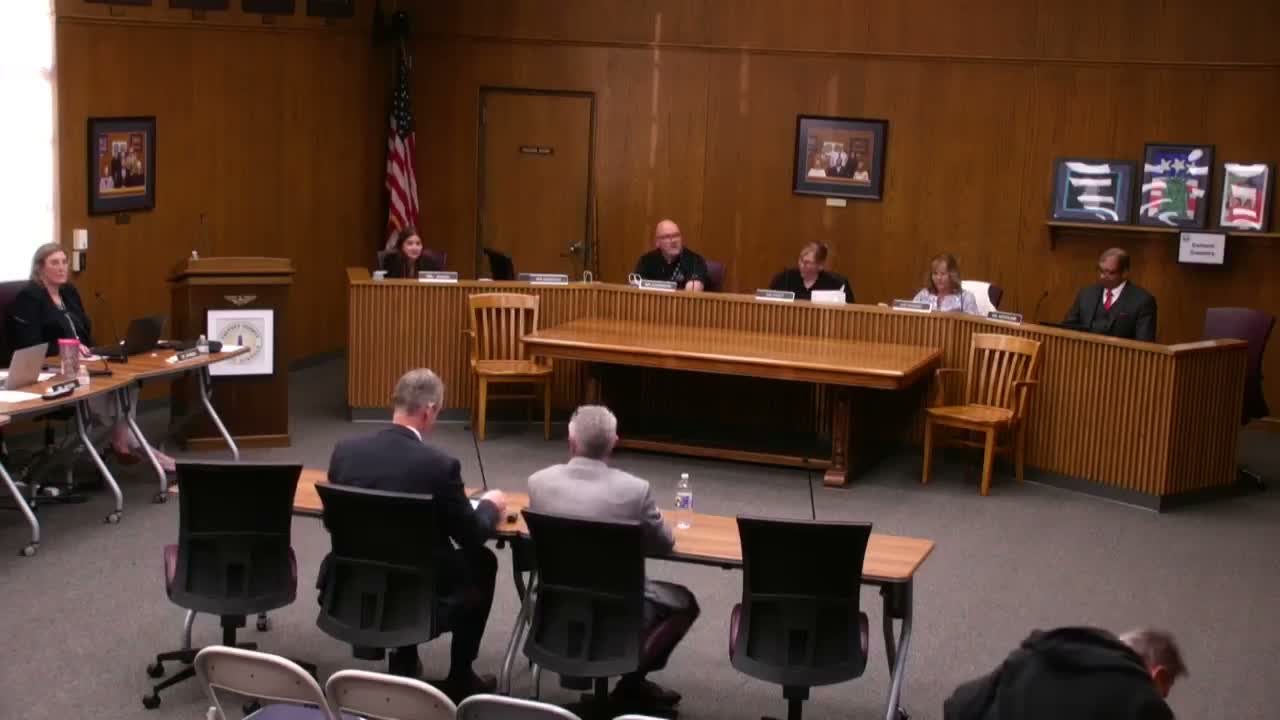
A district committee on grading procedures presented a set of recommendations intended to make grades more consistent, transparent and aligned with standards, and the Board engaged in an extended discussion about implementation, teacher workload and family communications.
Scott McComb, director of system and instructional performance, said the committee produced a 16‑page report with 23 recommendations after months of research and stakeholder engagement. "Grades reflect what students know and are able to do academically," McComb said, summarizing the committee’s unifying purpose for grading in Calvert County Public Schools.
Key recommendations include:
- Raising the minimum average a middle‑school student must earn to pass a course from 0.50 to 0.75. - Removing the grading floor for process (practice/homework) assignments so students receive the grade they actually earn; teachers still may offer make‑ups at their discretion. - Limiting the 50% product grading floor to the first half of a full‑year course (and the first marking period of semester courses) so final grades better reflect sustained mastery. - Expanding structured relearning and reassessment opportunities; product reassessments that remain below 50 after good‑faith relearning would be adjusted to a 50 minimum, provided the student participated in relearning. - Initiating a formal study of standards‑based grading at the elementary level, including research and stakeholder engagement.
Board members pressed staff on how the changes will affect teacher workload and family communication. One member noted survey results cited by proponents: "We conducted a survey and found that 91% of our high schools and 95% of our middle school teachers wanted to stop giving a 50% score for turning in no work," a board member said in support of change. McComb said the committee plans to convert recommendations into formal procedures and to prioritize professional development: the district already schedules 10 professional development days, with six before school starts, and those days will be used for training on new expectations.
Parents and some board members raised equity and practical concerns: board members asked whether the district will ensure teachers have time to write reassessments, whether grading comments or logs will show when grades were adjusted, and how the district will prevent inconsistent approaches across classrooms. McComb said the district maintains grade‑change forms and internal audits: "Every grade change requires a form ... we are audited," he said, describing an established paper trail for grade changes.
Supporters said the changes increase rigor and hold students accountable; critics warned that removing some safety nets could disadvantage students who struggle with trauma, housing instability or other barriers. The committee stressed that the 50% floor remains in early course windows to preserve early support and that the changes are intended to balance opportunity and accountability.
Next steps: staff will draft the formal procedures from the committee recommendations, develop a communications plan that uses CalvertNet and SchoolMessenger to inform families, and create a professional development plan so teachers and administrators have consistent training before implementation.