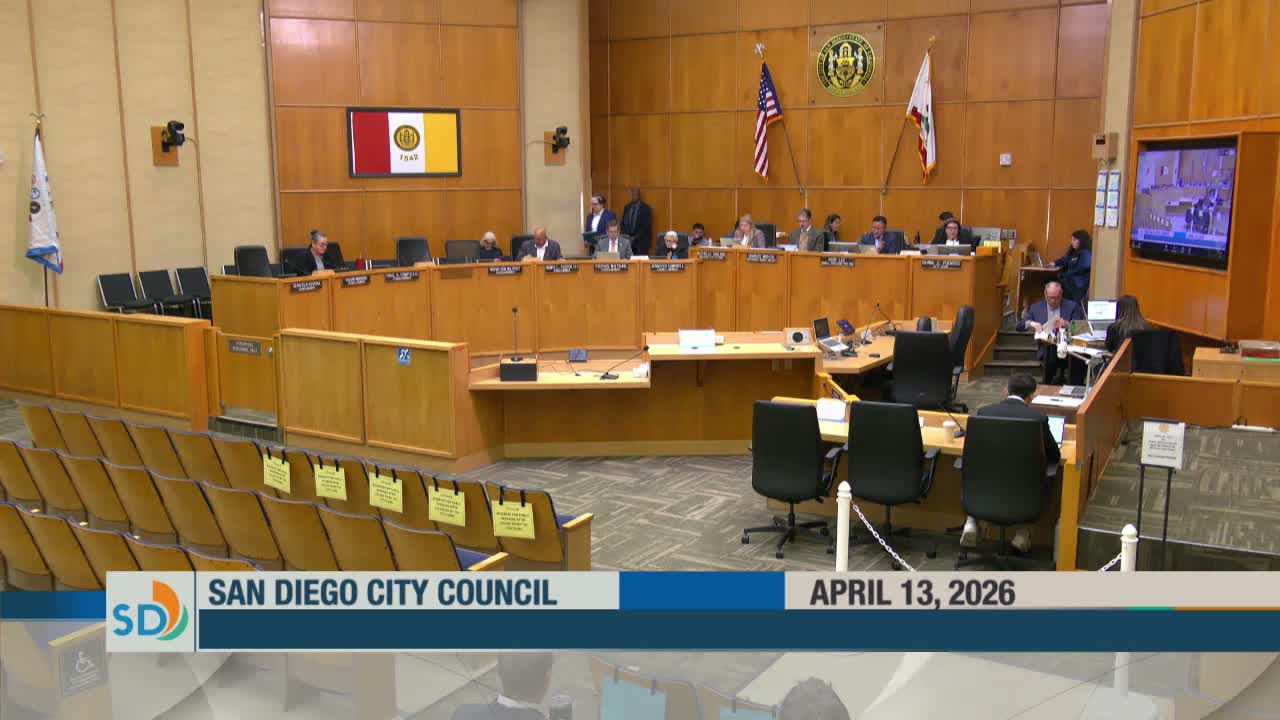
Audit finds gaps in Mission Bay lease revenue tracking; city commits to fixes
Loading...
Summary
A City Auditor performance audit of Mission Bay and San Diego Regional Park Improvement Funds found that a treasurer audit moratorium and reconciliation problems prevented full verification of FY2024 lease revenues; management agreed to five recommendations and said it is upgrading software and addressing 178 holdover leases across the city.
The City Auditor's office reported Thursday that it could not fully verify Mission Bay lease revenues for fiscal year 2024 after a management-imposed moratorium restricted the City Treasurer's lease-audit access and a backlog of unapplied payments created data gaps.
"We found that expenses were in compliance with charter requirements. And as far as revenues, we could not verify that all revenues were collected and deposited into the funds as required due to a management imposed moratorium on the city treasurer's lease revenue audits, and issues with the application of lease payments," said Andy Henow, City Auditor, as he introduced the Office of the City Auditor's performance audit.
The audit covered the distribution of adjusted Mission Bay lease revenue for FY24 under the city charter formula (first $20 million to the General Fund; 35% of the excess to the San Diego Regional Parks Improvement Fund; remainder to the Mission Bay Improvement Fund). Auditors reported roughly $37 million in adjusted Mission Bay lease revenues that year and flagged four findings: (1) the July 2024 moratorium on lease-audit access limited the City Treasurer's ability to perform planned audits; (2) a large backlog of unapplied payments meant the city did not assess late-penalty fees in FY24 when they may have been warranted; (3) a high share of Mission Bay agreements were in holdover status (the audit reported 35% in holdover), risking foregone revenue and perceptions of favoritism; and (4) oversight-committee presentations lacked the detailed expenditure information committee members said they need to perform effective oversight.
The auditors recommended written guidance discouraging future audit moratoria and prompt notification to the City Auditor and audit committee chair if audit access is restricted; stronger payment-application controls; prioritized lease renewals and appraisals where required; and clearer rules about what project information departments must provide to improvement-fund oversight committees. Management agreed to all five recommendations and said it has taken steps to resolve the issues.
City staff described near- and longer-term steps to address the problems. Monica Hardman, assistant director in the city's real estate/lease program, said the department has (a) implemented processes to review and match unapplied payments more promptly, (b) encouraged tenants to use the city's online payment portal that requires invoice identifiers at payment time, and (c) committed to modernizing the lease-management system. "We are upgrading to version 11," Hardman said of the ePortfolio system, adding completion is expected in July 2026 and that the department has issued an RFP for a long-term leasing solution.
Council members pressed staff for follow-up details and timelines. Audit Committee Chair Councilmember Moreno asked when the audit would return for follow-up; Henow said the office expects to begin the next iteration soon and likely present in the fall. Councilmembers asked for a status list and anticipated council return dates for Mission Bay leases now under negotiation or RFP.
Auditors also flagged $933,834 in deferred revenue for FY24 — funds expected but not recognized in the audit period because payments were unresolved at the time of review. Auditors said that amount may represent payments on the unapplied-credit list the audit described; EDD later confirmed that the roughly $933,000 had been reconciled and received after the audit snapshot.
Council members further discussed workload and resources. Staff said the city's lease portfolio exceeds 900 agreements, with roughly 178 agreements in holdover status citywide; the real estate program has 13 budgeted property-agent positions, with three vacancies (10 filled). Councilmembers asked whether more staff or an enterprise-fund approach could help close the backlog and recover revenue, and urged staff to provide a prioritized work plan tied to timelines and potential as-needed contracts.
The presentation and discussion were informational; no formal council action was required on the audit item. The City Auditor's office and Economic Development Department said they will report status updates as they implement the audit recommendations and as the next audit iteration proceeds.
What happens next: management agreed to implement the audit recommendations, the department will provide the council with status updates and timelines for Mission Bay leases, the city is upgrading the lease-management software, and the auditor will follow up in a future audit cycle to confirm implementation.