Lifetime Citizen Portal Access — AI Briefings, Alerts & Unlimited Follows
Alternative Sentencing reports expanded monitoring options and rising test volume; staff cite decreased positivity rate
Loading...
Summary
The Department of Alternative Sentencing reported growth in testing and described electronic monitoring options and caseload structure. Staff said 2025 saw over 18,000 tests and a low positive rate (roughly 8% reported), and that officers and caseworkers are stretched thin.
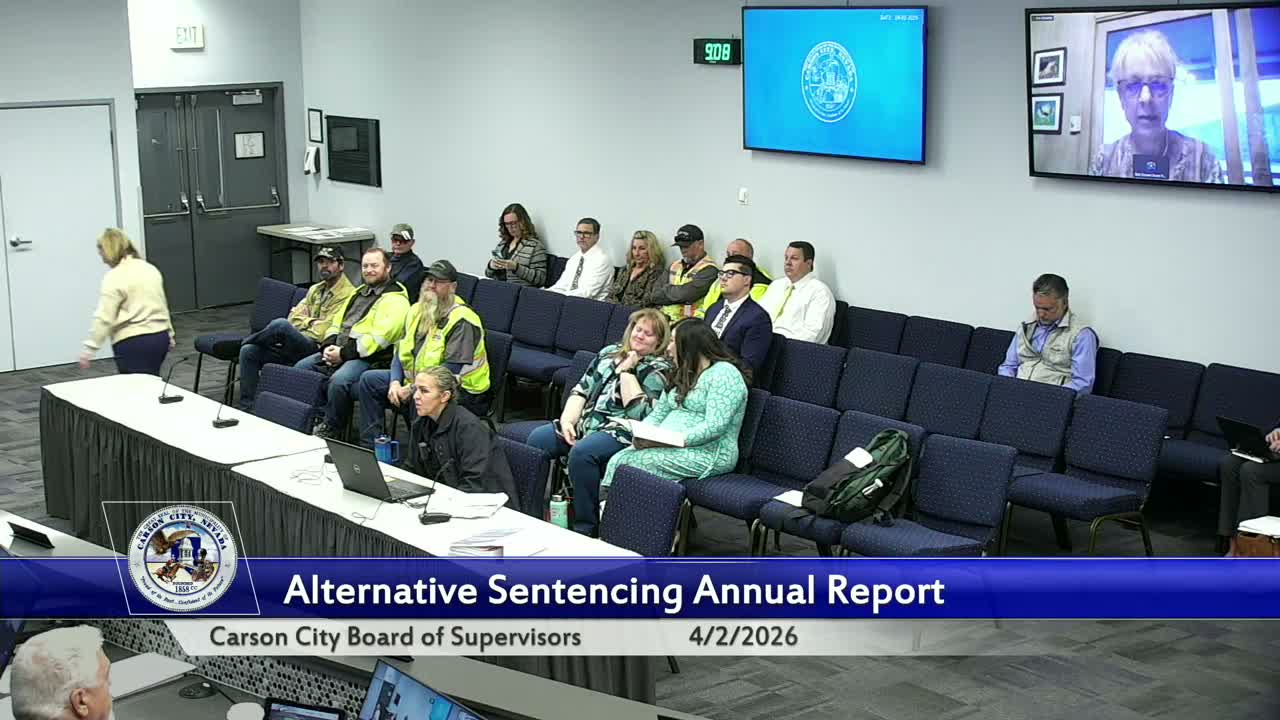
Marlena Stone, presenting the annual report for the Department of Alternative Sentencing (DAS), described the department’s staffing, caseloads and monitoring programs and outlined how the unit supports specialty courts and both pre‑ and post‑conviction supervision.
Stone said the DAS team includes professional staff and officers who manage large caseloads, work with specialty courts and provide home visits. She highlighted electronic monitoring tools being used to expand compliance options: a cell‑phone linked breath‑test that takes a photo during testing, SCRAM continuous alcohol transdermal monitoring, two‑week drug patches, and GPS for cases that need zone restrictions. Stone said the alternative testing and monitoring portfolio allows many clients to keep employment while meeting supervision requirements; she said the phone‑connected breath test costs about $2 per day.
On volume, Stone reported the department conducted about 18,000 tests in 2025 and said the positive‑test rate was a "really low percentage," estimating roughly 8% of tests were positive and noting some positives reflect medically assisted treatment. Board members asked for additional breakdowns — for example, how many positives resulted in rearrest — and Stone said the data are case‑by‑case and that the current case‑management system cannot easily separate new cases from ongoing supervision. She said staff expect to be able to provide more refined statistics with planned technology upgrades.
The board thanked staff and asked for follow‑up reporting on arrest rates, new versus continuing case counts, and staffing needs required to move from reactive to proactive supervision.