Lifetime Citizen Portal Access — AI Briefings, Alerts & Unlimited Follows
Board hears conflicting views on sewer‑extension value as nitrate levels remain high
Loading...
Summary
Public works staff said removing septic systems is a long-term strategy to restore wells; supervisors asked whether treating wells or other measures would be more cost‑effective. Staff said treatment of single wells is expensive and cleanup of decades‑old contamination will take years.
Carson City Public Works described the next phase of a multi‑decade effort to reduce nitrate contamination by removing septic systems and extending sewer to the Southeast side of town.
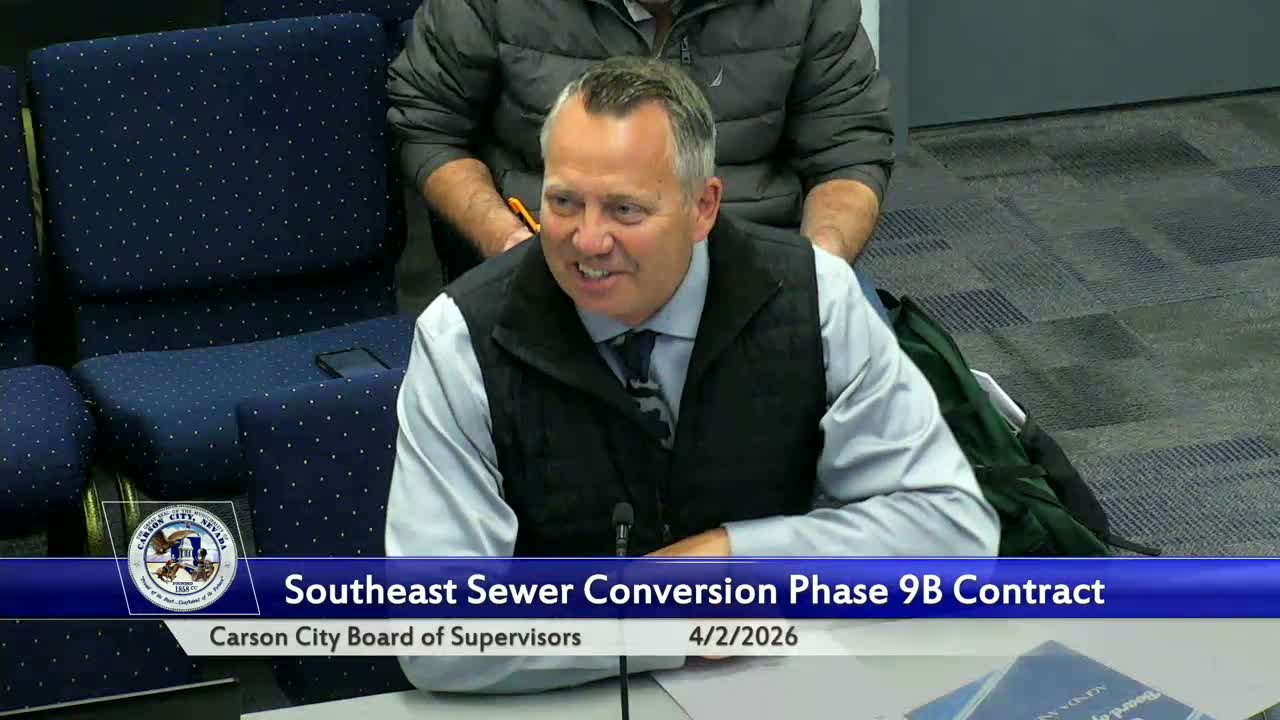
Darren Schultz told the board the Phase 9B work targets properties that were harder to serve, explaining that earlier phases moved pipes into streets and allowed easier connections; "this phase we're putting some of the pipes down below... getting easements so the flow doesn't have to be pumped up to the line," he said. Schultz and other staff said the project began after nitrate increases were identified in local wells in the 1990s and that removing septic systems is intended to reduce future nitrate load even though groundwater improvements will take years to appear.
Supervisor White and others pressed staff on data: White noted that 423 properties had been connected already and asked why nitrate readings have not improved, arguing the program "amounts to 14 homes for $750,000" in the current phase and questioning the return on investment. Schultz replied that contamination developed over decades and that remediation will similarly take a long time; he added that treating single wells at the wellhead generally is not recommended because it is costly and impractical for one well.
Board members also discussed options like blended supply or building centralized treatment; staff said such approaches require larger regional treatment facilities and were not cost‑effective for a single well. The board voted to award the Phase 9B contract to the lowest responsive bidder and authorized contingency spending to proceed with construction.
Attribution: Direct quotes and paraphrases are from Darren Schultz (Public Works) and Supervisor White (board member).